
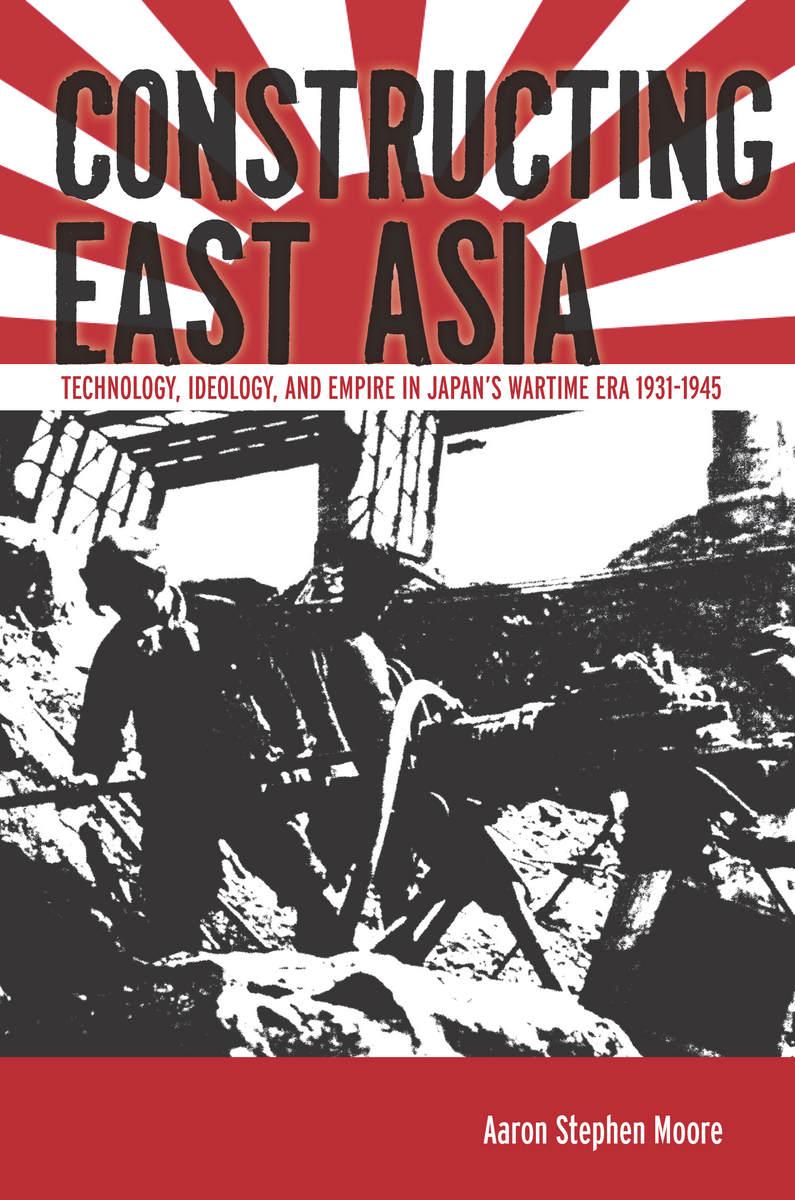
The conventional understanding of Japanese wartime ideology has for years been summed up by just a few words: anti-modern, spiritualist, and irrational. Yet such a cut-and-dried picture is not at all reflective of the principles that guided national policy from 1931–1945. Challenging the status quo, Constructing East Asia examines how Japanese intellectuals, bureaucrats, and engineers used technology as a system of power and mobilization—what historian Aaron Moore terms a "technological imaginary"—to rally people in Japan and its expanding empire. By analyzing how these different actors defined technology in public discourse, national policies, and large-scale infrastructure projects, Moore reveals wartime elites as far more calculated in thought and action than previous scholarship allows. Moreover, Moore positions the wartime origins of technology deployment as an essential part of the country's national policy and identity, upending another predominant narrative—namely, that technology did not play a modernizing role in Japan until the "economic miracle" of the postwar years.
Betal enkelt med kort, Klarna, Apple Pay eller Google Pay. Ikke fornøyd? Du har alltid 14 dagers angrerett. Les mer i våre vilkår. Har du spørsmål, send oss en e-post på hello@memmo.org.
Memmo gjør det enklere å studere – uansett hvor du er i verden. Hos oss samler du pensumbøker og smarte studieverktøy på ett og samme sted: sammendrag, quizer, podkaster og flashcards. Og så Ted, din studiekompis som svarer på alt du lurer på. Over 50 000 studenter studerer allerede her – bygget for at du skal lære raskere og stresse mindre.