
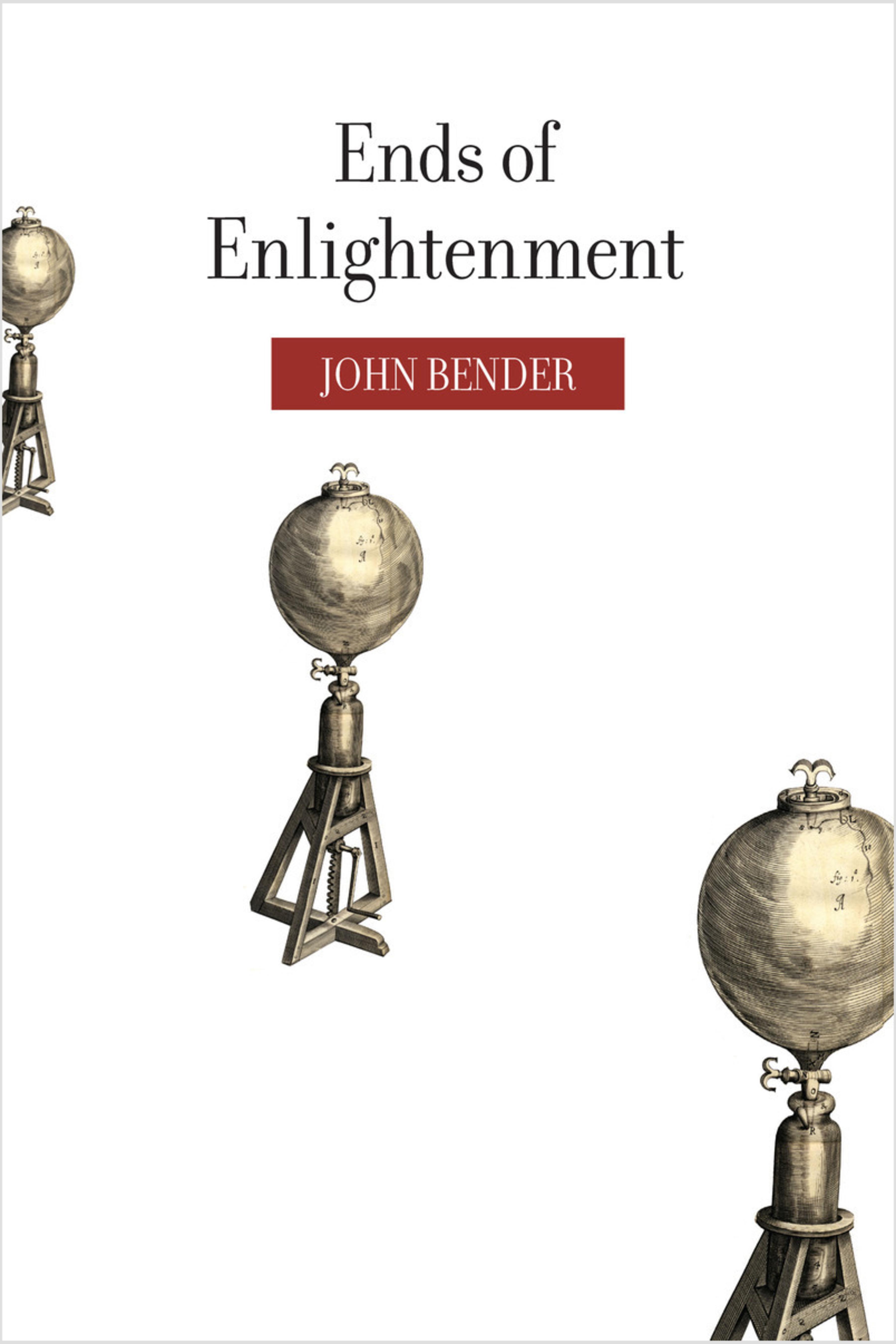
Ends of Enlightenment explores three realms of eighteenth-century European innovation that remain active in the twenty-first century: the realist novel, philosophical thought, and the physical sciences, especially human anatomy. The European Enlightenment was a state of being, a personal stance, and an orientation to the world. Ways of probing experience and knowledge in the novel and in the visual arts were interleaved with methods of experimentation in science and philosophy. This book's fresh perspective considers the novel as an art but also as a force in thinking. The critical distance afforded by a view back across the centuries allows Bender to redefine such novelists as Defoe, Fielding, Goldsmith, Godwin, and Laclos by placing them along philosophers and scientists like Newton, Locke, and Hume but also alongside engravings by Hogarth and by anatomist William Hunter. His book probes the kinship among realism, hypothesis, and scientific fact, defining in the process the rhetorical basis of public communication during the Enlightenment.
Betal enkelt med kort, Klarna, Apple Pay eller Google Pay. Ikke fornøyd? Du har alltid 14 dagers angrerett. Les mer i våre vilkår. Har du spørsmål, send oss en e-post på hello@memmo.org.
Memmo gjør det enklere å studere – uansett hvor du er i verden. Hos oss samler du pensumbøker og smarte studieverktøy på ett og samme sted: sammendrag, quizer, podkaster og flashcards. Og så Ted, din studiekompis som svarer på alt du lurer på. Over 50 000 studenter studerer allerede her – bygget for at du skal lære raskere og stresse mindre.