
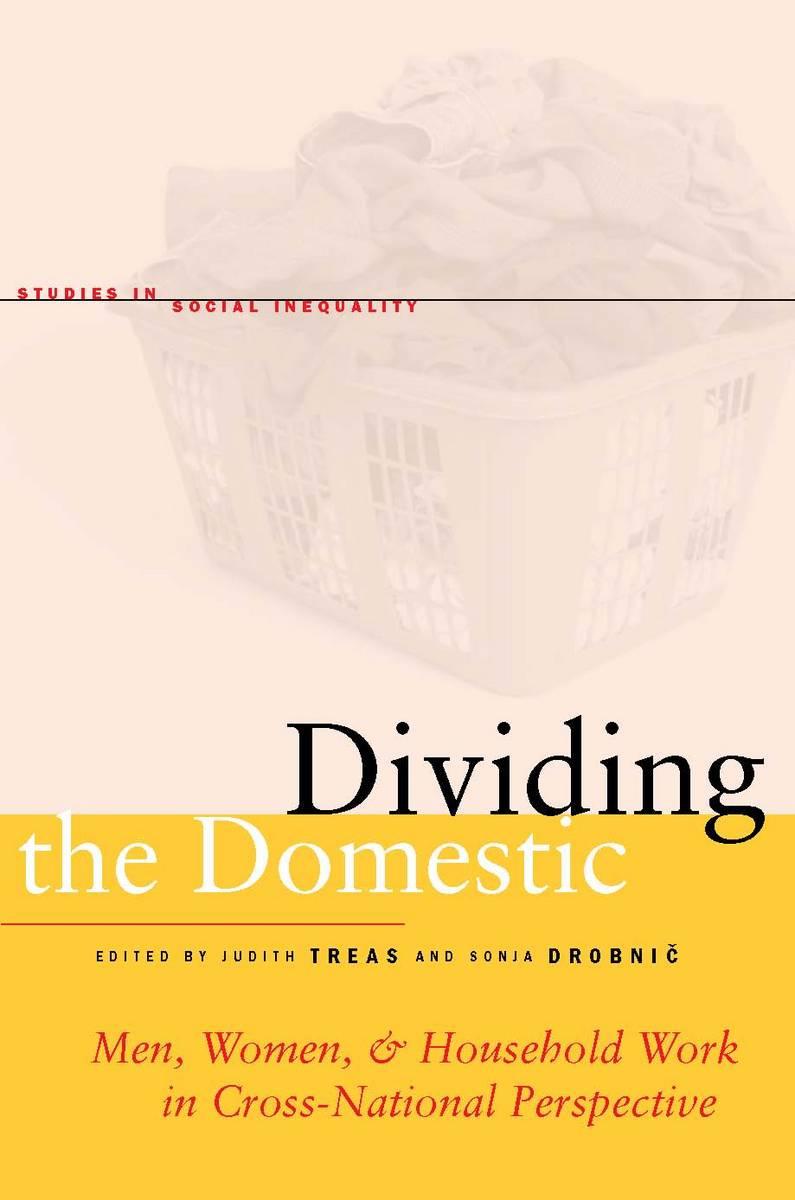
In Dividing the Domestic, leading international scholars roll up their sleeves to investigate how culture and country characteristics permeate our households and our private lives. The book introduces novel frameworks for understanding why the household remains a bastion of traditional gender relations—even when employed full-time, women everywhere still do most of the work around the house, and poor women spend more time on housework than affluent women. Education systems, tax codes, labor laws, public polices, and cultural beliefs about motherhood and marriage all make a difference. Any accounting of "who does what" needs to consider the complicity of trade unions, state arrangements for children's schooling, and new cultural prescriptions for a happy marriage. With its cross-national perspective, this pioneering volume speaks not only to sociologists concerned with gender and family, but also to those interested in scholarship on states, public policy, culture, and social inequality.
Betal enkelt med kort, Klarna, Apple Pay eller Google Pay. Ikke fornøyd? Du har alltid 14 dagers angrerett. Les mer i våre vilkår. Har du spørsmål, send oss en e-post på hello@memmo.org.
Memmo gjør det enklere å studere – uansett hvor du er i verden. Hos oss samler du pensumbøker og smarte studieverktøy på ett og samme sted: sammendrag, quizer, podkaster og flashcards. Og så Ted, din studiekompis som svarer på alt du lurer på. Over 50 000 studenter studerer allerede her – bygget for at du skal lære raskere og stresse mindre.