
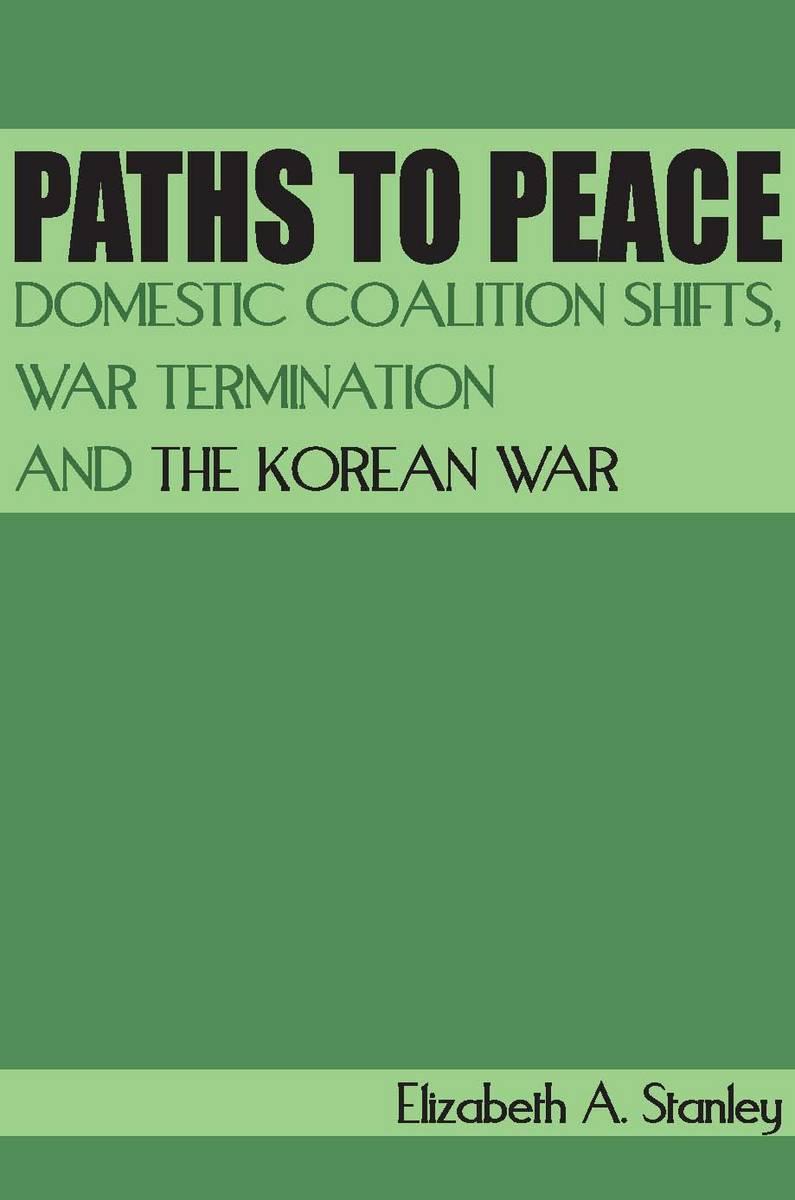
Paths to Peace begins by developing a theory about the domestic obstacles to making peace and the role played by shifts in states' governing coalitions in overcoming these obstacles. In particular, it explains how the longer the war, the harder it is to end, because domestic obstacles to peace become institutionalized over time. Next, it tests this theory with a mixed methods approach—through historical case studies and quantitative statistical analysis. Finally, it applies the theory to an in-depth analysis of the ending of the Korean War. By analyzing the domestic politics of the war's major combatants—the Soviet Union, the United States, China, and North and South Korea—it explains why the final armistice terms accepted in July 1953 were little different from those proposed at the start of negotiations in July 1951, some 294,000 additional battle-deaths later.
Betal enkelt med kort, Klarna, Apple Pay eller Google Pay. Ikke fornøyd? Du har alltid 14 dagers angrerett. Les mer i våre vilkår. Har du spørsmål, send oss en e-post på hello@memmo.org.
Memmo gjør det enklere å studere – uansett hvor du er i verden. Hos oss samler du pensumbøker og smarte studieverktøy på ett og samme sted: sammendrag, quizer, podkaster og flashcards. Og så Ted, din studiekompis som svarer på alt du lurer på. Over 50 000 studenter studerer allerede her – bygget for at du skal lære raskere og stresse mindre.