
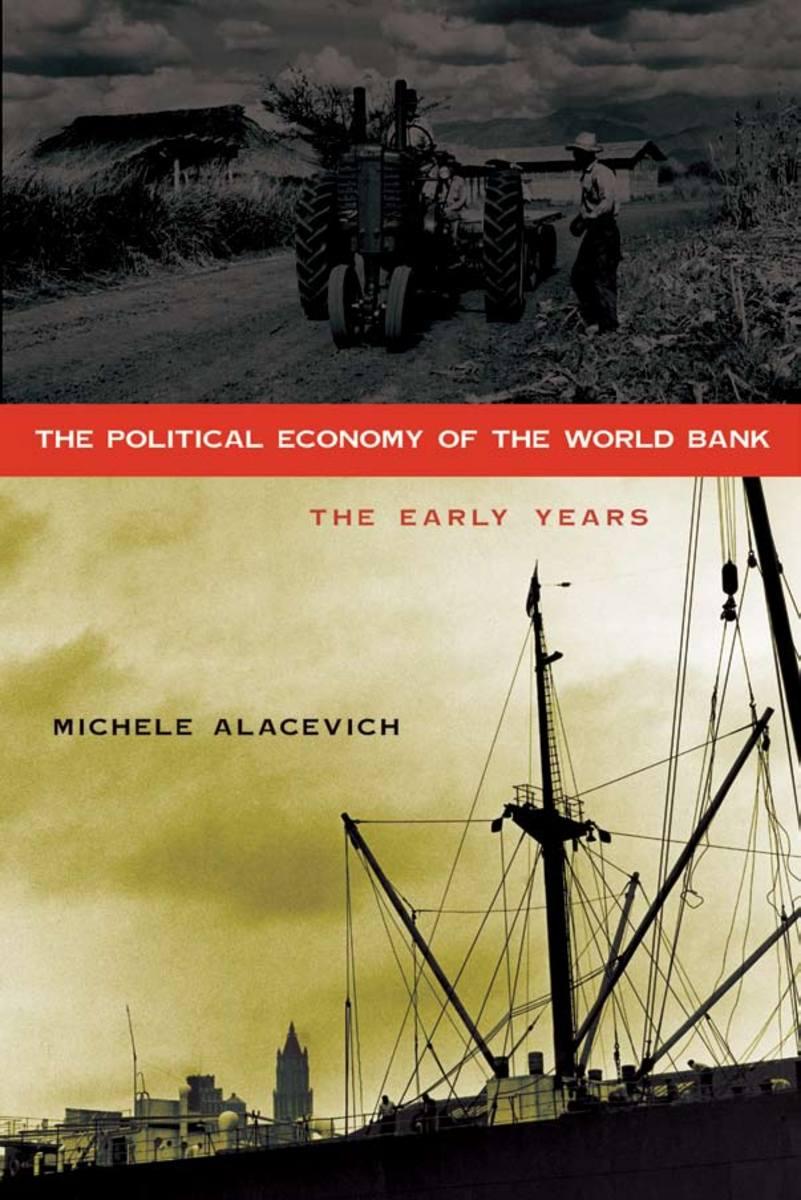
The Political Economy of the World Bank: The Early Years is a fascinating study of economic history. This text describes perhaps what is the most crucial time for development economics: the birth of the "third world," the creation of development economics as a discipline, and the establishment of the World Bank's leading role in development.
Using previously unavailable archival material, Michele Alacevich takes a close look at the years during which the International Bank for Reconstruction and Development—now known as the World Bank— turned its attention from reconstruction to development, having been upstaged by the Marshall Plan.He describes the "Currie Mission" to Colombia (1949–1954), the World Bank's first general survey mission in a developing nation. With the Currie Mission as a starting point and a case study, Alacevich analyzes the complexities of the Bank's first steps toward economic and social development in poorer nations, and helps the reader understand some foundational questions about development that are still of great relevance today.
The Political Economy of the World Bank: The Early Years is essential reading for anyone interested in the economic history of international development as a lens for better understanding current development issues.
Betal enkelt med kort, Klarna, Apple Pay eller Google Pay. Ikke fornøyd? Du har alltid 14 dagers angrerett. Les mer i våre vilkår. Har du spørsmål, send oss en e-post på hello@memmo.org.
Memmo gjør det enklere å studere – uansett hvor du er i verden. Hos oss samler du pensumbøker og smarte studieverktøy på ett og samme sted: sammendrag, quizer, podkaster og flashcards. Og så Ted, din studiekompis som svarer på alt du lurer på. Over 50 000 studenter studerer allerede her – bygget for at du skal lære raskere og stresse mindre.