
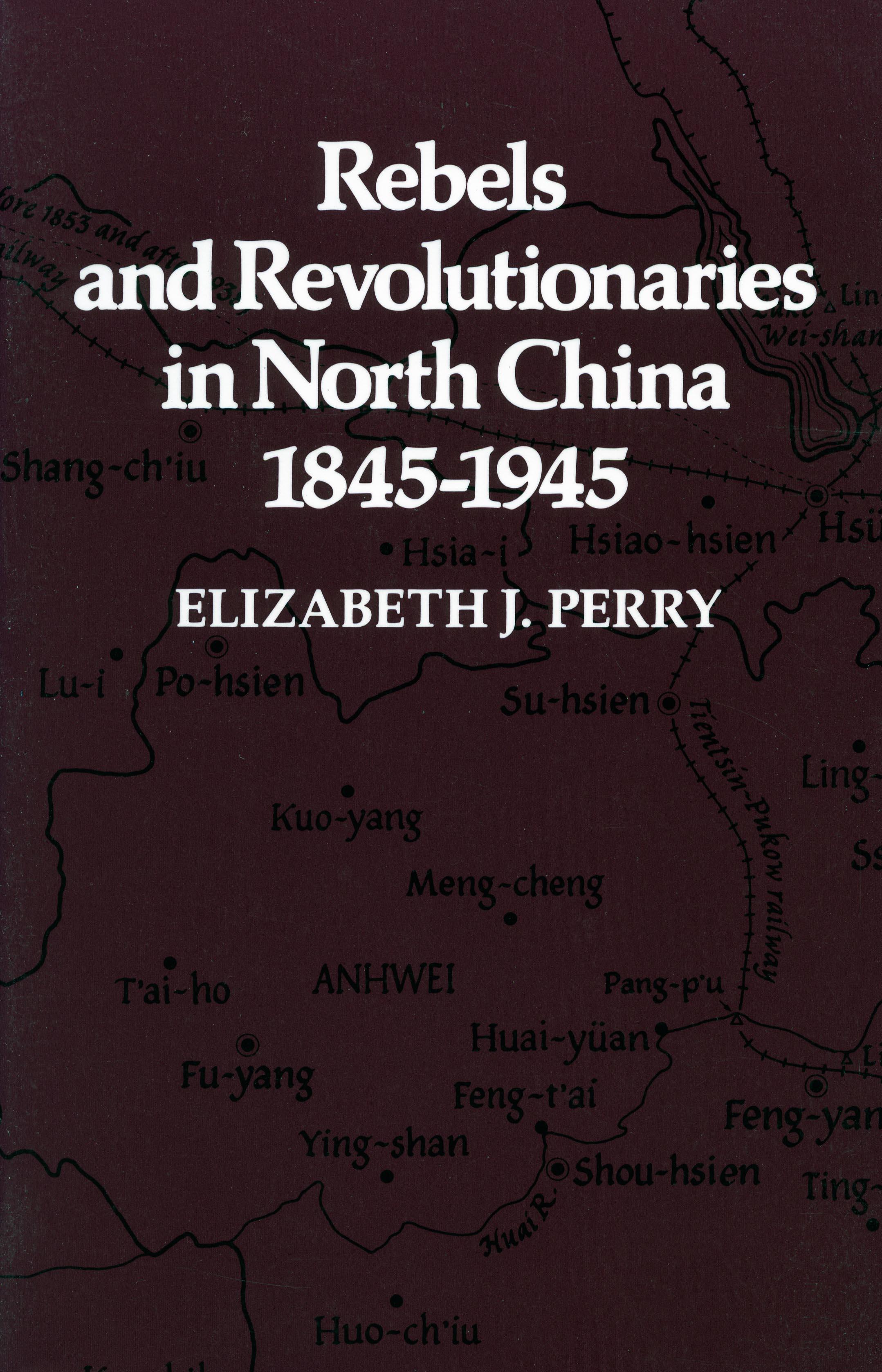
Why do peasants rebel? In particular, why do some peasants rebel and not others? Starting from the fact that only in certain geographical areas does rebellion seem to recur persistently, the author examines three notable rebel movements in one such area in China: Huaipei, a region of poor soil and unstable weather bounded by the Huai and Yellow (Huang He) rivers.
The Nien rebels of the 1850s and 1860s and the Red Spear Society of the Republican era are described as representing traditional forms of violent competition for scarce economic resources. The Nien were essentially "predatory," using violence as a way of obtaining food and other necessities; the Red Spears essentially "protective," concerned to defend peasant homes and property against bandits, warlord armies, and state efforts at taxation. The communist movement of the 1930s and 1940s, by contrast, looked beyond these traditional patterns to a national social revolution that would render local rebellions unnecessary.
The author throws new light on the role of secret societies in peasant protest, and offers a new interpretation of the relationship between rebellion and revolution.
Betal enkelt med kort, Klarna, Apple Pay eller Google Pay. Ikke fornøyd? Du har alltid 14 dagers angrerett. Les mer i våre vilkår. Har du spørsmål, send oss en e-post på hello@memmo.org.
Memmo gjør det enklere å studere – uansett hvor du er i verden. Hos oss samler du pensumbøker og smarte studieverktøy på ett og samme sted: sammendrag, quizer, podkaster og flashcards. Og så Ted, din studiekompis som svarer på alt du lurer på. Over 50 000 studenter studerer allerede her – bygget for at du skal lære raskere og stresse mindre.
Du vil kanskje også like
Kjøp boken0