
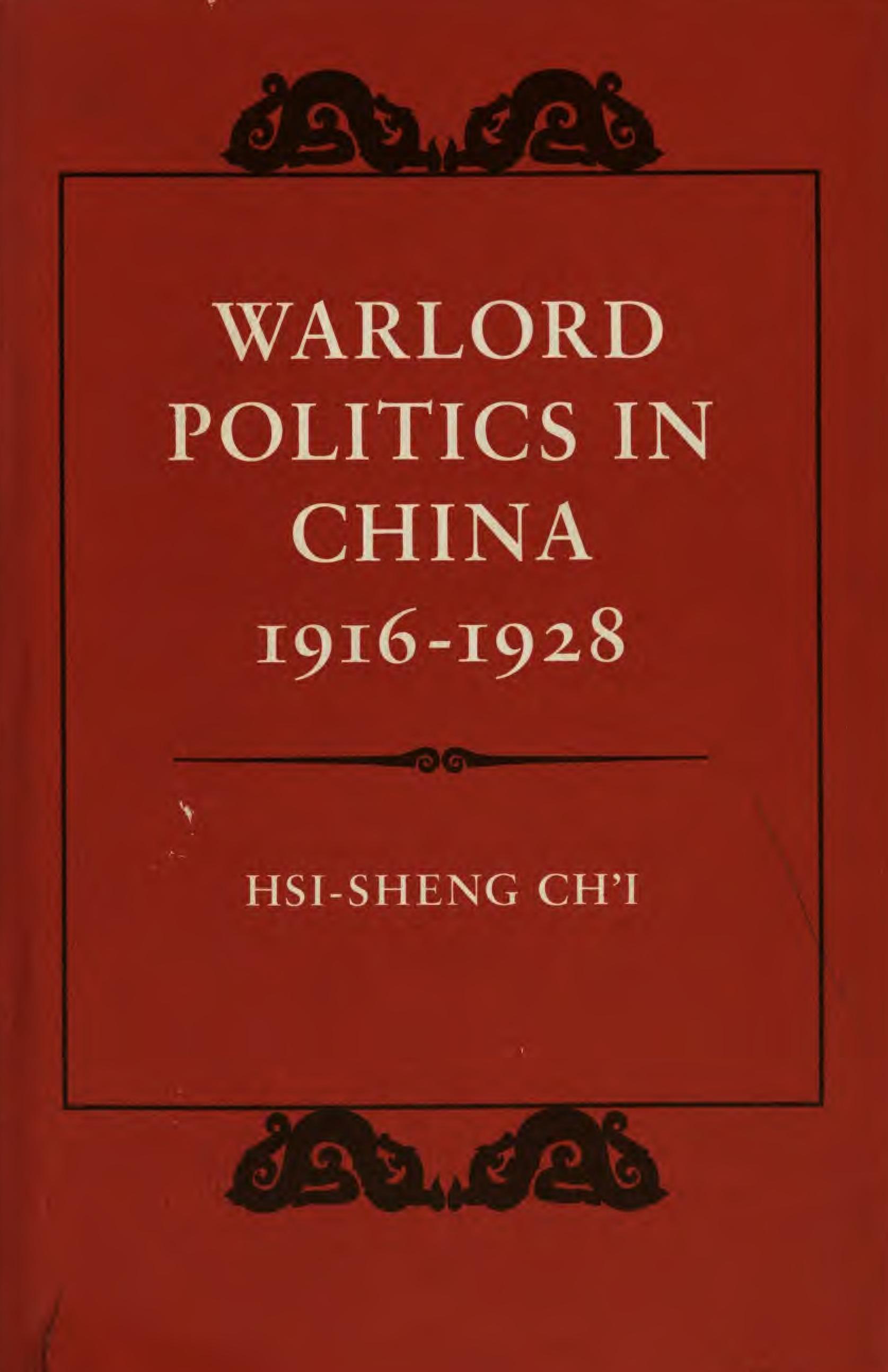
The first comprehensive analytical treatment of warlordism in twentieth-century China, this book approaches regional militarism as a generic phenomenon of Chinese politics in the most complex and chaotic era of recent Chinese history.
After describing the emergence of militarist regimes after the death of Yuan Shih-k'ai in 1916, the author analyzes their membership, goals, capabilities, and sources of cohesion, in the process presenting new information on their organization, methods of recruitment, quality of training, types of weapons, tactical and strategic concepts, and means of financing. On the strength of this information, he offers a convincing explanation I balance-of-power terms for the baffling advances, retreats, clashes, and changes of allegiance that have puzzled students of the era.
His analysis makes clear how the leading warlords viewed the state, themselves, and each other. A concluding chapter presents an explanation based on systems theory for the Kuomintang's triumph over the warlords who had sought to confine its domain to Kwangtung.
Included as appendixes are a chronology of events and lists of national leaders and provincial military authorities from 1916 to 1928.
Betal enkelt med kort, Klarna, Apple Pay eller Google Pay. Ikke fornøyd? Du har alltid 14 dagers angrerett. Les mer i våre vilkår. Har du spørsmål, send oss en e-post på hello@memmo.org.
Memmo gjør det enklere å studere – uansett hvor du er i verden. Hos oss samler du pensumbøker og smarte studieverktøy på ett og samme sted: sammendrag, quizer, podkaster og flashcards. Og så Ted, din studiekompis som svarer på alt du lurer på. Over 50 000 studenter studerer allerede her – bygget for at du skal lære raskere og stresse mindre.
Du vil kanskje også like
Kjøp boken0