
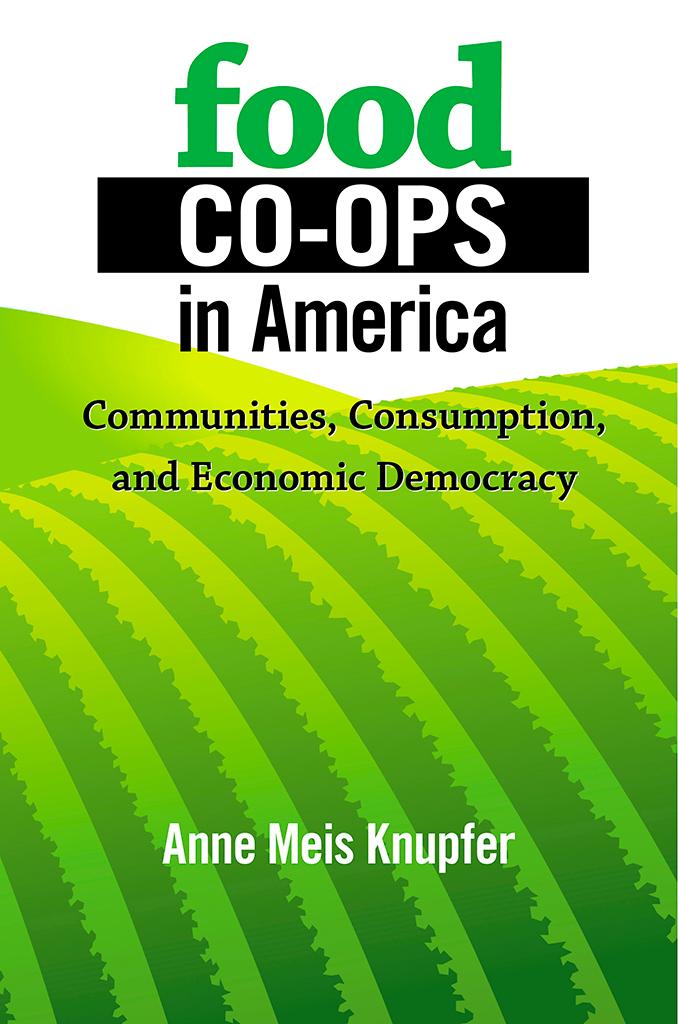
In recent years, American shoppers have become more conscious of their food choices and have increasingly turned to CSAs, farmers' markets, organic foods in supermarkets, and to joining and forming new food co-ops. In fact, food co-ops have been a viable food source, as well as a means of collective and democratic ownership, for nearly 180 years.
In Food Co-ops in America, Anne Meis Knupfer examines the economic and democratic ideals of food cooperatives. She shows readers what the histories of food co-ops can tell us about our rights as consumers, how we can practice democracy and community, and how we might do business differently. In the first history of food co-ops in the United States, Knupfer draws on newsletters, correspondence, newspaper coverage, and board meeting minutes, as well as visits to food co-ops around the country, where she listened to managers, board members, workers, and members.
What possibilities for change—be they economic, political, environmental or social—might food co-ops offer to their members, communities, and the globalized world? Food co-ops have long advocated for consumer legislation, accurate product labeling, and environmental protection. Food co-ops have many constituents—members, workers, board members, local and even global producers—making the process of collective decision-making complex and often difficult. Even so, food co-ops offer us a viable alternative to corporate capitalism. In recent years, committed co-ops have expanded their social vision to improve access to healthy food for all by helping to establish food co-ops in poorer communities.
Betal enkelt med kort, Klarna, Apple Pay eller Google Pay. Ikke fornøyd? Du har alltid 14 dagers angrerett. Les mer i våre vilkår. Har du spørsmål, send oss en e-post på hello@memmo.org.
Memmo gjør det enklere å studere – uansett hvor du er i verden. Hos oss samler du pensumbøker og smarte studieverktøy på ett og samme sted: sammendrag, quizer, podkaster og flashcards. Og så Ted, din studiekompis som svarer på alt du lurer på. Over 50 000 studenter studerer allerede her – bygget for at du skal lære raskere og stresse mindre.