
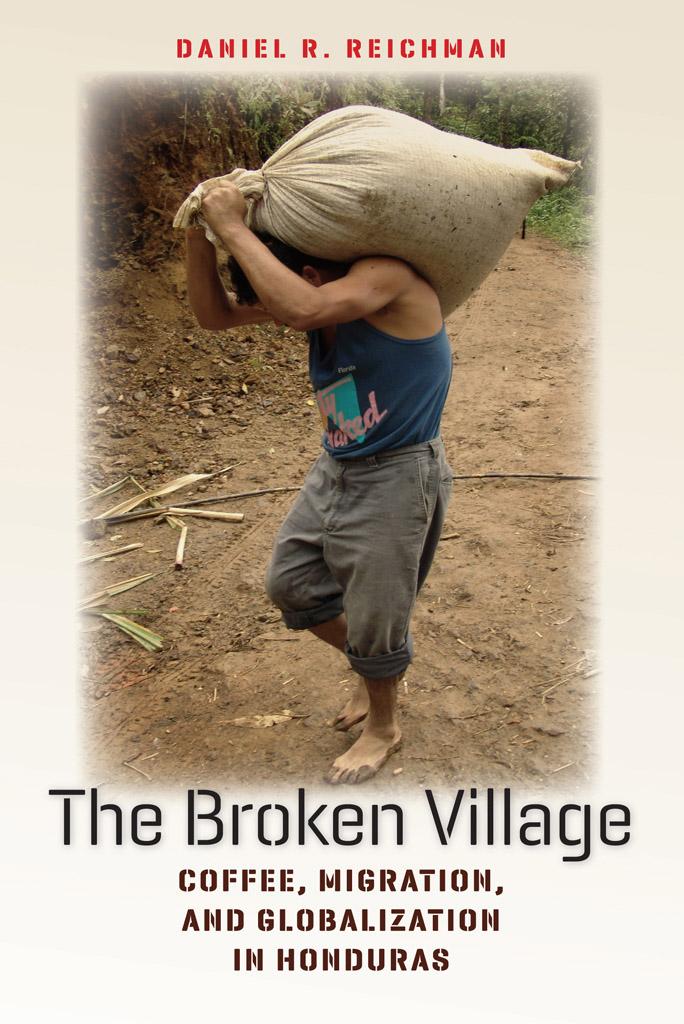
In The Broken Village, Daniel R. Reichman tells the story of a remote village in Honduras that transformed almost overnight from a sleepy coffee-growing community to a hotbed of undocumented migration to and from the United States. The small village—called here by the pseudonym La Quebrada—was once home to a thriving coffee economy. Recently, it has become dependent on migrants working in distant places like Long Island and South Dakota, who live in ways that most Honduran townspeople struggle to comprehend or explain. Reichman explores how the new "migration economy" has upended cultural ideas of success and failure, family dynamics, and local politics.
During his time in La Quebrada, Reichman focused on three different strategies for social reform—a fledgling coffee cooperative that sought to raise farmer incomes and establish principles of fairness and justice through consumer activism; religious campaigns for personal morality that were intended to counter the corrosive effects of migration; and local discourses about migrant "greed" that labeled migrants as the cause of social crisis, rather than its victims. All three phenomena had one common trait: They were settings in which people presented moral visions of social welfare in response to a perceived moment of crisis. The Broken Village integrates sacred and secular ideas of morality, legal and cultural notions of justice, to explore how different groups define social progress.
Betal enkelt med kort, Klarna, Apple Pay eller Google Pay. Ikke fornøyd? Du har alltid 14 dagers angrerett. Les mer i våre vilkår. Har du spørsmål, send oss en e-post på hello@memmo.org.
Memmo gjør det enklere å studere – uansett hvor du er i verden. Hos oss samler du pensumbøker og smarte studieverktøy på ett og samme sted: sammendrag, quizer, podkaster og flashcards. Og så Ted, din studiekompis som svarer på alt du lurer på. Over 50 000 studenter studerer allerede her – bygget for at du skal lære raskere og stresse mindre.