
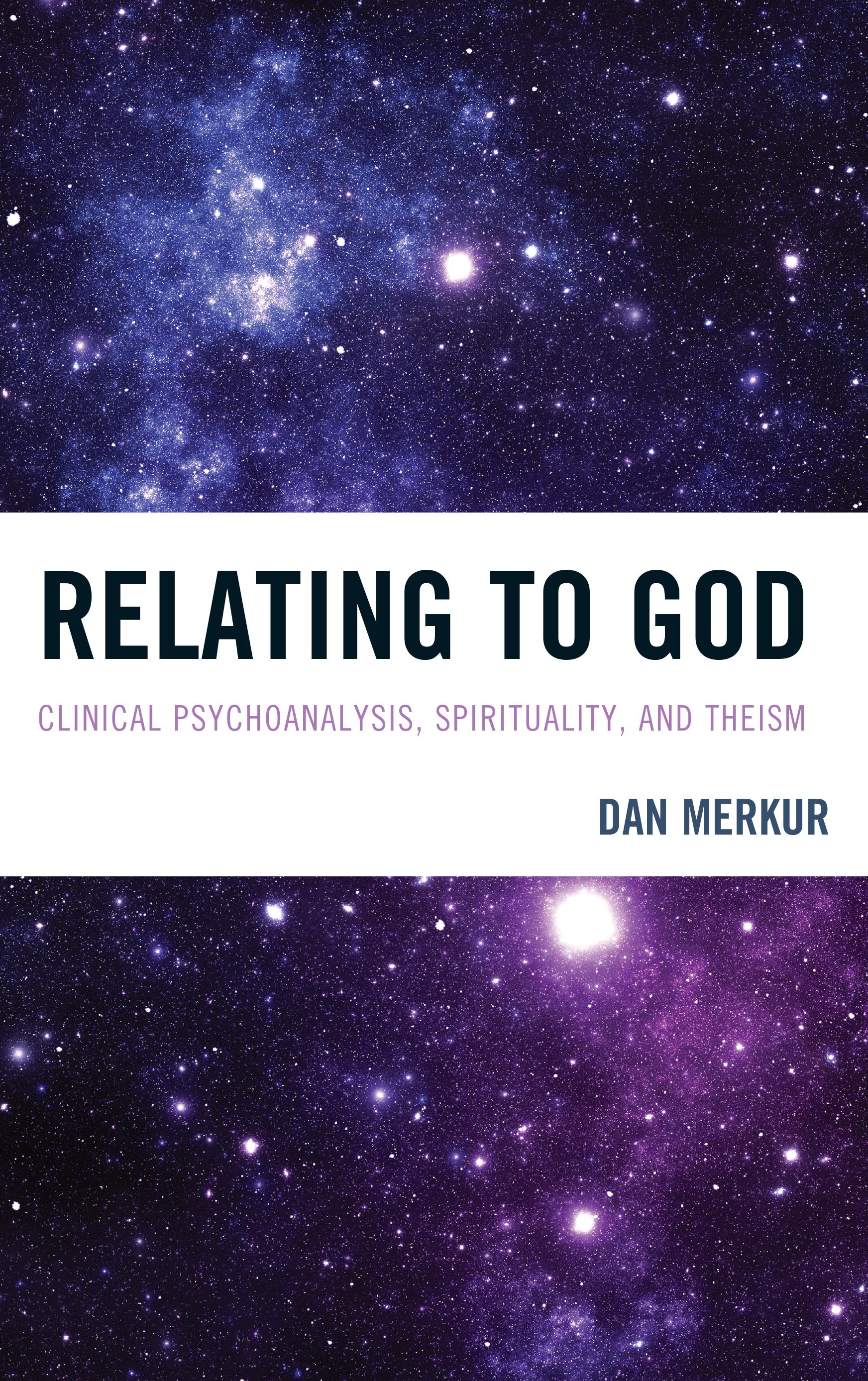
In Relating to God: Clinical Psychoanalysis, Spirituality, and Theism, Dan Merkur conceptualizes religious discourse within psychoanalysis. He proposes that God be treated as a transferential figure whose analysis leads to a reduction of the parental content that is projected onto God. Merkur notes that religious conversion experiences regularly involve theological intuitions that are either rational or, owing to morbid complications, have undergone displacement into irrational symbolism. Analysis renders the religiosity more wholesome.
Traditionally, psychoanalytic thought has been dismissive of religion. Freud is on record, however, as having called psychoanalysis a neutral procedure. He argued that religion, with its dependency on a providential God who punishes disobedience, imagines spirituality on the model of human parents and fails to approach spirituality in an appropriately scientific manner. He wrote little of spiritual phenomena, but mentioned both the rationality of the universe and the parapsychological occurrence of thought transference.
Occasionally, later psychoanalysts used different language in order to contrast wholesome and morbid forms of religion. Erich Fromm distinguished authoritarian and humanistic religions, while D. W. Winnicott condemned fetishistic behavior while approving of playful illusions that require “belief-in.” These formulations constructed a middle position for clinicians, neither categorically opposed to religion as classical psychoanalysis was, nor do they embrace cultural relativity as “spiritually oriented” psychotherapists are currently advocating.
What sorts of spiritual practices does psychoanalysis find unobjectionable? As examples of humanistic religion, Fromm named Zen Buddhism, Buddhist mindfulness meditation, and the via negativa or “way of negating” that some Christian and Jewish mystics have followed. Because the Bible-based approaches are little known, Merkur discusses their histories, procedures, and psychoanalytic understanding.
Traditionally, psychoanalytic thought has been dismissive of religion. Freud is on record, however, as having called psychoanalysis a neutral procedure. He argued that religion, with its dependency on a providential God who punishes disobedience, imagines spirituality on the model of human parents and fails to approach spirituality in an appropriately scientific manner. He wrote little of spiritual phenomena, but mentioned both the rationality of the universe and the parapsychological occurrence of thought transference.
Occasionally, later psychoanalysts used different language in order to contrast wholesome and morbid forms of religion. Erich Fromm distinguished authoritarian and humanistic religions, while D. W. Winnicott condemned fetishistic behavior while approving of playful illusions that require “belief-in.” These formulations constructed a middle position for clinicians, neither categorically opposed to religion as classical psychoanalysis was, nor do they embrace cultural relativity as “spiritually oriented” psychotherapists are currently advocating.
What sorts of spiritual practices does psychoanalysis find unobjectionable? As examples of humanistic religion, Fromm named Zen Buddhism, Buddhist mindfulness meditation, and the via negativa or “way of negating” that some Christian and Jewish mystics have followed. Because the Bible-based approaches are little known, Merkur discusses their histories, procedures, and psychoanalytic understanding.
Betal enkelt med kort, Klarna, Apple Pay eller Google Pay. Ikke fornøyd? Du har alltid 14 dagers angrerett. Les mer i våre vilkår. Har du spørsmål, send oss en e-post på hello@memmo.org.
Memmo gjør det enklere å studere – uansett hvor du er i verden. Hos oss samler du pensumbøker og smarte studieverktøy på ett og samme sted: sammendrag, quizer, podkaster og flashcards. Og så Ted, din studiekompis som svarer på alt du lurer på. Over 50 000 studenter studerer allerede her – bygget for at du skal lære raskere og stresse mindre.