
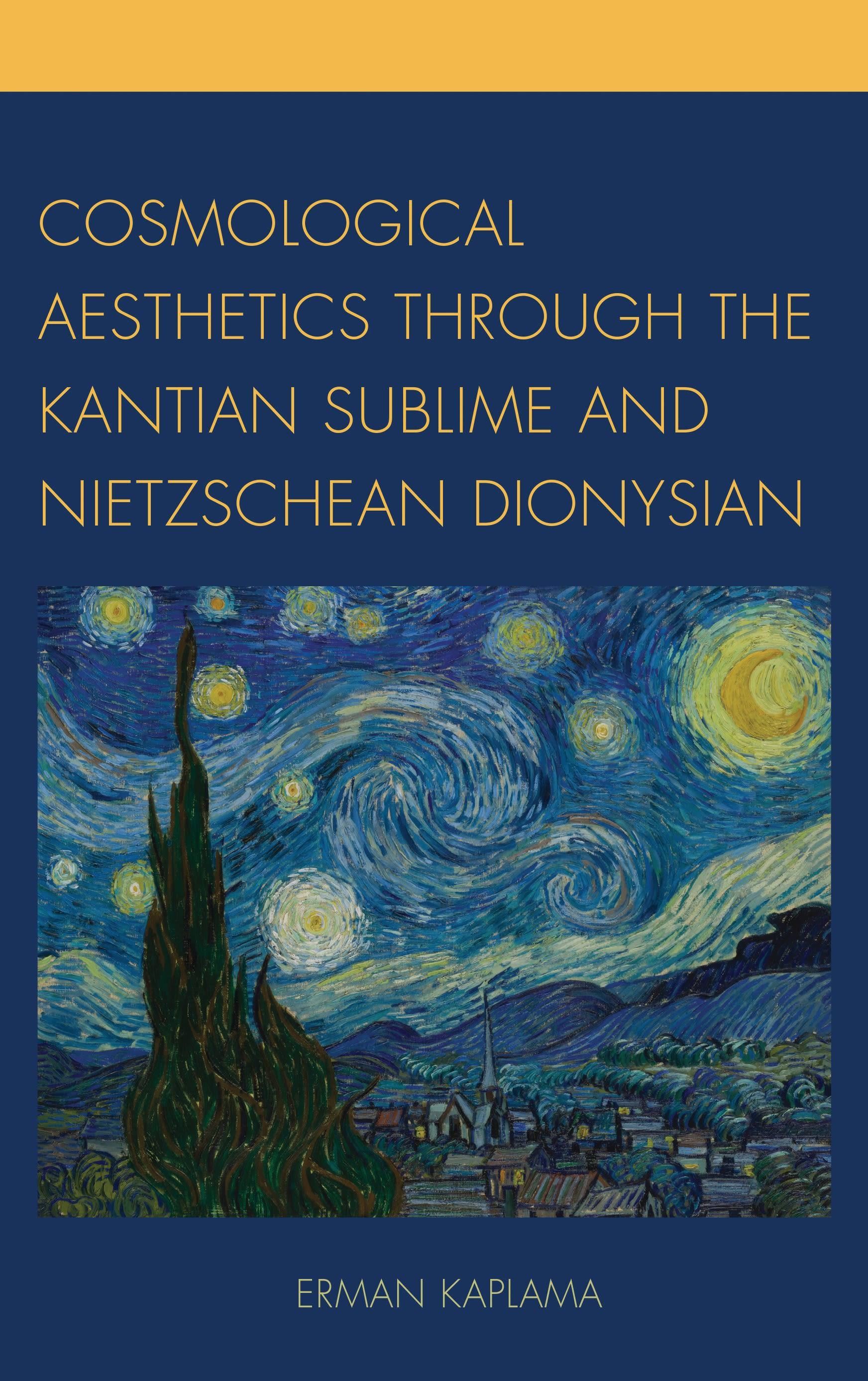
Erman Kaplama explores the principle of transition (Übergang) from metaphysics to physics developed by Kant in his unfinished magnum opus, Opus Postumum. Drawing on the Heraclitean logos and Kant’s notions of sense-intuition (Anschauung) and reflective judgment, Kaplama interprets transition as an aesthetic principle. He revises the idea of nature (phusis) as the principle of motion referring to Heraclitus’ cosmology as well as Heidegger’s and Nietzsche’s lectures on the pre-Socratics. Kaplama compares the Kantian sublime and Nietzschean Dionysian as aesthetic theories representing the transition from the sensible to supersensible and as cosmological theories that consider human nature (ethos) as an extension of nature. In light of such Nietzschean notions as the eternal recurrence and will to power, the Dionysian is shown to trigger the transition by which nature and art are redefined. Finally, Cosmological Aesthetics employs the principles of transition and motion to analyze Van Gogh’s Starry Night in an excursus.
Betal enkelt med kort, Klarna, Apple Pay eller Google Pay. Ikke fornøyd? Du har alltid 14 dagers angrerett. Les mer i våre vilkår. Har du spørsmål, send oss en e-post på hello@memmo.org.
Memmo gjør det enklere å studere – uansett hvor du er i verden. Hos oss samler du pensumbøker og smarte studieverktøy på ett og samme sted: sammendrag, quizer, podkaster og flashcards. Og så Ted, din studiekompis som svarer på alt du lurer på. Over 50 000 studenter studerer allerede her – bygget for at du skal lære raskere og stresse mindre.