
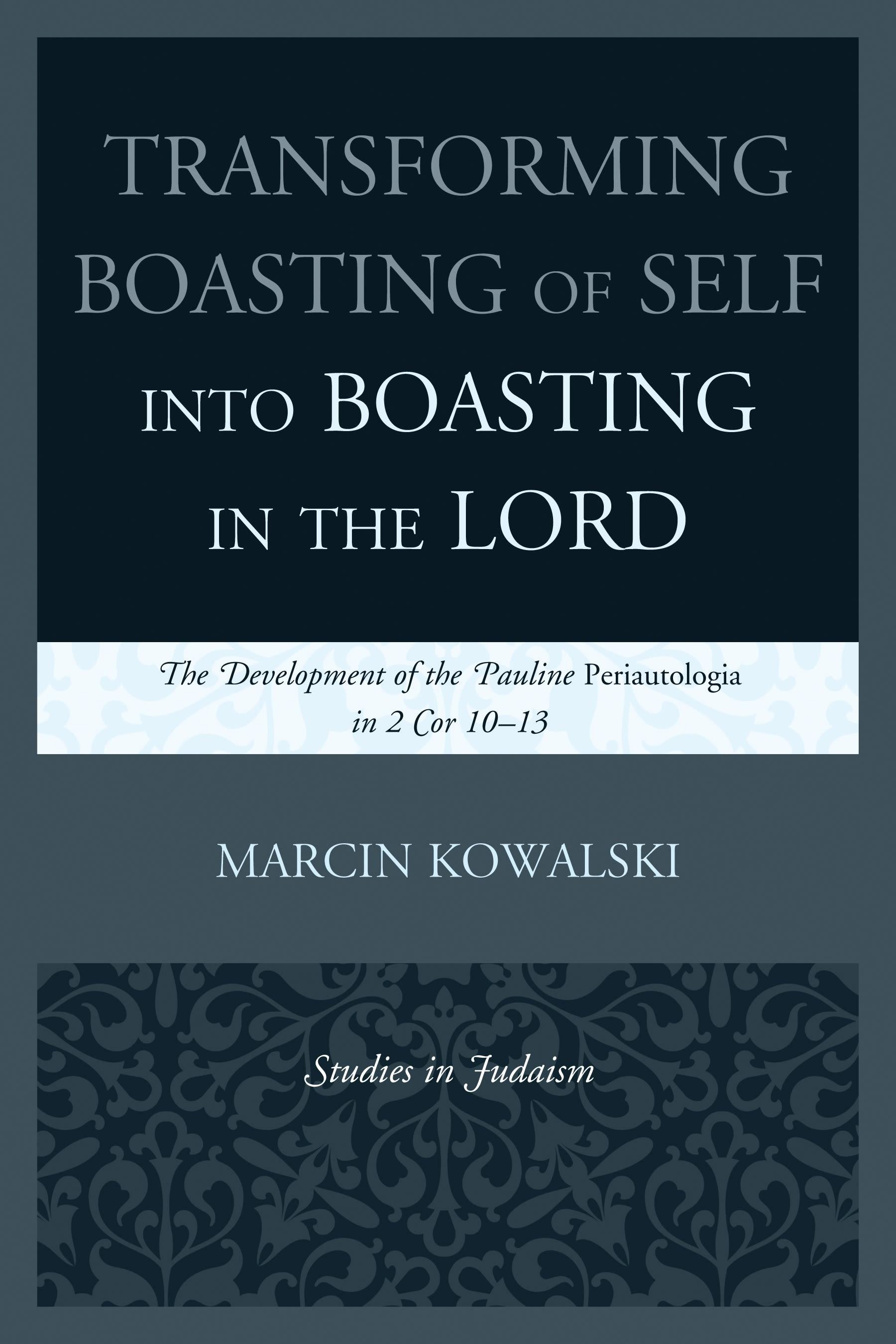
This book uses rhetorical analysis to illuminate one of the most fascinating and complicated speeches by Saint Paul: 2 Cor 10–13. The main problem of the speech regards Paul’s claim to be a true servant of Christ and to have the right to boast about it. Paul proves he is strong enough to be the leader of Corinth and paradoxically demonstrates that weakness should belong to the identity of an apostle. Another issue regards the legitimacy of his boasting. The egocentric boast based on the comparison with his opponents is the one that Paul calls foolish, but he is forced, nevertheless, to undertake it. The tool that ultimately enables him to transform self-aggrandizing speech into speech that is focused on Christ is his paradoxical boasting of weakness. The careful crafting of his discourse based on Christological principles ultimately speaks for qualifying it as a self-praise speech (periautologia) with a pedagogical, not defensive, purpose.
Betal enkelt med kort, Klarna, Apple Pay eller Google Pay. Ikke fornøyd? Du har alltid 14 dagers angrerett. Les mer i våre vilkår. Har du spørsmål, send oss en e-post på hello@memmo.org.
Memmo gjør det enklere å studere – uansett hvor du er i verden. Hos oss samler du pensumbøker og smarte studieverktøy på ett og samme sted: sammendrag, quizer, podkaster og flashcards. Og så Ted, din studiekompis som svarer på alt du lurer på. Over 50 000 studenter studerer allerede her – bygget for at du skal lære raskere og stresse mindre.