
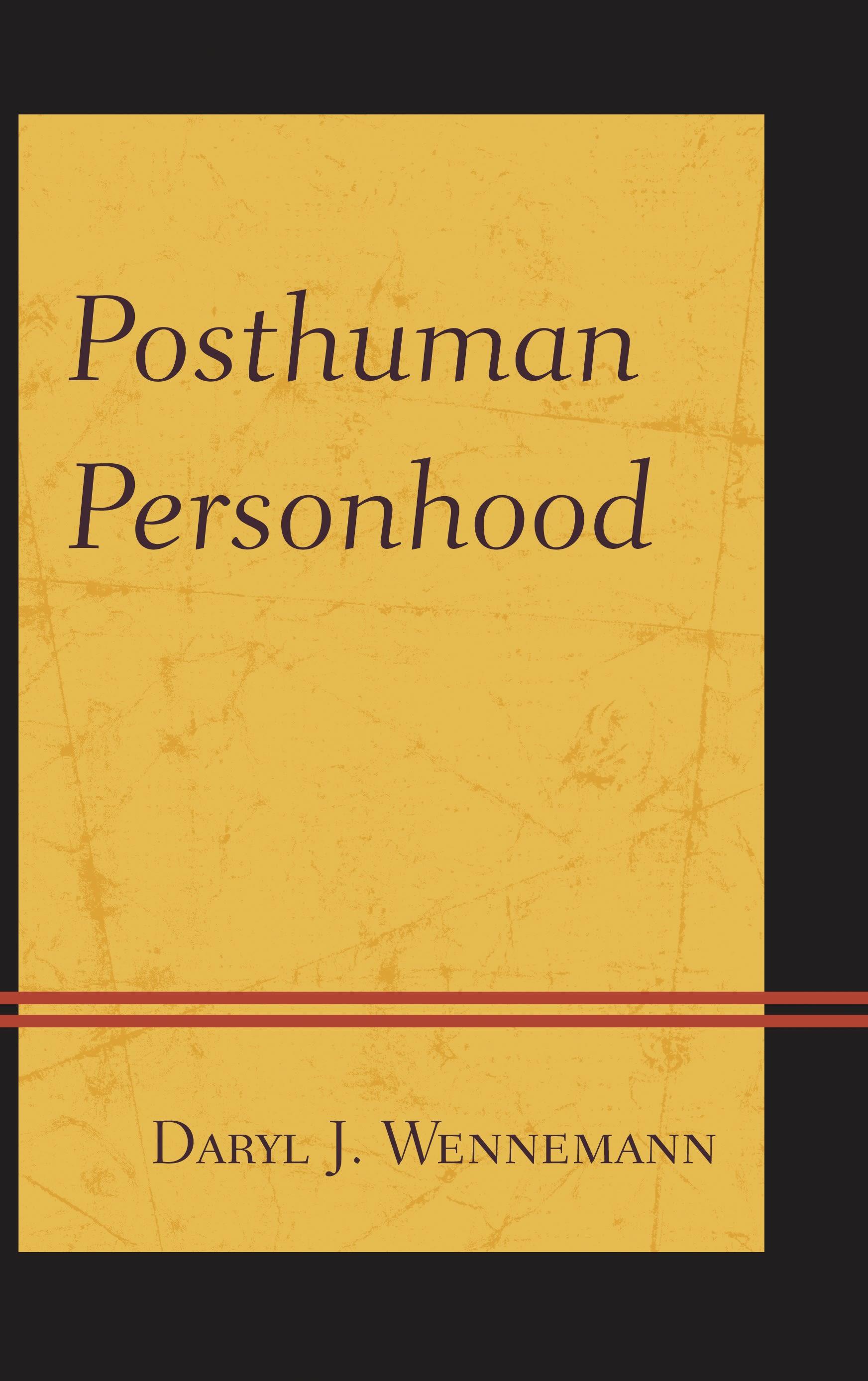
Posthuman Personhood takes up the ethical challenge posed by Francis Fukuyama’s work, Our Posthuman Future. Daryl J. Wennemann argues that the traditional concept of personhood may be fruitfully applied to the ethical challenge we facein a posthuman age. He draws upon Wilfrid Sellars’ treatment of the concept of a person within “the manifest image of man in the world.” Sellars proposed that we develop a stereoscopic view of reality that includes both a scientific understanding of the world and a meaningful place for persons living and acting in the world. Following Mary Anne Warren, Wennemann develops a distinction between two meanings of the term “human,” a biological meaning and a moral meaning, and maintains that all (biologically) humanbeings are persons. But, it is not necessarily the case that all personsmust be (biologically) human. After drawing on a contemporary version of Kant’s distinction between a theoretical possibility and a real possibility, the book posits that biologically non-human persons like robots, computers, or aliens are a theoretical possibility but that we do not know if they are a real possibility. Finally, Wennemann describes an ethic of self-limitation for the posthuman age.
Betal enkelt med kort, Klarna, Apple Pay eller Google Pay. Ikke fornøyd? Du har alltid 14 dagers angrerett. Les mer i våre vilkår. Har du spørsmål, send oss en e-post på hello@memmo.org.
Memmo gjør det enklere å studere – uansett hvor du er i verden. Hos oss samler du pensumbøker og smarte studieverktøy på ett og samme sted: sammendrag, quizer, podkaster og flashcards. Og så Ted, din studiekompis som svarer på alt du lurer på. Over 50 000 studenter studerer allerede her – bygget for at du skal lære raskere og stresse mindre.