
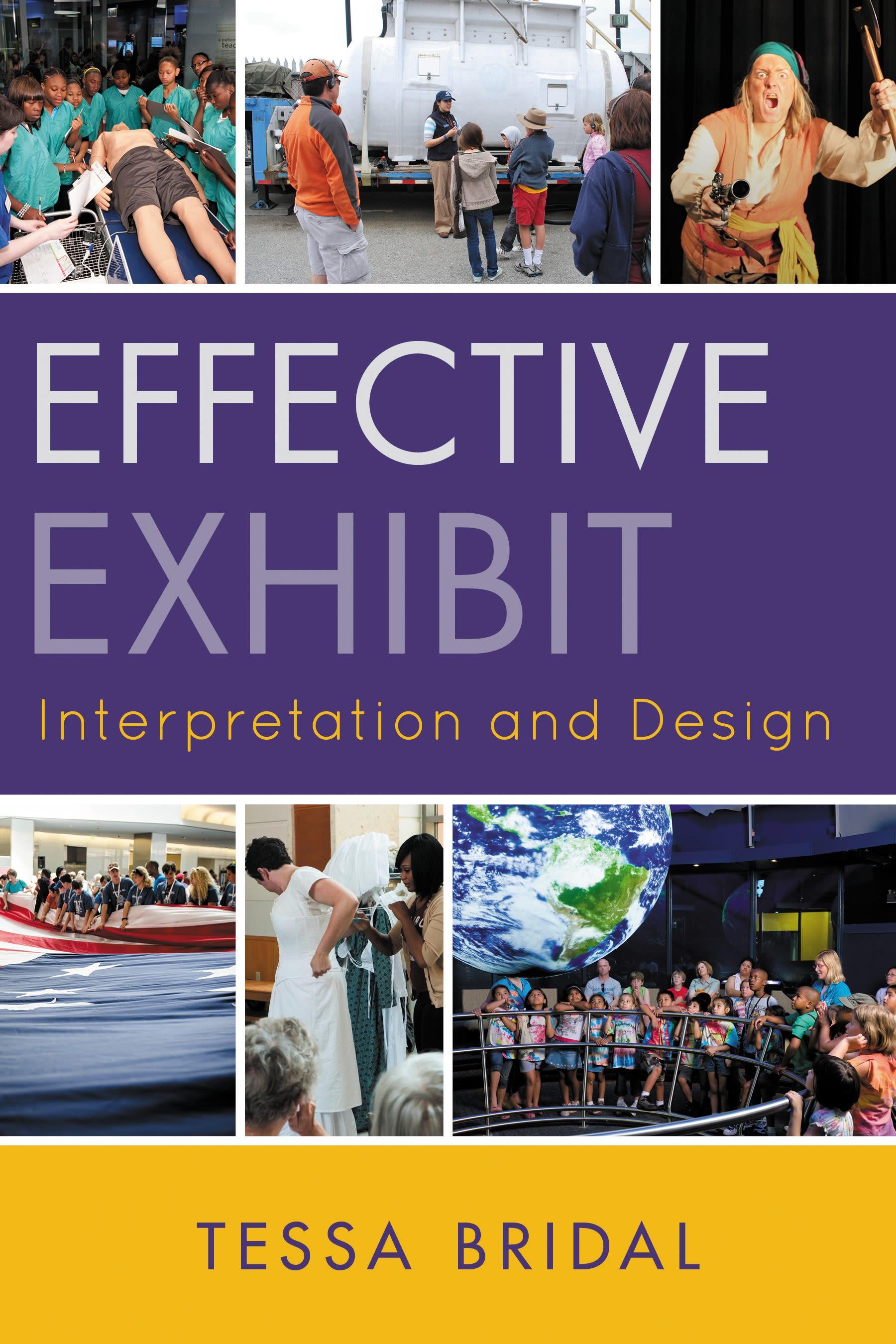
As the American Alliance of Museums’ (AAM) Standing Professional Committees Council tells us “exhibitions are the public face of museums. The effective presentation of collections and information in exhibitions is an activity unique to museums, and it is through their exhibitions that the vast majority of people know museums.”
Effective Exhibit Interpretation and Design examines the impact of an integrated approach to exhibit design and development on the effective creation and support of live interpretation of exhibit messages and institutional mission. Bridal argues that the interpreters who bring these exhibitions, an institution’s mission, collections, and stories to life and the forefront of a visitor’s attention are just as vital a part of an institution’s public face, and that neglecting to give live interpretation an equal seat at the table impoverishes the ultimate visitor experience.
Eight institutions collaborated with the author in examining the outcomes of approaching exhibit and live interpretation design and development collaboratively, the challenges of adding interpretation to spaces and exhibits not designed for it, and the guiding practices they have put into place. These institutions were: Imagine It! The Children's Museum of Atlanta, Minnesota History Center, The Missouri History Museum, the Museum of Science and Industry, Chicago, National Children’s Museum, The National Museum of American History, The Science Museum of Minnesota and The Science Museum of Virginia. Information was also shared by the Children’s Museum of Indianapolis and the Monterey Bay Aquarium.
Effective Exhibit Interpretation and Design examines the impact of an integrated approach to exhibit design and development on the effective creation and support of live interpretation of exhibit messages and institutional mission. Bridal argues that the interpreters who bring these exhibitions, an institution’s mission, collections, and stories to life and the forefront of a visitor’s attention are just as vital a part of an institution’s public face, and that neglecting to give live interpretation an equal seat at the table impoverishes the ultimate visitor experience.
Eight institutions collaborated with the author in examining the outcomes of approaching exhibit and live interpretation design and development collaboratively, the challenges of adding interpretation to spaces and exhibits not designed for it, and the guiding practices they have put into place. These institutions were: Imagine It! The Children's Museum of Atlanta, Minnesota History Center, The Missouri History Museum, the Museum of Science and Industry, Chicago, National Children’s Museum, The National Museum of American History, The Science Museum of Minnesota and The Science Museum of Virginia. Information was also shared by the Children’s Museum of Indianapolis and the Monterey Bay Aquarium.
Betal enkelt med kort, Klarna, Apple Pay eller Google Pay. Ikke fornøyd? Du har alltid 14 dagers angrerett. Les mer i våre vilkår. Har du spørsmål, send oss en e-post på hello@memmo.org.
Memmo gjør det enklere å studere – uansett hvor du er i verden. Hos oss samler du pensumbøker og smarte studieverktøy på ett og samme sted: sammendrag, quizer, podkaster og flashcards. Og så Ted, din studiekompis som svarer på alt du lurer på. Over 50 000 studenter studerer allerede her – bygget for at du skal lære raskere og stresse mindre.