
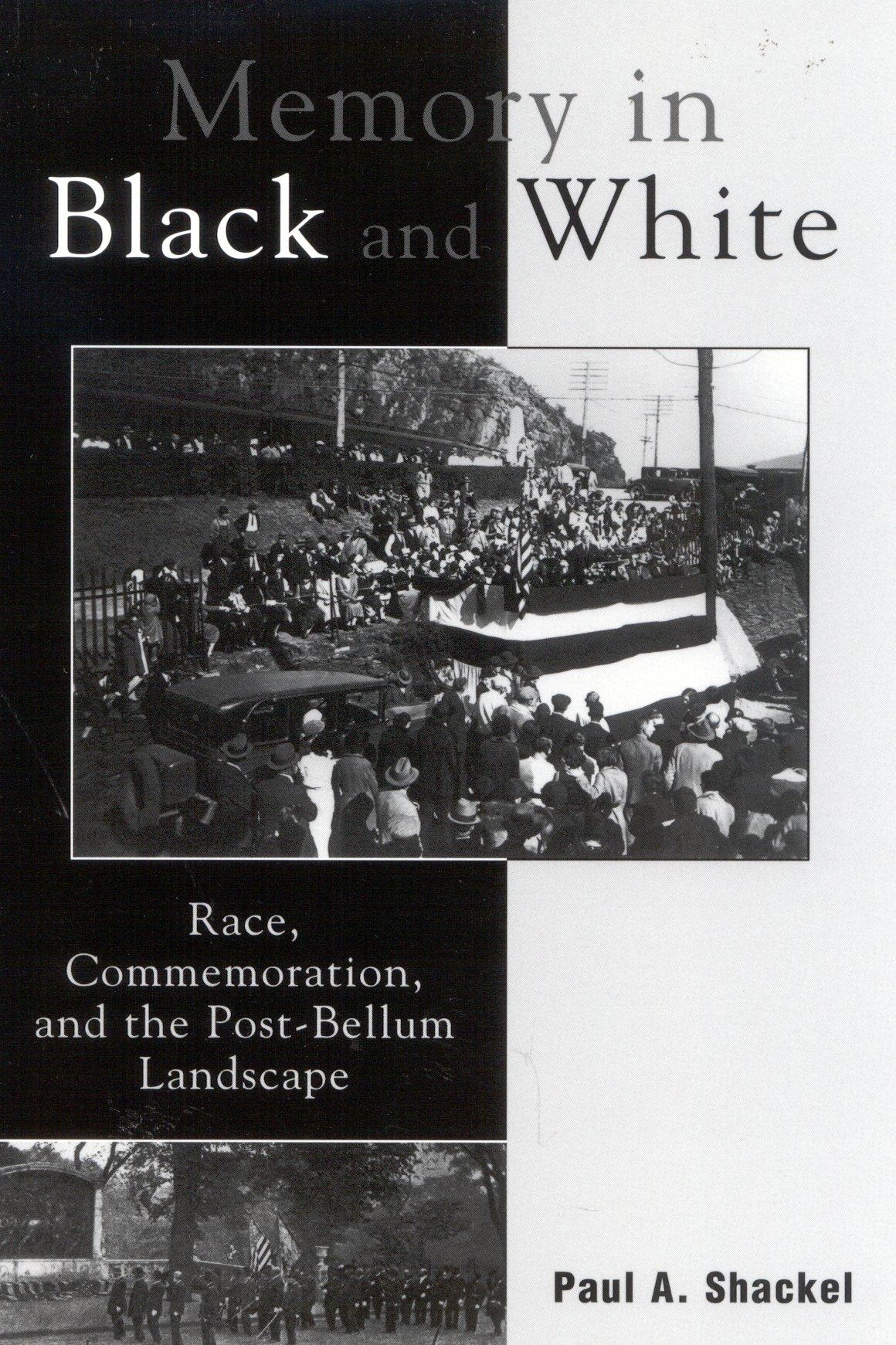
As a nation we bring many perspectives to our commemorative places and our ideas may change over time, especially on difficult topics like slavery and racism. Why a place is saved and how it is interpreted to visitors has much to do with our collective memory of the events that took place there. Using the skills of an archaeologist and a historian, Paul Shackel examines four well-known Civil War-era National Park sites and shows us how public memory shaped their creation and continues to shape their interpretation. Shackel shows us that 'public memory' is really 'public memories,' and interpretation may change dramatically from one generation to another as interpreters try to accommodate, or ignore, certain memories. Memory in Black and White is important reading for all who are interested in history and memory of landscapes, and will be especially useful to those involved in preserving and interpreting a controversial place. Visit the author's web page Visit the UMD Heritage Program web page
Betal enkelt med kort, Klarna, Apple Pay eller Google Pay. Ikke fornøyd? Du har alltid 14 dagers angrerett. Les mer i våre vilkår. Har du spørsmål, send oss en e-post på hello@memmo.org.
Memmo gjør det enklere å studere – uansett hvor du er i verden. Hos oss samler du pensumbøker og smarte studieverktøy på ett og samme sted: sammendrag, quizer, podkaster og flashcards. Og så Ted, din studiekompis som svarer på alt du lurer på. Over 50 000 studenter studerer allerede her – bygget for at du skal lære raskere og stresse mindre.