
I.B. Tauris in association with the Institute of Ismaili Studies
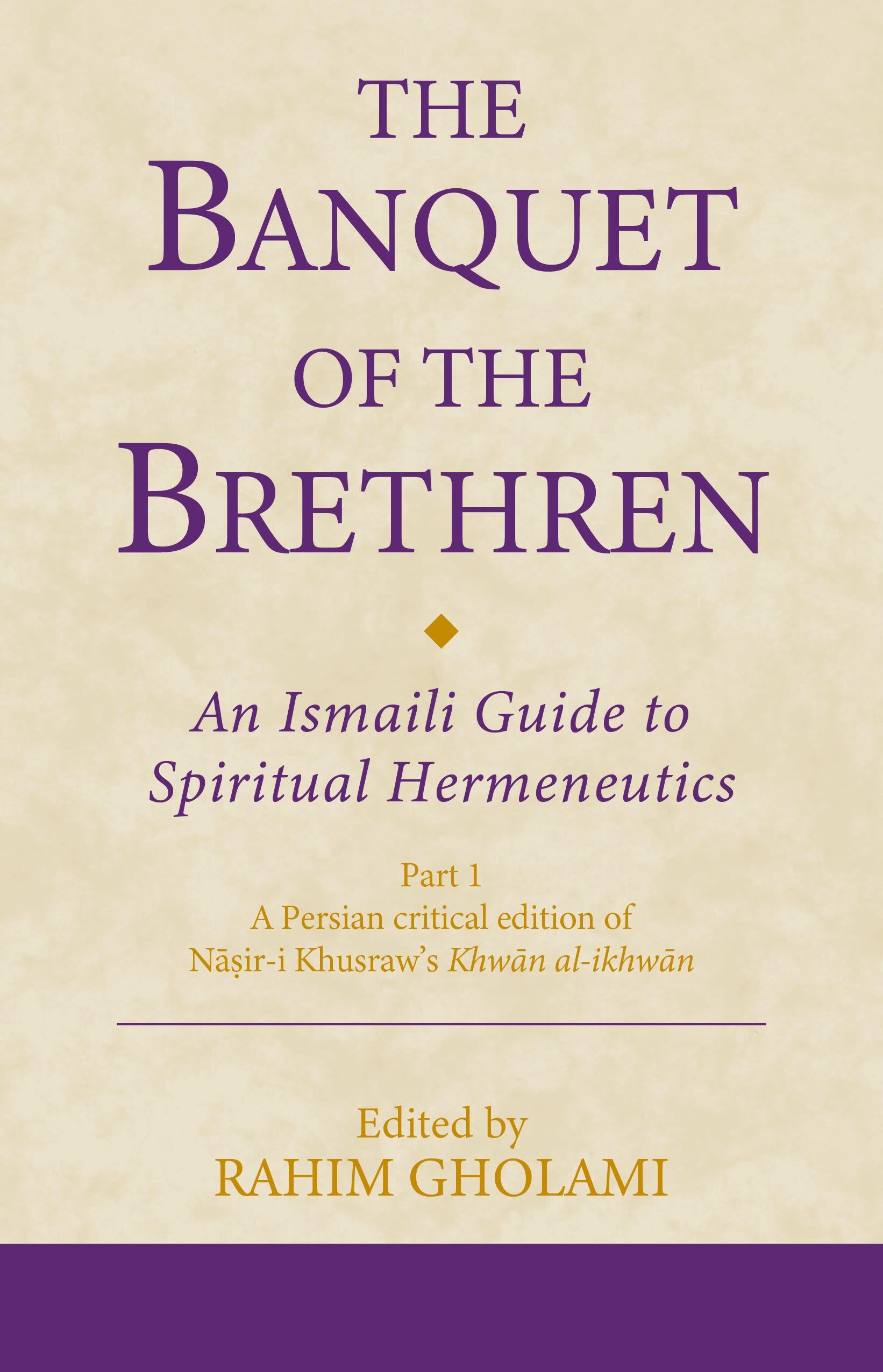
The Ismaili missionary and poet, Nasir-i Khusraw (d. after 1070), wrote Khwan al-ikhwan (The Banquet of the Brethren) when he was living in his remote mountain refuge of Yumgan in Badakhshan. A work of philosophical theology, it consists of a sequence of dynamic arguments for divine unicity (tawhid), the authority of the Prophet Muhammad, his legatee, 'Ali b. Abi Talib, and his descendants, the imams from the line of Isma'il b. Ja'far al-Sadiq. This new edition is based on two extant manuscripts of Khwan al-ikhwan making it a more comprehensive resource.
Written in Persian, Khwan al-ikhwan includes a precis of ideas found in a work by an earlier missionary, Abu Ya'qub al-Sijistani (d. ca. 971), the Kitab al-Yanabi', which Nasir-i Khusraw recast and then extended in 100 chapters. The current publication consists of a new Persian critical edition of the text, with an introduction that discusses Khwan al-ikhwan in the context of both Nasir-i Khusraw's other works and al-Sijistani's Kitab al-Yanabi, in addition to notes throughout. The book is an important example of Ismaili theology and a reflection of the learning of the age including the conception of a geo-centric cosmos, Aristotelian physics, and Neoplatonic philosophy, which greatly influenced the Ismaili missionaries (or da'is) of the Iranian lands. The editorial apparatus in this edition brings Khwan al-ikhwan to an even wider readership advancing the field of Ismaili Studies.
The Ismaili missionary and poet, Nasir-i Khusraw (d. after 1070), wrote Khwan al-ikhwan (The Banquet of the Brethren) when he was living in his remote mountain refuge of Yumgan in Badakhshan. A work of philosophical theology, it consists of a sequence of dynamic arguments for divine unicity (tawhid), the authority of the Prophet Muhammad, his legatee, 'Ali b. Abi Talib, and his descendants, the imams from the line of Isma'il b. Ja'far al-Sadiq. This new edition is based on two extant manuscripts of Khwan al-ikhwan making it a more comprehensive resource.
Written in Persian, Khwan al-ikhwan includes a precis of ideas found in a work by an earlier missionary, Abu Ya'qub al-Sijistani (d. ca. 971), the Kitab al-Yanabi', which Nasir-i Khusraw recast and then extended in 100 chapters. The current publication consists of a new Persian critical edition of the text, with an introduction that discusses Khwan al-ikhwan in the context of both Nasir-i Khusraw's other works and al-Sijistani's Kitab al-Yanabi, in addition to notes throughout. The book is an important example of Ismaili theology and a reflection of the learning of the age including the conception of a geo-centric cosmos, Aristotelian physics, and Neoplatonic philosophy, which greatly influenced the Ismaili missionaries (or da'is) of the Iranian lands. The editorial apparatus in this edition brings Khwan al-ikhwan to an even wider readership advancing the field of Ismaili Studies.
Betal enkelt med kort, Klarna, Apple Pay eller Google Pay. Ikke fornøyd? Du har alltid 14 dagers angrerett. Les mer i våre vilkår. Har du spørsmål, send oss en e-post på hello@memmo.org.
Memmo gjør det enklere å studere – uansett hvor du er i verden. Hos oss samler du pensumbøker og smarte studieverktøy på ett og samme sted: sammendrag, quizer, podkaster og flashcards. Og så Ted, din studiekompis som svarer på alt du lurer på. Over 50 000 studenter studerer allerede her – bygget for at du skal lære raskere og stresse mindre.