
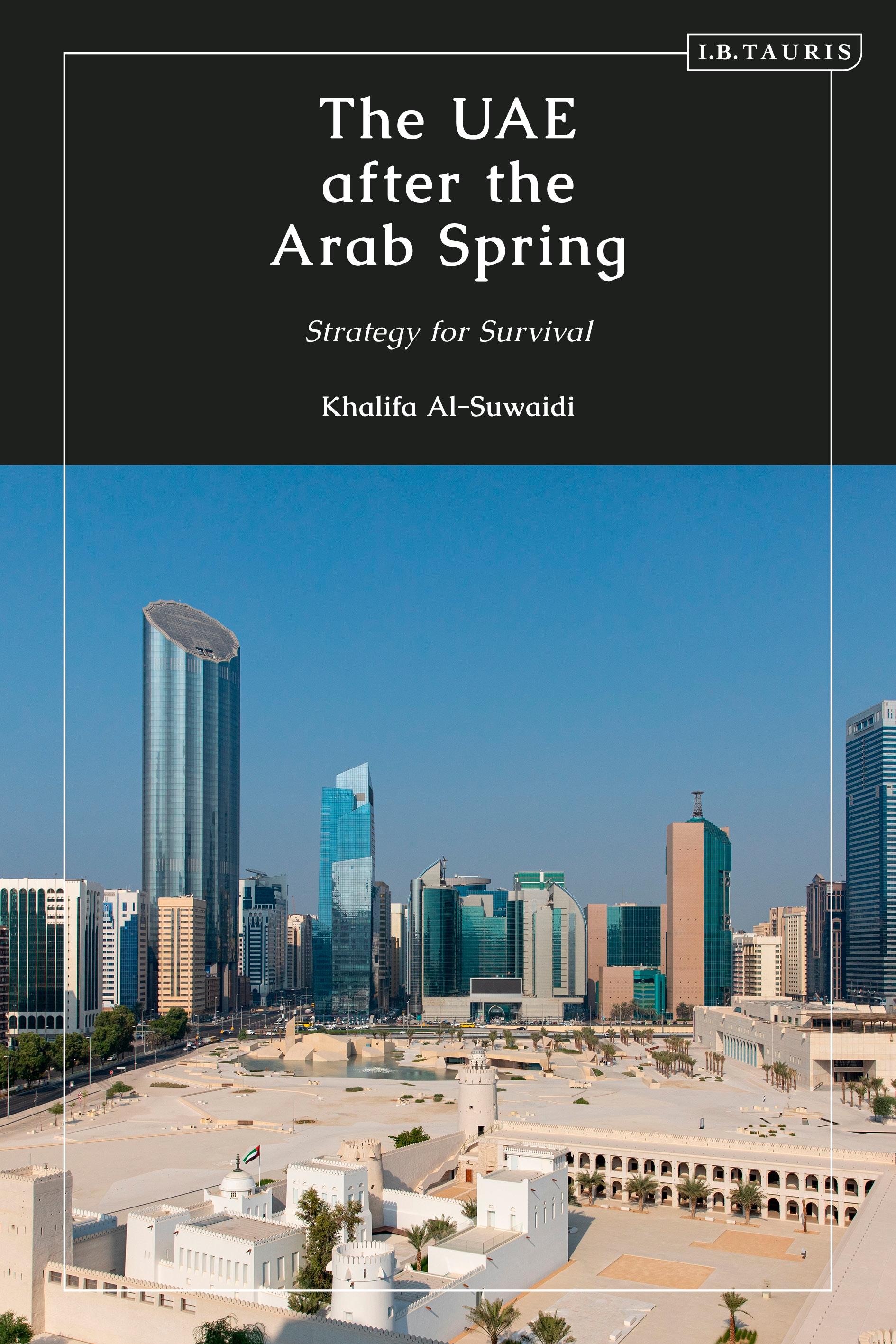
Why did the Gulf monarchies – and the UAE in particular - avoid the upheavals and challenges of the Arab uprisings? This book examines how the UAE survived the waves of regional unrest. It departs from attributing regime survival to rentier state theory and instead offers a more nuanced approach to understanding the pillars of regime legitimacy upon which the UAE now rests. In doing so, the book sheds light on the transformation of the UAE from a quietist state, which relied almost entirely upon an overseas security guarantor, to an assertive regional power in its own right.
Written by an Emirati author who understands the internal dynamics of the country, the book examines the state's proactive foreign policy and the changing domestic and regional environment influencing its decisions. The book argues that the UAE leadership encouraged a new national identity to evolve amid the pressures of modernity, particularly at a time when young Emiratis had access to information beyond government control via social media. This is also part of its shift away from a country based on a rentier economy to a situation where the citizens take more initiative, learn more skills, and increasingly enter the private sector to help the country prosper. This has given rise to a new Emirati identity that is politically conservative, economically neo-liberal and socially liberal. In providing an analysis of the policies of the UAE leadership before and after the Arab Spring, this book is a vital contribution to the literature on Emirati domestic and foreign policy and points to where the country might be headed.
Written by an Emirati author who understands the internal dynamics of the country, the book examines the state's proactive foreign policy and the changing domestic and regional environment influencing its decisions. The book argues that the UAE leadership encouraged a new national identity to evolve amid the pressures of modernity, particularly at a time when young Emiratis had access to information beyond government control via social media. This is also part of its shift away from a country based on a rentier economy to a situation where the citizens take more initiative, learn more skills, and increasingly enter the private sector to help the country prosper. This has given rise to a new Emirati identity that is politically conservative, economically neo-liberal and socially liberal. In providing an analysis of the policies of the UAE leadership before and after the Arab Spring, this book is a vital contribution to the literature on Emirati domestic and foreign policy and points to where the country might be headed.
Betal enkelt med kort, Klarna, Apple Pay eller Google Pay. Ikke fornøyd? Du har alltid 14 dagers angrerett. Les mer i våre vilkår. Har du spørsmål, send oss en e-post på hello@memmo.org.
Memmo gjør det enklere å studere – uansett hvor du er i verden. Hos oss samler du pensumbøker og smarte studieverktøy på ett og samme sted: sammendrag, quizer, podkaster og flashcards. Og så Ted, din studiekompis som svarer på alt du lurer på. Over 50 000 studenter studerer allerede her – bygget for at du skal lære raskere og stresse mindre.