
Choice Outstanding Academic Title for 2015
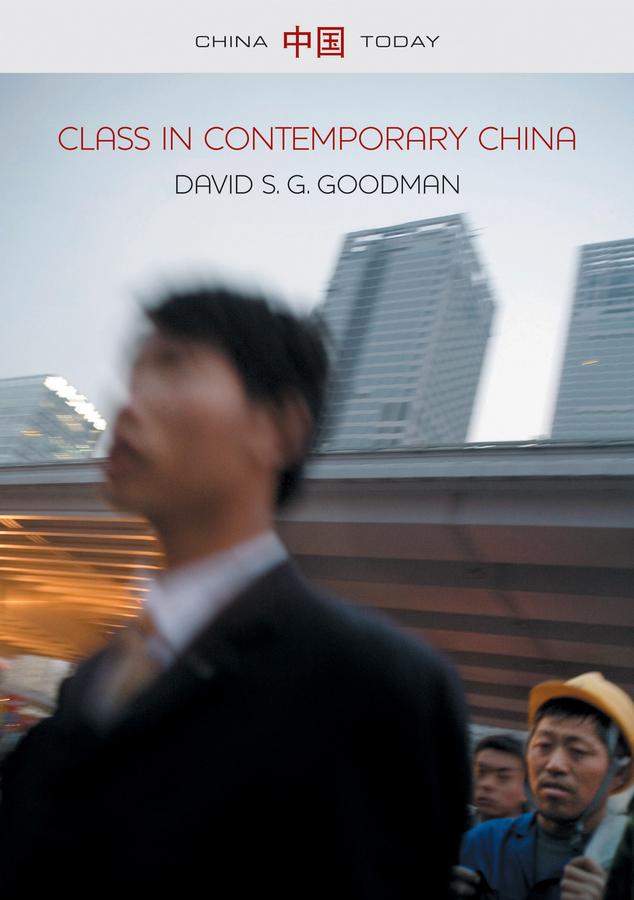
More than three decades of economic growth have led to significant social change in the People�s Republic of China. This timely book examines the emerging structures of class and social stratification: how they are interpreted and managed by the Chinese Communist Party, and how they are understood and lived by people themselves.
David Goodman details the emergence of a dominant class based on political power and wealth that has emerged from the institutions of the Party-state; a well-established middle class that is closely associated with the Party-state and a not-so-well-established entrepreneurial middle class; and several different subordinate classes in both the rural and urban areas. In doing so, he considers several critical issues: the extent to which the social basis of the Chinese political system has changed and the likely consequences; the impact of change on the old working class that was the socio-political mainstay of state socialism before the 1980s; the extent to which the migrant workers on whom much of the economic power of the PRC since the early 1980s has been based are becoming a new working class; and the consequences of China�s growing middle class, especially for politics.
The result is an invaluable guide for students and non-specialists interested in the contours of ongoing social change in China.
More than three decades of economic growth have led to significant social change in the People�s Republic of China. This timely book examines the emerging structures of class and social stratification: how they are interpreted and managed by the Chinese Communist Party, and how they are understood and lived by people themselves.
David Goodman details the emergence of a dominant class based on political power and wealth that has emerged from the institutions of the Party-state; a well-established middle class that is closely associated with the Party-state and a not-so-well-established entrepreneurial middle class; and several different subordinate classes in both the rural and urban areas. In doing so, he considers several critical issues: the extent to which the social basis of the Chinese political system has changed and the likely consequences; the impact of change on the old working class that was the socio-political mainstay of state socialism before the 1980s; the extent to which the migrant workers on whom much of the economic power of the PRC since the early 1980s has been based are becoming a new working class; and the consequences of China�s growing middle class, especially for politics.
The result is an invaluable guide for students and non-specialists interested in the contours of ongoing social change in China.
Betal enkelt med kort, Klarna, Apple Pay eller Google Pay. Ikke fornøyd? Du har alltid 14 dagers angrerett. Les mer i våre vilkår. Har du spørsmål, send oss en e-post på hello@memmo.org.
Memmo gjør det enklere å studere – uansett hvor du er i verden. Hos oss samler du pensumbøker og smarte studieverktøy på ett og samme sted: sammendrag, quizer, podkaster og flashcards. Og så Ted, din studiekompis som svarer på alt du lurer på. Over 50 000 studenter studerer allerede her – bygget for at du skal lære raskere og stresse mindre.
Du vil kanskje også like
Kjøp boken0