
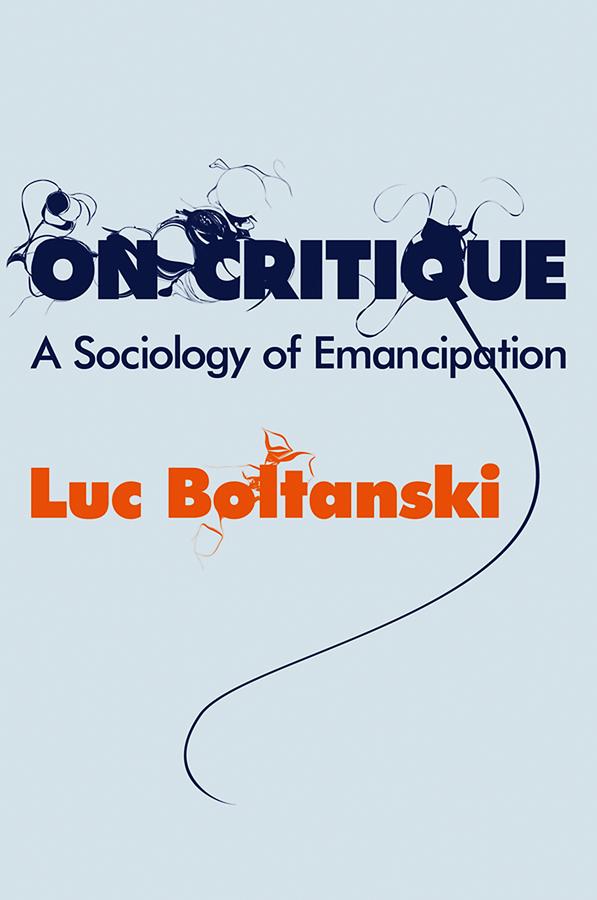
In critical sociology, description in terms of power relations underscores the potency of mechanisms of oppression, the way the oppressed passively endure them, going so far in their alienation as to
adopt the values that enslave them. Pragmatic sociology, by contrast, describes the actions of human beings who rebel but who are endowed with reason. It stresses their ability, in certain historical conditions, to rise up against their domination and construct new interpretations of reality in the service of critical activity.
In this major new book Boltanski develops a framework that makes it possible to reconcile these seemingly antagonistic approaches - the one determinist and assigning the leading role to the enlightening science of the sociologist, the other concerned to stick as closely as possible to what people say and do. This labour of unification leads him to rework central notions such as practice, institution, critique and, finally, ‘social reality,' all with the aim of contributing to a contemporary renewal of practices of emancipation.
Betal enkelt med kort, Klarna, Apple Pay eller Google Pay. Ikke fornøyd? Du har alltid 14 dagers angrerett. Les mer i våre vilkår. Har du spørsmål, send oss en e-post på hello@memmo.org.
Memmo gjør det enklere å studere – uansett hvor du er i verden. Hos oss samler du pensumbøker og smarte studieverktøy på ett og samme sted: sammendrag, quizer, podkaster og flashcards. Og så Ted, din studiekompis som svarer på alt du lurer på. Over 50 000 studenter studerer allerede her – bygget for at du skal lære raskere og stresse mindre.