
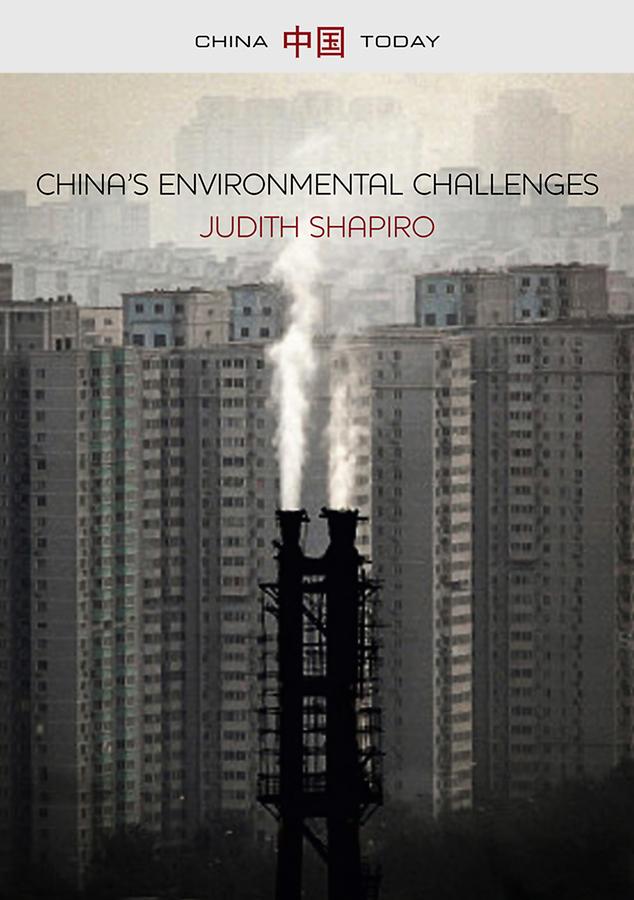
China’s huge environmental challenges are significant for us all. They affect not only the health and well-being of China but the very future of the planet.
In this trailblazing book, noted China specialist and environmentalist Judith Shapiro investigates China’s struggle to achieve sustainable development against a backdrop of acute rural poverty and soaring middle class consumption. Using five core analytical concepts to explore the complexities of this struggle - the implications of globalization, the challenges of governance; contested national identity, the evolution of civil society and problems of environmental justice and equity - Shapiro poses a number of pressing questions: Do the Chinese people have the right to the higher living standards enjoyed in the developed world? Are China's environmental problems so severe that they may shake the government's stability, legitimacy and control? To what extent are China’s environmental problems due to patterns of Western consumption? And in a world of increasing limits on resources and pollution "sinks," is it even possible to build an equitable system in which people enjoy equal access to resources without taking them from successive generations, from the poor, or from other species?
China and the planet are at a pivotal moment; the path towards a more sustainable development model is still open. But - as Shapiro persuasively argues - making this choice will require humility, creativity, and a rejection of business as usual. The window of opportunity will not be open much longer.
In this trailblazing book, noted China specialist and environmentalist Judith Shapiro investigates China’s struggle to achieve sustainable development against a backdrop of acute rural poverty and soaring middle class consumption. Using five core analytical concepts to explore the complexities of this struggle - the implications of globalization, the challenges of governance; contested national identity, the evolution of civil society and problems of environmental justice and equity - Shapiro poses a number of pressing questions: Do the Chinese people have the right to the higher living standards enjoyed in the developed world? Are China's environmental problems so severe that they may shake the government's stability, legitimacy and control? To what extent are China’s environmental problems due to patterns of Western consumption? And in a world of increasing limits on resources and pollution "sinks," is it even possible to build an equitable system in which people enjoy equal access to resources without taking them from successive generations, from the poor, or from other species?
China and the planet are at a pivotal moment; the path towards a more sustainable development model is still open. But - as Shapiro persuasively argues - making this choice will require humility, creativity, and a rejection of business as usual. The window of opportunity will not be open much longer.
Chapter 1 - 'The Big Picture' - is available online.
Betal enkelt med kort, Klarna, Apple Pay eller Google Pay. Ikke fornøyd? Du har alltid 14 dagers angrerett. Les mer i våre vilkår. Har du spørsmål, send oss en e-post på hello@memmo.org.
Memmo gjør det enklere å studere – uansett hvor du er i verden. Hos oss samler du pensumbøker og smarte studieverktøy på ett og samme sted: sammendrag, quizer, podkaster og flashcards. Og så Ted, din studiekompis som svarer på alt du lurer på. Over 50 000 studenter studerer allerede her – bygget for at du skal lære raskere og stresse mindre.
Du vil kanskje også like
Kjøp boken0