
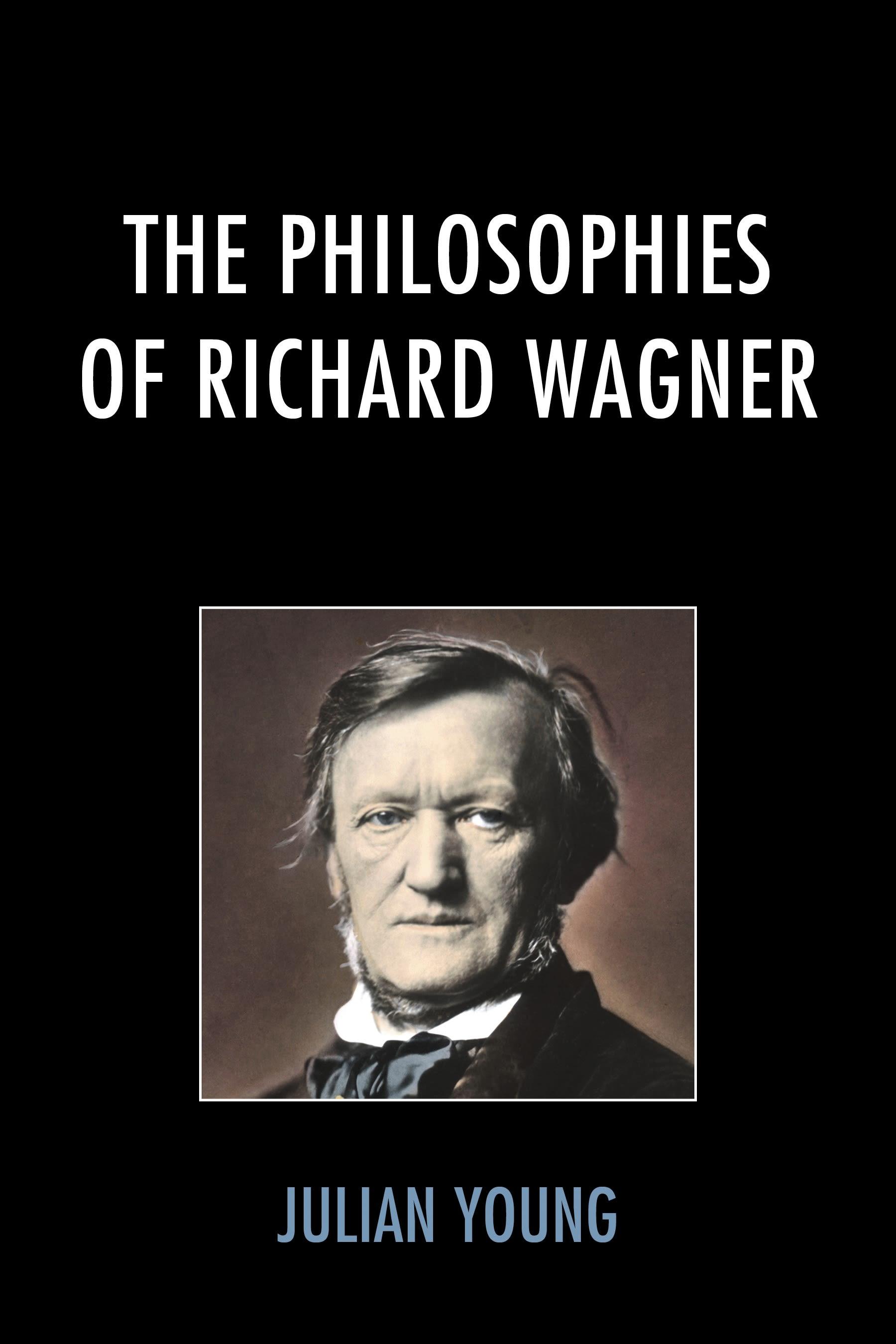
In addition to being a great composer, Richard Wagner was also an important philosopher. Julian Young begins by examining the philosophy of art and society Wagner constructs during his time as a revolutionary anarchist-communist. Modernity, Wagner argued, is to be rescued from its current anomie through the rebirth of Greek tragedy (the original Gesamtkunstwerk) in the form of the “artwork of the future," an artwork of which his own operas are the prototype.
Young then examines the entirely different philosophy Wagner constructs after his 1854 conversion from Hegelian optimism to Schopenhauerian pessimism. “Redemption” now becomes, not a future utopia in this world, but rather “transfigured” existence in another world, attainable only through death. Viewing Wagner’s operas through the lens of his philosophy, the book offers often novel interpretations of Lohengrin, The Ring cycle, Tristan und Isolde, Die Meistersinger, and Parsifal.
Finally, Young dresses the cause of Friedrich Nietzsche’s transformation from Wagner’s intimate friend and disciple into his most savage critic. Nietzsche’s fundamental accusation, it is argued, is one of betrayal: that Wagner betrayed his early, “life affirming” philosophy of art and life in favor of “life-denial." Nietzsche’s assertion and the final conclusion of the book is that our task, now, is to “become better Wagnerians than Wagner.”
Young then examines the entirely different philosophy Wagner constructs after his 1854 conversion from Hegelian optimism to Schopenhauerian pessimism. “Redemption” now becomes, not a future utopia in this world, but rather “transfigured” existence in another world, attainable only through death. Viewing Wagner’s operas through the lens of his philosophy, the book offers often novel interpretations of Lohengrin, The Ring cycle, Tristan und Isolde, Die Meistersinger, and Parsifal.
Finally, Young dresses the cause of Friedrich Nietzsche’s transformation from Wagner’s intimate friend and disciple into his most savage critic. Nietzsche’s fundamental accusation, it is argued, is one of betrayal: that Wagner betrayed his early, “life affirming” philosophy of art and life in favor of “life-denial." Nietzsche’s assertion and the final conclusion of the book is that our task, now, is to “become better Wagnerians than Wagner.”
Betal enkelt med kort, Klarna, Apple Pay eller Google Pay. Ikke fornøyd? Du har alltid 14 dagers angrerett. Les mer i våre vilkår. Har du spørsmål, send oss en e-post på hello@memmo.org.
Memmo gjør det enklere å studere – uansett hvor du er i verden. Hos oss samler du pensumbøker og smarte studieverktøy på ett og samme sted: sammendrag, quizer, podkaster og flashcards. Og så Ted, din studiekompis som svarer på alt du lurer på. Over 50 000 studenter studerer allerede her – bygget for at du skal lære raskere og stresse mindre.