
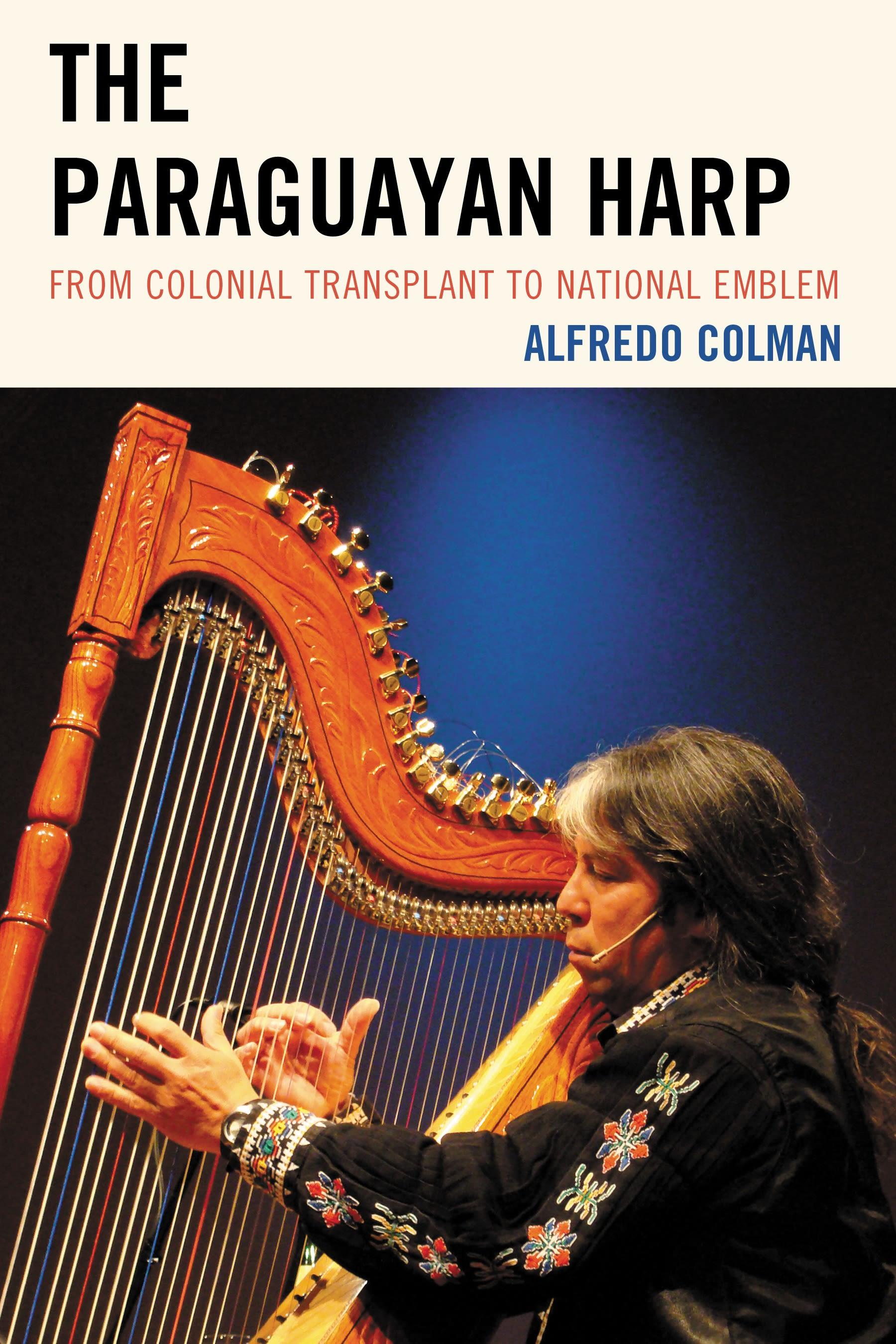
How did a music instrument transplated to South America by colonial Jesuit missionaries earn the official designation as Paraguay's cultural national symbol? This ethnomusicological and organological study of the Paraguayan diatonic harp in the twentieth century tells its story as an emblematic national musical instrument.
First used liturgically by Jesuit missions in colonial times, the transplanted European diatonic harp was transformed and adopted into the folk music vocabulary of Paraguay and the Río de la Plata region. Following the commercial success of Paraguayan harpist Félix Pérez Cardozo in the 1930s in Argentina, the instrument's symbolic value as an icon of social, cultural, and national identity was articulated in local traditions such as popular folk music festivals. It received designation of arpa paraguaya (Paraguayan harp) and, in 2010, official recognition as simbolo de la cultura nacional (cultural national symbol).
The author's fieldwork in Paraguay and continuous contact with composers, educators, festival organizers, harp performers, researchers, and festival organizers have provided unique insights into the development of the Paraguayan harp tradition as a cultural icon of the nation.
First used liturgically by Jesuit missions in colonial times, the transplanted European diatonic harp was transformed and adopted into the folk music vocabulary of Paraguay and the Río de la Plata region. Following the commercial success of Paraguayan harpist Félix Pérez Cardozo in the 1930s in Argentina, the instrument's symbolic value as an icon of social, cultural, and national identity was articulated in local traditions such as popular folk music festivals. It received designation of arpa paraguaya (Paraguayan harp) and, in 2010, official recognition as simbolo de la cultura nacional (cultural national symbol).
The author's fieldwork in Paraguay and continuous contact with composers, educators, festival organizers, harp performers, researchers, and festival organizers have provided unique insights into the development of the Paraguayan harp tradition as a cultural icon of the nation.
Betal enkelt med kort, Klarna, Apple Pay eller Google Pay. Ikke fornøyd? Du har alltid 14 dagers angrerett. Les mer i våre vilkår. Har du spørsmål, send oss en e-post på hello@memmo.org.
Memmo gjør det enklere å studere – uansett hvor du er i verden. Hos oss samler du pensumbøker og smarte studieverktøy på ett og samme sted: sammendrag, quizer, podkaster og flashcards. Og så Ted, din studiekompis som svarer på alt du lurer på. Over 50 000 studenter studerer allerede her – bygget for at du skal lære raskere og stresse mindre.