
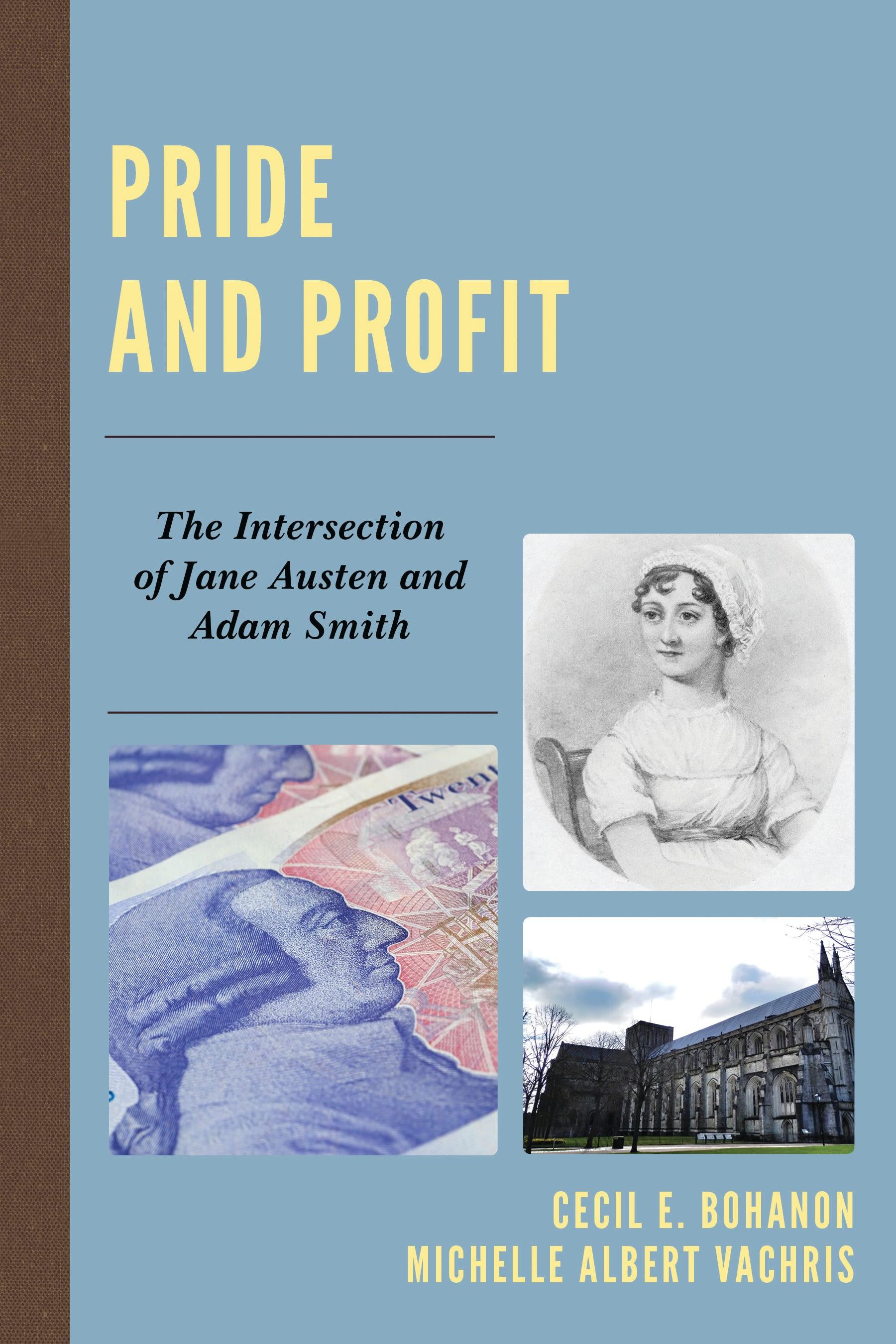
Jane Austen’s novels provide timeless insight into the practice of virtues and vices. They instruct their readers in rectitude and teach them that bad character inevitably leads to bad outcomes. Austen themes include the necessity of self-command, the importance of being “other directed”, the virtues of prudence, benevolence, and justice, as well as the follies of vanity, pride, greed, and the human tendency to misjudge oneself and others. Austen offers a no-nonsense moral philosophy of practical living that is quite similar to that of Scottish economist and philosopher Adam Smith. Smith’s book in moral philosophy The Theory of Moral Sentiments is a rich work that outlines how humans acquire and apply moral reasoning. It also provides a path to human happiness which emphasizes developing habits of virtue and propriety that direct and control individual ambition.
Pride and Profit explores the ways in which Austen’s novels reflect Smith’s ideas. More than this, they provide colorful illustrations of Smith’s ideas on self-command, prudence, benevolence, justice, and impartiality as well as vanity, pride, and greed. Jane Austen channels Adam Smith in her stories and characters, and more importantly, embellishes, refines, and explains Smith. Our understanding of Smith is improved and expanded by reading Jane Austen because she bring his insights to life and adds insights of her own. Bohanon and Vachris show how Smithian perspectives on virtue are depicted in Austen’s novels and how Smith’s and Austen’s perspectives reflect and define the bourgeoisie culture of the Enlightenment and industrial revolution.
Pride and Profit explores the ways in which Austen’s novels reflect Smith’s ideas. More than this, they provide colorful illustrations of Smith’s ideas on self-command, prudence, benevolence, justice, and impartiality as well as vanity, pride, and greed. Jane Austen channels Adam Smith in her stories and characters, and more importantly, embellishes, refines, and explains Smith. Our understanding of Smith is improved and expanded by reading Jane Austen because she bring his insights to life and adds insights of her own. Bohanon and Vachris show how Smithian perspectives on virtue are depicted in Austen’s novels and how Smith’s and Austen’s perspectives reflect and define the bourgeoisie culture of the Enlightenment and industrial revolution.
Sider: 202
Kategori: Ekonomi & Utveckling
e-ISBN: 9780739191842
Fraktvekt: 1.2 kg
Sendes innen: 1-2 dager
Betal enkelt med kort, Klarna, Apple Pay eller Google Pay. Ikke fornøyd? Du har alltid 14 dagers angrerett. Les mer i våre vilkår. Har du spørsmål, send oss en e-post på hello@memmo.org.
Memmo gjør det enklere å studere – uansett hvor du er i verden. Hos oss samler du pensumbøker og smarte studieverktøy på ett og samme sted: sammendrag, quizer, podkaster og flashcards. Og så Ted, din studiekompis som svarer på alt du lurer på. Over 50 000 studenter studerer allerede her – bygget for at du skal lære raskere og stresse mindre.