
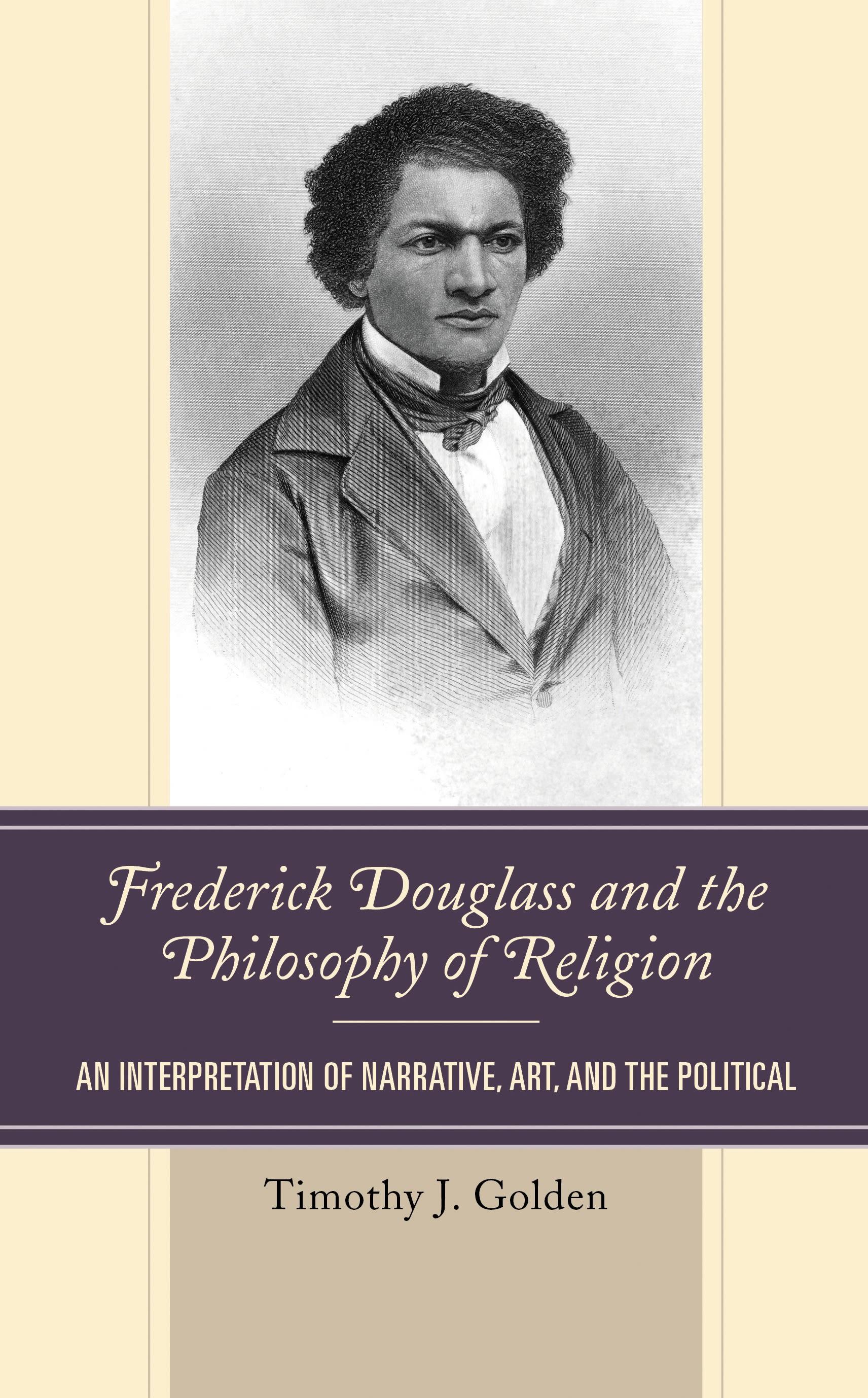
Frederick Douglass and the Philosophy of Religion: An Interpretation of Narrative, Art, and the Political addresses Douglass’s narrative method and the reformed epistemology of analytic theism within the context of Incarnational theology. Timothy J. Golden argues that in this context, Douglass’s use of narrative maintains a robust moral, social, and political engagement—and thus a closer connection to an authentic Christian theology—in a way that analytic theism does not. To show this contrast, Golden presents existential and phenomenological interpretations of Douglass, reading him alongside Kierkegaard, Kafka, and Levinas. Golden concludes the book with reflection on how Douglass’s Incarnational theology connects to his future philosophical and theological work, which understands consciousness (subjectivity) as saturated in time understood as history. Golden argues that the resulting view of consciousness helps to overcome abstraction in a variety of philosophical subfields, including jurisprudence and gender studies.
Betal enkelt med kort, Klarna, Apple Pay eller Google Pay. Ikke fornøyd? Du har alltid 14 dagers angrerett. Les mer i våre vilkår. Har du spørsmål, send oss en e-post på hello@memmo.org.
Memmo gjør det enklere å studere – uansett hvor du er i verden. Hos oss samler du pensumbøker og smarte studieverktøy på ett og samme sted: sammendrag, quizer, podkaster og flashcards. Og så Ted, din studiekompis som svarer på alt du lurer på. Over 50 000 studenter studerer allerede her – bygget for at du skal lære raskere og stresse mindre.