
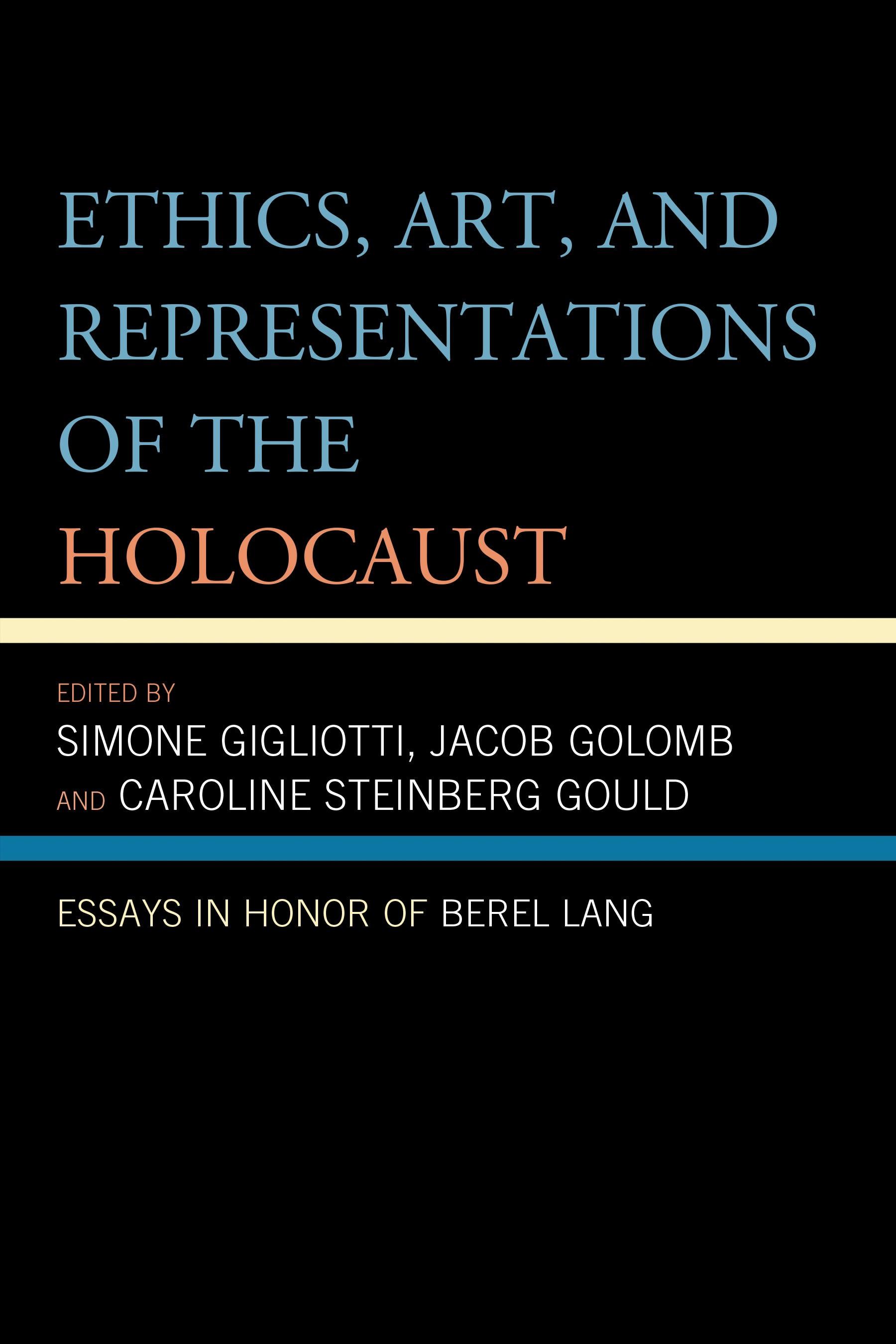
The American-Jewish philosopher Berel Lang has left an indelible impression on an unusually broad range of fields that few scholars can rival. From his earliest innovations in philosophy and meta-philosophy, to his ground-breaking work on representation, historical writing, and art after Auschwitz, he has contributed original and penetrating insights to the philosophical, literary, and historical debates on ethics, art, and the representation of the Nazi Genocide.
In honor of Berel Lang’s five decades of scholarly and philosophical contributions, the editors of Ethics, Art and Representations of the Holocaust invited seventeen eminent scholars from around the world to discuss Lang’s impact on their own research and to reflect on how the Nazi genocide continues to resonate in contemporary debates about antisemitism, commemoration and poetic representations. Resisting what Alvin Rosenfeld warned as “the end of the Holocaust”, the essays in this collection signal the Holocaust as an event without closure, of enduring resonance to new generations of scholars of genocide, Jewish studies, and philosophy.
Readers will find original and provocative essays on topics as diverse as Nietzsche’s reputed Nazi leanings, Jewish anti-apartheid activists in South Africa, wartime rescue in Poland, philosophical responses to the Holocaust, hidden diaries in the Kovno Ghetto, and analyses of reactions to trauma in classic literary works by Bernhard Schlink, Sylvia Plath, and Derek Walcott.
In honor of Berel Lang’s five decades of scholarly and philosophical contributions, the editors of Ethics, Art and Representations of the Holocaust invited seventeen eminent scholars from around the world to discuss Lang’s impact on their own research and to reflect on how the Nazi genocide continues to resonate in contemporary debates about antisemitism, commemoration and poetic representations. Resisting what Alvin Rosenfeld warned as “the end of the Holocaust”, the essays in this collection signal the Holocaust as an event without closure, of enduring resonance to new generations of scholars of genocide, Jewish studies, and philosophy.
Readers will find original and provocative essays on topics as diverse as Nietzsche’s reputed Nazi leanings, Jewish anti-apartheid activists in South Africa, wartime rescue in Poland, philosophical responses to the Holocaust, hidden diaries in the Kovno Ghetto, and analyses of reactions to trauma in classic literary works by Bernhard Schlink, Sylvia Plath, and Derek Walcott.
Betal enkelt med kort, Klarna, Apple Pay eller Google Pay. Ikke fornøyd? Du har alltid 14 dagers angrerett. Les mer i våre vilkår. Har du spørsmål, send oss en e-post på hello@memmo.org.
Memmo gjør det enklere å studere – uansett hvor du er i verden. Hos oss samler du pensumbøker og smarte studieverktøy på ett og samme sted: sammendrag, quizer, podkaster og flashcards. Og så Ted, din studiekompis som svarer på alt du lurer på. Over 50 000 studenter studerer allerede her – bygget for at du skal lære raskere og stresse mindre.