
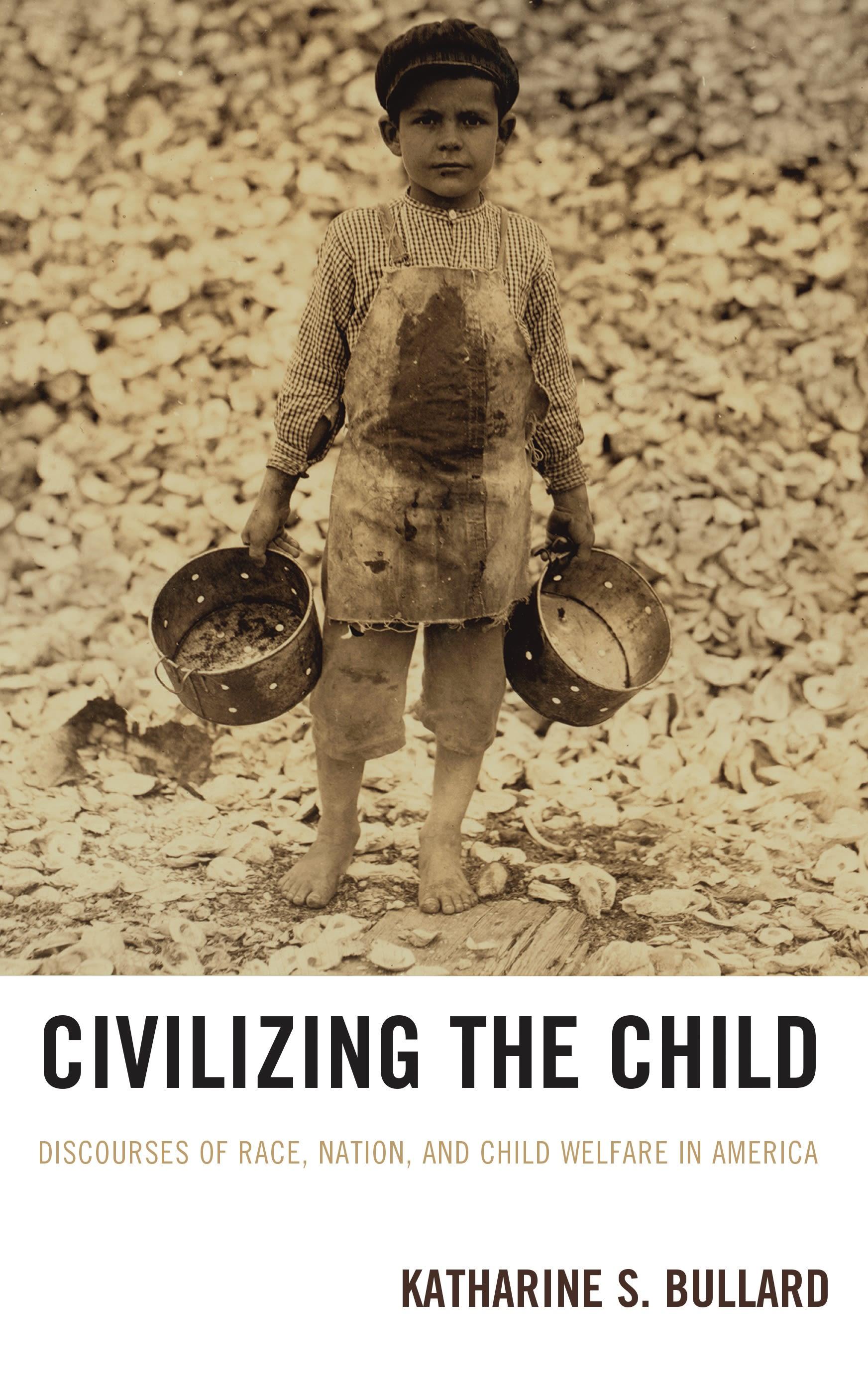
In Civilizing the Child: Discourses of Race, Nation, and Child Welfare in America, Katherine S. Bullard analyzes the discourse of child welfare advocates who argued for the notion of a racialized ideal child. This ideal child, limited to white, often native-born children, was at the center of arguments for material support to children and education for their parents. This book illuminates important limitations in the Progressive approach to social welfare and helps to explain the current dearth of support for poor children.
Civilizing the Child tracks the growing social concern with children in the nineteenth and early-twentieth centuries. The author uses seminal figures and institutions to look at the origins of the welfare state. Chapters focus on Charles Loring Brace, Jacob Riis, residents of the Hull House Settlement, and the staff of U.S. Children’s Bureau, analyzing their work to unpack the assumptions about American identity that made certain children belong and others remain outsiders. Bullard traces the ways in which child welfare advocates used racialized language and emphasized the “civilizing mission” to argue for support of white native-born children. This language focused on the future citizenship of some children as an argument for their support and protection.
Civilizing the Child tracks the growing social concern with children in the nineteenth and early-twentieth centuries. The author uses seminal figures and institutions to look at the origins of the welfare state. Chapters focus on Charles Loring Brace, Jacob Riis, residents of the Hull House Settlement, and the staff of U.S. Children’s Bureau, analyzing their work to unpack the assumptions about American identity that made certain children belong and others remain outsiders. Bullard traces the ways in which child welfare advocates used racialized language and emphasized the “civilizing mission” to argue for support of white native-born children. This language focused on the future citizenship of some children as an argument for their support and protection.
Betal enkelt med kort, Klarna, Apple Pay eller Google Pay. Ikke fornøyd? Du har alltid 14 dagers angrerett. Les mer i våre vilkår. Har du spørsmål, send oss en e-post på hello@memmo.org.
Memmo gjør det enklere å studere – uansett hvor du er i verden. Hos oss samler du pensumbøker og smarte studieverktøy på ett og samme sted: sammendrag, quizer, podkaster og flashcards. Og så Ted, din studiekompis som svarer på alt du lurer på. Over 50 000 studenter studerer allerede her – bygget for at du skal lære raskere og stresse mindre.