
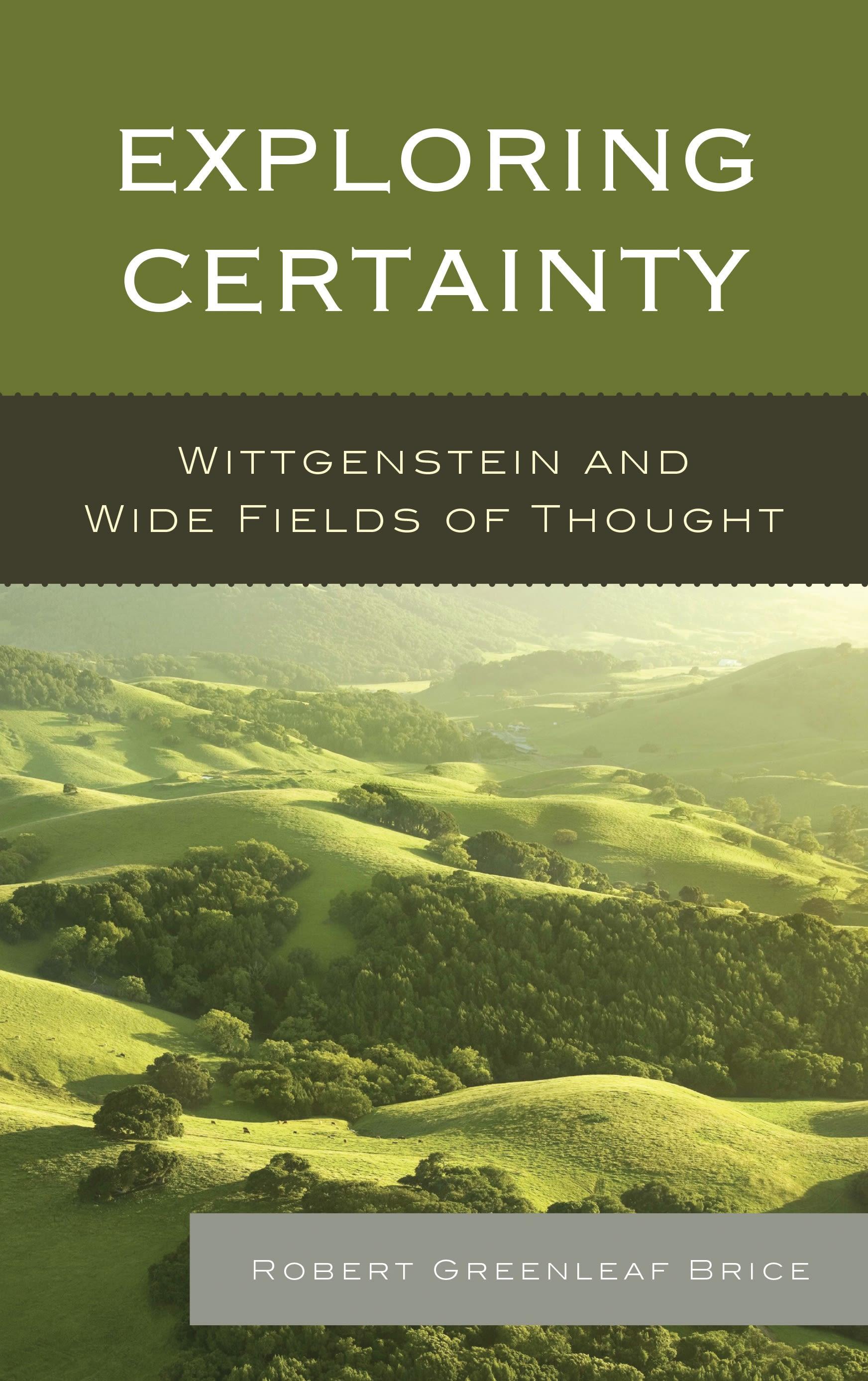
Ludwig Wittgenstein’s On Certainty explores a myriad of new and important ideas regarding our notions of belief, knowledge, skepticism, and certainty. During the course of his exploration, Wittgenstein makes a fascinating new discovery about certitude, namely, that it is categorically distinct from knowledge. As his investigation advances, he recognizes that certainty must be non-propositional and non-ratiocinated; borne out not in the things we say, but in our actions, our deeds. Many philosophers working outside of epistemology recognized Wittgenstein's insights and determined that his work's abrupt end might serve as an excellent launching point for still further philosophical expeditions. In Exploring Certainty: Wittgenstein and Wide Fields of Thought, Robert Greenleaf Bricesurveys some of this rich topography. Wittgenstein's writings serve as a point of departure for Brice's own ideas about certainty. He shows how Wittgenstein's rough and unpolished notion of certitude might be smoothed out and refined in a way to benefit studies of morality, aesthetics, cognitive science, philosophy of mathematics. Brice's work opens new avenues of thought for scholars and students of the Wittgensteinian tradition, while introducing original philosophies concerning issues central to human knowledge and cognition.
Betal enkelt med kort, Klarna, Apple Pay eller Google Pay. Ikke fornøyd? Du har alltid 14 dagers angrerett. Les mer i våre vilkår. Har du spørsmål, send oss en e-post på hello@memmo.org.
Memmo gjør det enklere å studere – uansett hvor du er i verden. Hos oss samler du pensumbøker og smarte studieverktøy på ett og samme sted: sammendrag, quizer, podkaster og flashcards. Og så Ted, din studiekompis som svarer på alt du lurer på. Over 50 000 studenter studerer allerede her – bygget for at du skal lære raskere og stresse mindre.