
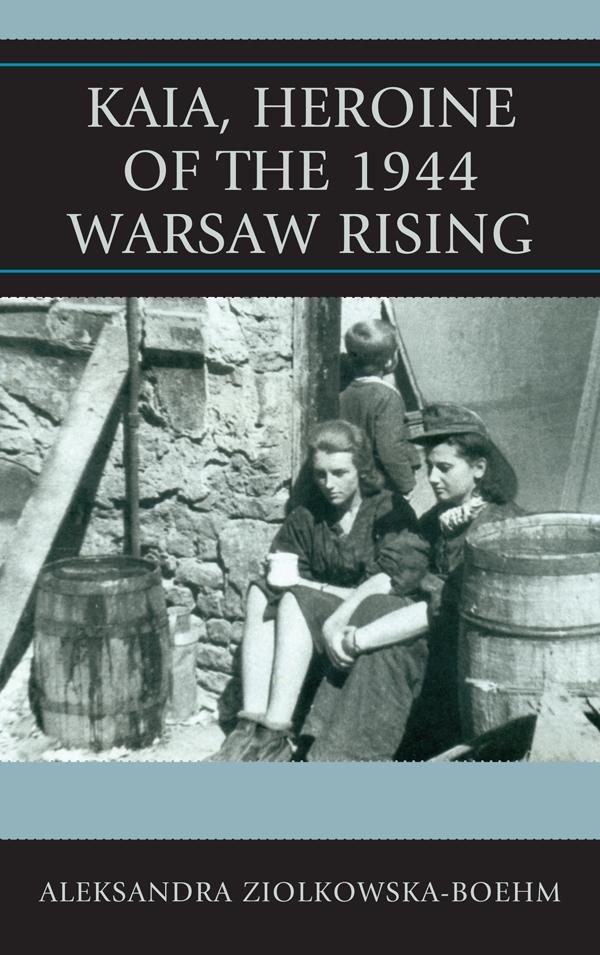
Kaia, Heroine of the 1944 Warsaw Rising tells the story of one woman, whose life encompasses a century of Polish history. Full of tragic and compelling experiences such as life in Siberia, Warsaw before World War II, the German occupation, the Warsaw Rising, and life in the Soviet Ostashkov prison, Kaia was deeply involved with the battle that decimated Warsaw in 1944 as a member of the resistance army and the rebuilding of the city as an architect years later.
Kaia’s father was expelled from Poland for conspiring against the Russian czar. She spent her early childhood near Altaj Mountain and remembered Siberia as a “paradise”. In 1922, the family returned to free Poland, the train trip taking a year. Kaia entered the school system, studied architecture, and joined the Armia Krajowa in 1942. After the legendary partisan Hubal’s death, a courier gave Kaia the famous leader’s Virtuti Militari Award to protect. She carried the medal for 54 years. After the Warsaw Rising collapsed, she was captured by the Russian NKVD in Bialystok and imprisoned. In one of many interrogations, a Russian asked about Hubal’s award. When Kaia replied that it was a religious relic from her father, she received only a puzzled look from the interrogator. Knowing that another interrogation could end differently, she hid the award in the heel of her shoe where it was never discovered.
In 1946, Kaia, very ill and weighing only 84 pounds, returned to Poland, where she regained her health and later worked as an architect to the rebuild the totally decimated Warsaw.
Kaia’s father was expelled from Poland for conspiring against the Russian czar. She spent her early childhood near Altaj Mountain and remembered Siberia as a “paradise”. In 1922, the family returned to free Poland, the train trip taking a year. Kaia entered the school system, studied architecture, and joined the Armia Krajowa in 1942. After the legendary partisan Hubal’s death, a courier gave Kaia the famous leader’s Virtuti Militari Award to protect. She carried the medal for 54 years. After the Warsaw Rising collapsed, she was captured by the Russian NKVD in Bialystok and imprisoned. In one of many interrogations, a Russian asked about Hubal’s award. When Kaia replied that it was a religious relic from her father, she received only a puzzled look from the interrogator. Knowing that another interrogation could end differently, she hid the award in the heel of her shoe where it was never discovered.
In 1946, Kaia, very ill and weighing only 84 pounds, returned to Poland, where she regained her health and later worked as an architect to the rebuild the totally decimated Warsaw.
Betal enkelt med kort, Klarna, Apple Pay eller Google Pay. Ikke fornøyd? Du har alltid 14 dagers angrerett. Les mer i våre vilkår. Har du spørsmål, send oss en e-post på hello@memmo.org.
Memmo gjør det enklere å studere – uansett hvor du er i verden. Hos oss samler du pensumbøker og smarte studieverktøy på ett og samme sted: sammendrag, quizer, podkaster og flashcards. Og så Ted, din studiekompis som svarer på alt du lurer på. Over 50 000 studenter studerer allerede her – bygget for at du skal lære raskere og stresse mindre.