
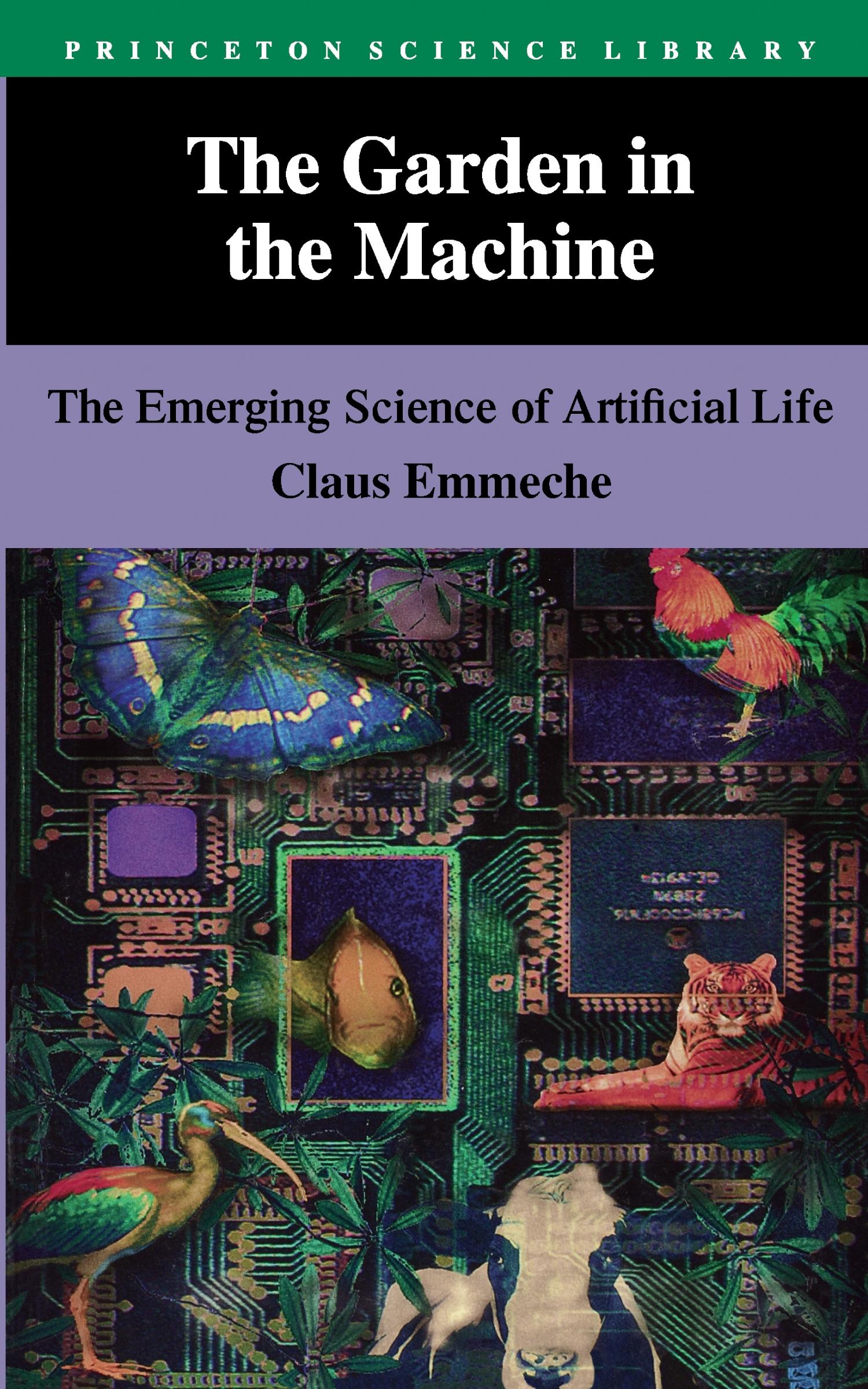
What is life? Is it just the biologically familiar--birds, trees, snails, people--or is it an infinitely complex set of patterns that a computer could simulate? What role does intelligence play in separating the organic from the inorganic, the living from the inert? Does life evolve along a predestined path, or does it suddenly emerge from what appeared lifeless and programmatic?
In this easily accessible and wide-ranging survey, Claus Emmeche outlines many of the challenges and controversies involved in the dynamic and curious science of artificial life. Emmeche describes the work being done by an international network of biologists, computer scientists, and physicists who are using computers to study life as it could be, or as it might evolve under conditions different from those on earth.
Many artificial-life researchers believe that they can create new life in the computer by simulating the processes observed in traditional, biological life-forms. The flight of a flock of birds, for example, can be reproduced faithfully and in all its complexity by a relatively simple computer program that is designed to generate electronic "boids." Are these "boids" then alive? The central problem, Emmeche notes, lies in defining the salient differences between biological life and computer simulations of its processes. And yet, if we can breathe life into a computer, what might this mean for our other assumptions about what it means to be alive?
The Garden in the Machine touches on every aspect of this complex and rapidly developing discipline, including its connections to artificial intelligence, chaos theory, computational theory, and studies of emergence. Drawing on the most current work in the field, this book is a major overview of artificial life. Professionals and nonscientists alike will find it an invaluable guide to concepts and technologies that may forever change our definition of life.
Betal enkelt med kort, Klarna, Apple Pay eller Google Pay. Ikke fornøyd? Du har alltid 14 dagers angrerett. Les mer i våre vilkår. Har du spørsmål, send oss en e-post på hello@memmo.org.
Memmo gjør det enklere å studere – uansett hvor du er i verden. Hos oss samler du pensumbøker og smarte studieverktøy på ett og samme sted: sammendrag, quizer, podkaster og flashcards. Og så Ted, din studiekompis som svarer på alt du lurer på. Over 50 000 studenter studerer allerede her – bygget for at du skal lære raskere og stresse mindre.