
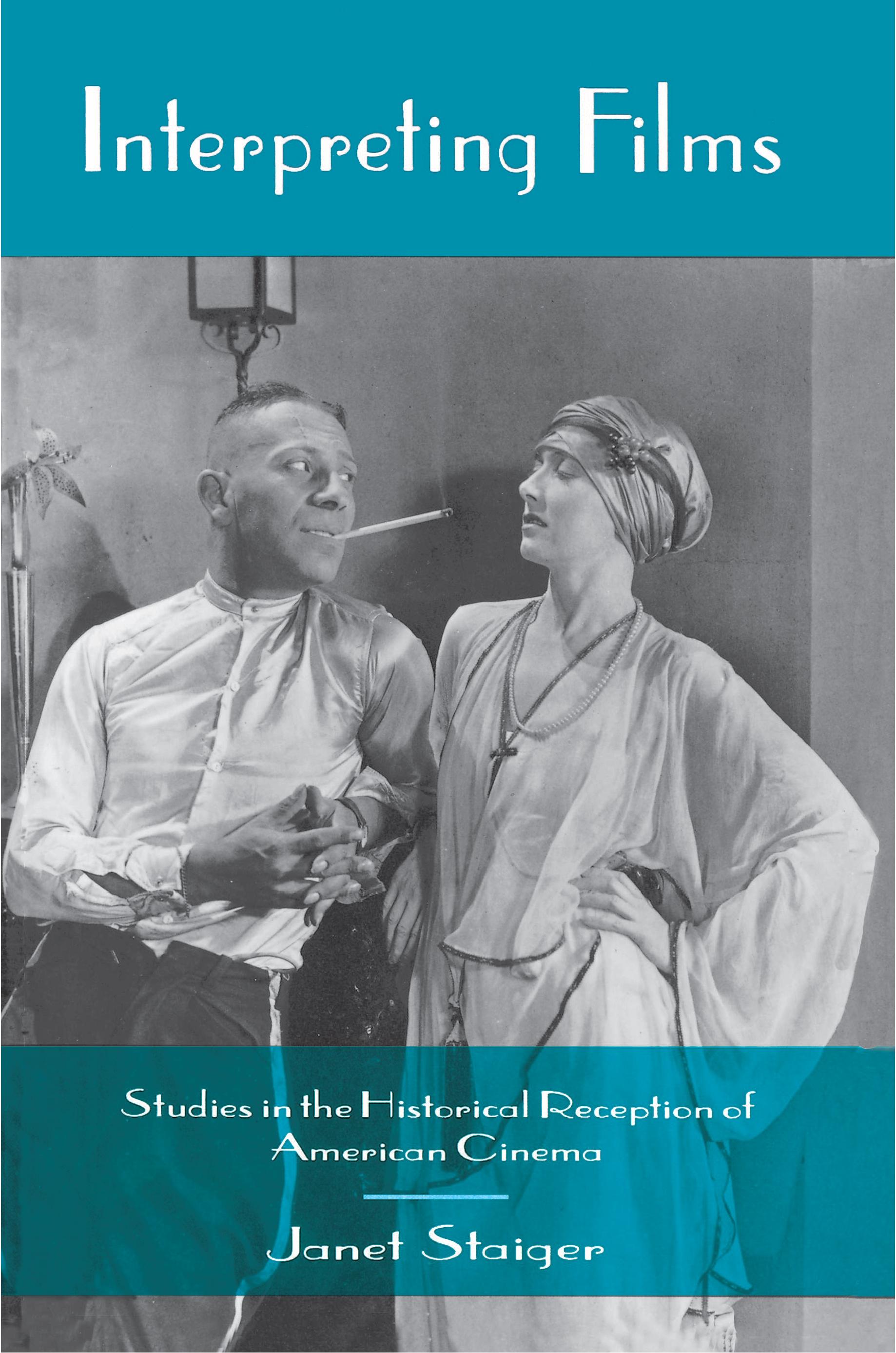
Employing a wide range of examples from Uncle Tom's Cabin and Birth of a Nation to Zelig and Personal Best, Janet Staiger argues that a historical examination of spectators' responses to films can make a valuable contribution to the history, criticism, and philosophy of cultural products. She maintains that as artifacts, films do not contain immanent meanings, that differences among interpretations have historical bases, and that these variations are due to social, political, and economic conditions as well as the viewers' constructed images of themselves. After proposing a theory of reception study, the author demonstrates its application mainly through analyzing the varying responses of audiences to certain films at specific moments in history. Staiger gives special attention to how questions of class, gender, sexual preference, race, and ethnicity enter into film viewers' interpretations. Her analysis reflects recent developments in post-structuralism, cognitive psychology, psychoanalysis, and cultural studies, and includes a discussion of current reader-response models in literary and film studies as well as an alternative approach for thinking about historical readers and spectators.
Betal enkelt med kort, Klarna, Apple Pay eller Google Pay. Ikke fornøyd? Du har alltid 14 dagers angrerett. Les mer i våre vilkår. Har du spørsmål, send oss en e-post på hello@memmo.org.
Memmo gjør det enklere å studere – uansett hvor du er i verden. Hos oss samler du pensumbøker og smarte studieverktøy på ett og samme sted: sammendrag, quizer, podkaster og flashcards. Og så Ted, din studiekompis som svarer på alt du lurer på. Over 50 000 studenter studerer allerede her – bygget for at du skal lære raskere og stresse mindre.