
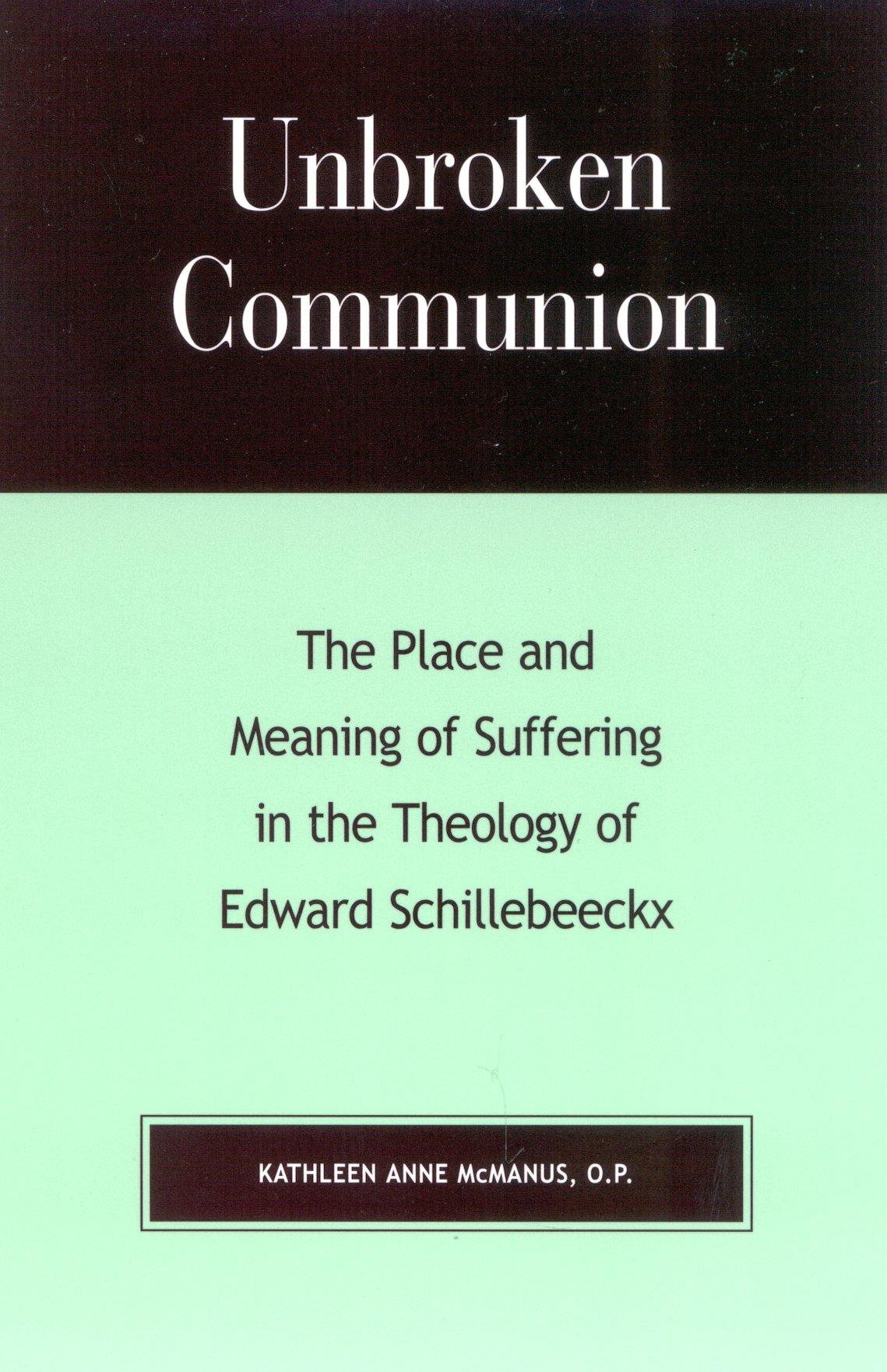
The reality of suffering is the greatest challenge to faith in the goodness of creation and the possibility of salvation. Edward Schillebeeckx not only takes this into account, but dialectically incorporates the reality of suffering into a theology generally defined by its focus on the interrelated themes of creation, salvation, and eschatological hope. In Unbroken Communion, Kathleen Anne McManus, O.P., traces the origins of Schillebeeckx's thought, its development, and its consequences.
Schillebeeckx grounds his entire theological project in the promise of a divine/human future made visible in creation and entrusted to human freedom. Because suffering is so tangibly present in human experience, it provides the means, dialectically, of imaging the horizon of our hope. It is thus that Schillebeeckx turns suffering into hope.
Schillebeeckx grounds his entire theological project in the promise of a divine/human future made visible in creation and entrusted to human freedom. Because suffering is so tangibly present in human experience, it provides the means, dialectically, of imaging the horizon of our hope. It is thus that Schillebeeckx turns suffering into hope.
Betal enkelt med kort, Klarna, Apple Pay eller Google Pay. Ikke fornøyd? Du har alltid 14 dagers angrerett. Les mer i våre vilkår. Har du spørsmål, send oss en e-post på hello@memmo.org.
Memmo gjør det enklere å studere – uansett hvor du er i verden. Hos oss samler du pensumbøker og smarte studieverktøy på ett og samme sted: sammendrag, quizer, podkaster og flashcards. Og så Ted, din studiekompis som svarer på alt du lurer på. Over 50 000 studenter studerer allerede her – bygget for at du skal lære raskere og stresse mindre.