
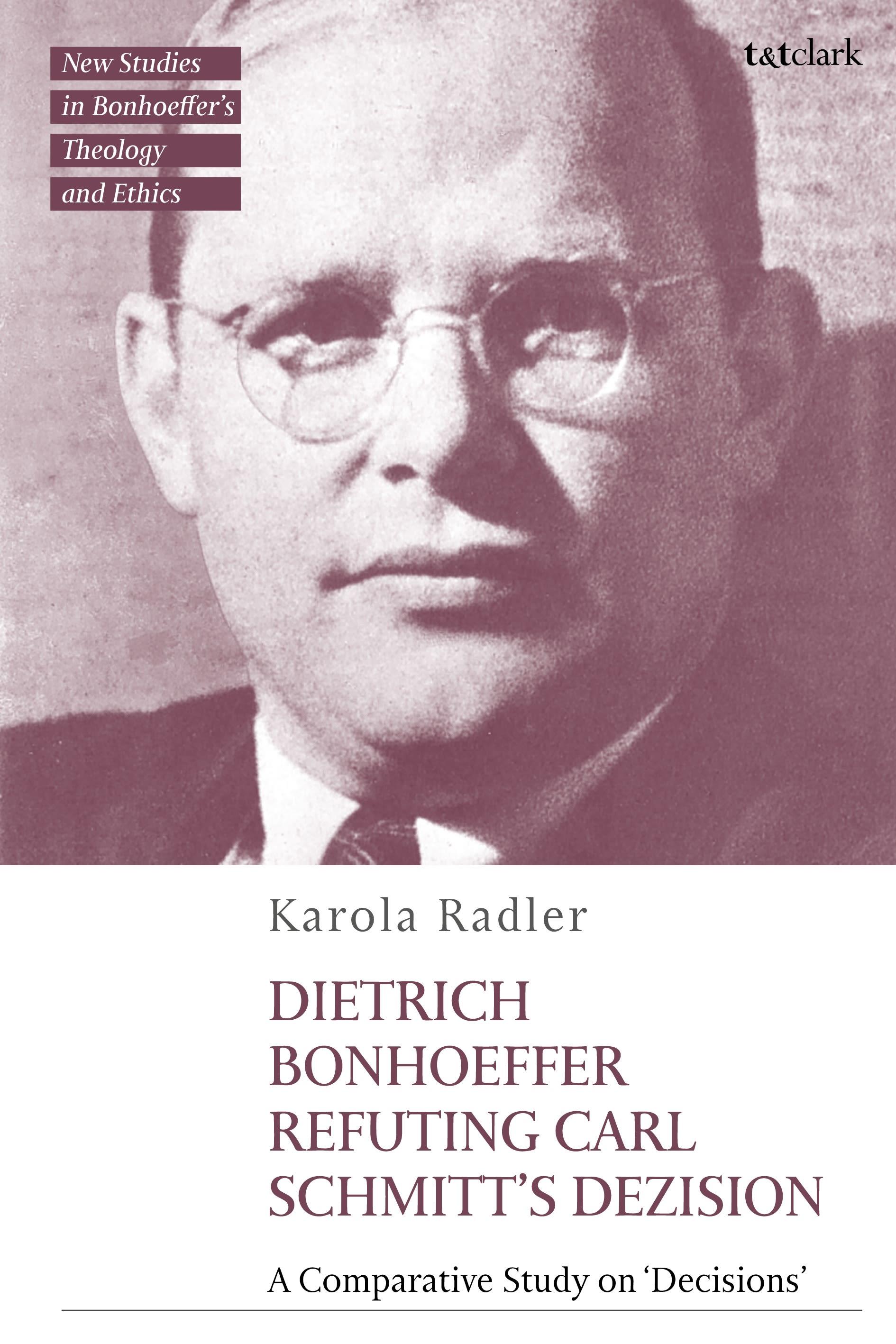
Radler examines Bonhoeffer's and Schmitt's intellectual paradigms of thought of theology and jurisprudence. Whilst both thinkers encounter constitutional institutional models, they arrive at opposing conclusions and actions. This book tackles how they approach the indicators for a decision of choices between alternatives, the urgency of resolving the problems at hand, the intended goal, and the following active manifestation in Christ.
Radler reveals how Schmitt's form of Dezision, resting on a linear model of history, abstracts metaphysical content from objective normative evaluation and, in support of a human personality representing the idea of Christ, elevates the significance of the self over content and subject in structural analogy to theological dogma. On the other hand, Bonhoeffer's theology repudiates Schmitt's political-jurisprudential position, contesting that history ultimately focuses on leading to human wholeness through reconciliation.
Radler reveals how Schmitt's form of Dezision, resting on a linear model of history, abstracts metaphysical content from objective normative evaluation and, in support of a human personality representing the idea of Christ, elevates the significance of the self over content and subject in structural analogy to theological dogma. On the other hand, Bonhoeffer's theology repudiates Schmitt's political-jurisprudential position, contesting that history ultimately focuses on leading to human wholeness through reconciliation.
Betal enkelt med kort, Klarna, Apple Pay eller Google Pay. Ikke fornøyd? Du har alltid 14 dagers angrerett. Les mer i våre vilkår. Har du spørsmål, send oss en e-post på hello@memmo.org.
Memmo gjør det enklere å studere – uansett hvor du er i verden. Hos oss samler du pensumbøker og smarte studieverktøy på ett og samme sted: sammendrag, quizer, podkaster og flashcards. Og så Ted, din studiekompis som svarer på alt du lurer på. Over 50 000 studenter studerer allerede her – bygget for at du skal lære raskere og stresse mindre.