
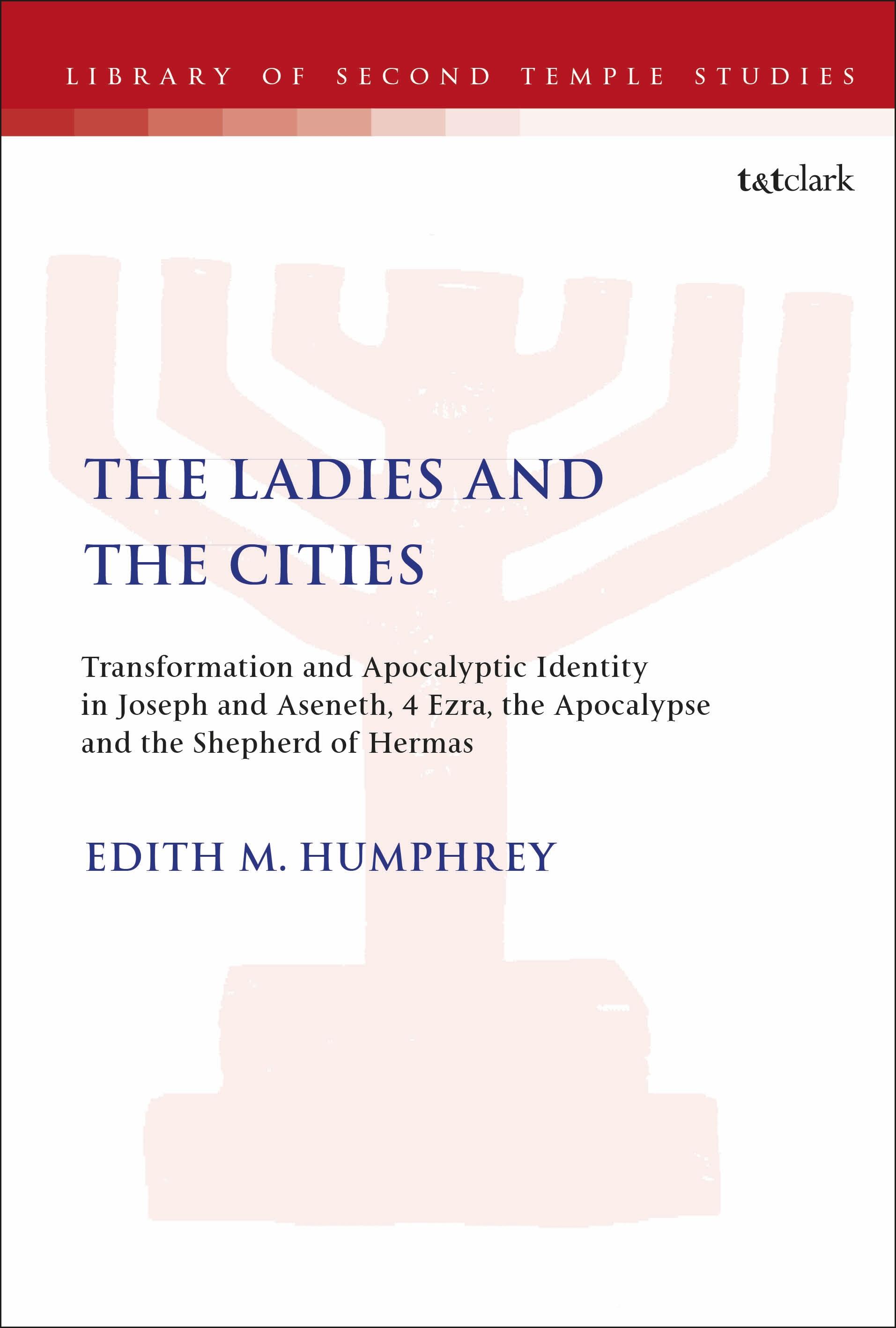
Transcendence in general and transformation in particular have long been established as key motifs in apocalypses. The transformation of a seer during a heavenly journey is found commonly in such esoteric apocalypses as I Enoch. No heavenly journey occurs in the apocalypses treated here. Rather, symbolic women figures--"ladies" in the classical sense--who are associated with God's city or Tower, undergo transformation at key points in the action. The surface structures of Joseph and Aseneth, 4 Ezra, the Apocalypse and The Shepherd of Hermas are traced, and the crucial transformation episodes are located within each structure. Transformation of figures which represent God's people points to the significance of identitiy within the apocalyptic perspective. Earlier analyses have demonstrated that the apocalyptic perspective urges the reader to consider life from a different stance in time and in space ("temporal" and "spatial" axes). The present analysis suggests that the apocalypse also charts its revelations along an "axis of identity" so that the reader is invited to become, as it were, someone more in tune with the mysteries he or she is viewing. Of special interest is the treatment of the increasingly well-known romance Joseph and Aseneth alongside apocalypses, a parallel which is fruitful because of the curious visionary sequence, closely related to apocalypse in content and form, which is found in the inner centre of that work.
Betal enkelt med kort, Klarna, Apple Pay eller Google Pay. Ikke fornøyd? Du har alltid 14 dagers angrerett. Les mer i våre vilkår. Har du spørsmål, send oss en e-post på hello@memmo.org.
Memmo gjør det enklere å studere – uansett hvor du er i verden. Hos oss samler du pensumbøker og smarte studieverktøy på ett og samme sted: sammendrag, quizer, podkaster og flashcards. Og så Ted, din studiekompis som svarer på alt du lurer på. Over 50 000 studenter studerer allerede her – bygget for at du skal lære raskere og stresse mindre.