
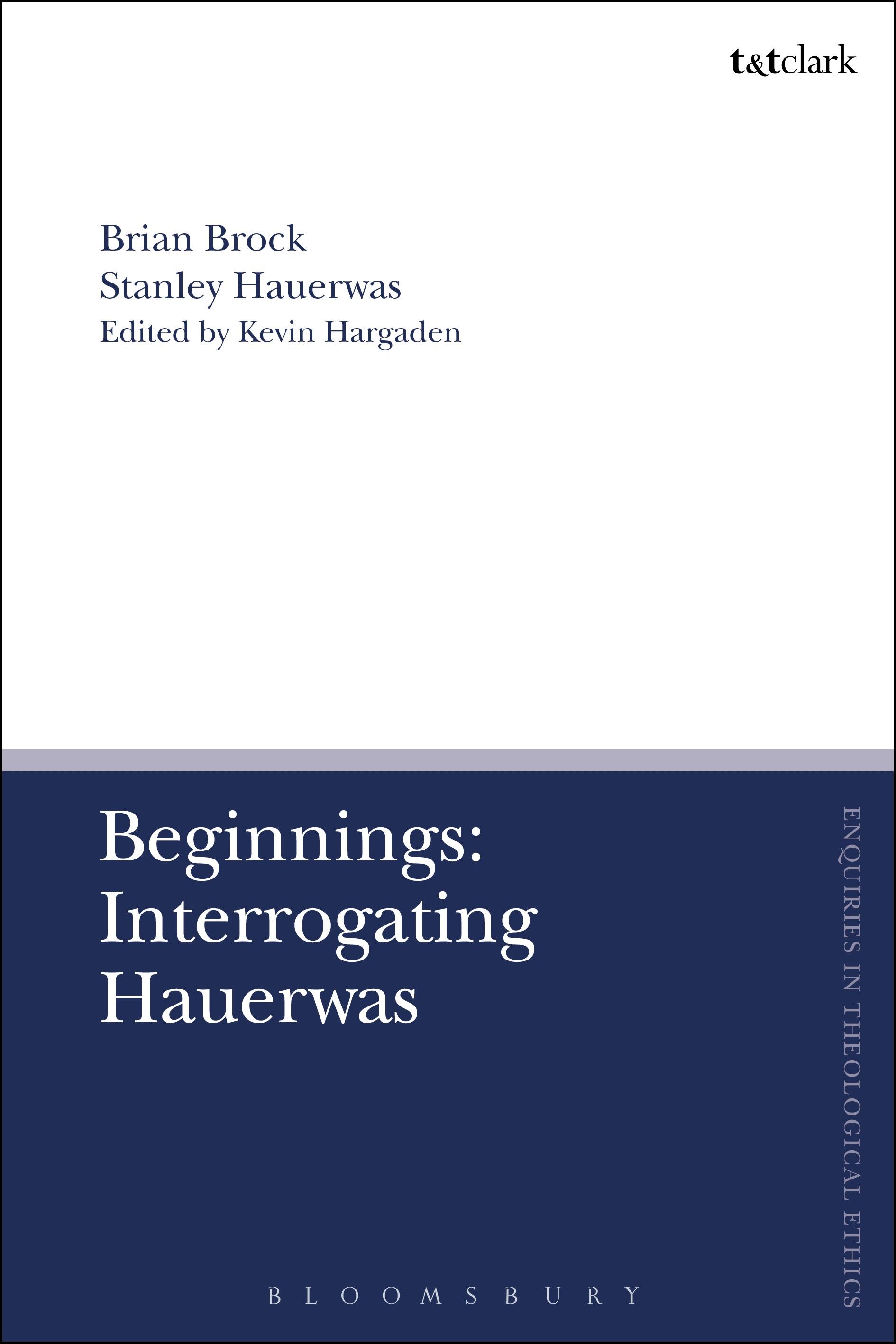
Stanley Hauerwas is arguably the most well-known figure in theological ethics of the last generation. Having published voluminously over the last 30 years, late in his career he has also published two volumes of essays discussing his corpus retrospectively, as well as a widely acclaimed memoir. The sheer volume of his work can be daunting to readers, and it is easy to get the impression that his retrospective volumes are restating positions developed earlier.
Brian Brock delves into Hauerwas' formation as a theologian at Yale, his first book, Character and the Christian Life, and examines some of his early, and outspoken, criticisms of the guild of Christian ethics. This chapter is followed by a discussion of his memoir, Hannah's Child, and raises tricky questions about the role of autobiography in Christian ethics, as well as the troubling problem of race in the modern academy. Brock explores Hauerwas' work on disability, his criticisms of the discipline of medical ethics, and the role played by vulnerability in his work. The next chapter examines his views on just war and pacifism, here probing the sensitive issue of the role of gender in his work, and leading into a discussion on the nature of the church's peaceable politics, in which his supposed hyper-ecclesiocentricism is examined. Brock examines the role of virtue in Hauerwas' thought, and teases out why he hates to be called a virtue ethicist. A final chapter asks him to respond to the recently levelled criticism that scripture does no work in his theology, focusing especially on his under-appreciated commentary on the gospel of Matthew.
The editor of this volume has managed to maneuver Hauerwas into positions where he has directly faced tricky questions that he normally does not discuss, such as the accusation that he is racist, too soft on Yoder, or misogynist.
Brian Brock delves into Hauerwas' formation as a theologian at Yale, his first book, Character and the Christian Life, and examines some of his early, and outspoken, criticisms of the guild of Christian ethics. This chapter is followed by a discussion of his memoir, Hannah's Child, and raises tricky questions about the role of autobiography in Christian ethics, as well as the troubling problem of race in the modern academy. Brock explores Hauerwas' work on disability, his criticisms of the discipline of medical ethics, and the role played by vulnerability in his work. The next chapter examines his views on just war and pacifism, here probing the sensitive issue of the role of gender in his work, and leading into a discussion on the nature of the church's peaceable politics, in which his supposed hyper-ecclesiocentricism is examined. Brock examines the role of virtue in Hauerwas' thought, and teases out why he hates to be called a virtue ethicist. A final chapter asks him to respond to the recently levelled criticism that scripture does no work in his theology, focusing especially on his under-appreciated commentary on the gospel of Matthew.
The editor of this volume has managed to maneuver Hauerwas into positions where he has directly faced tricky questions that he normally does not discuss, such as the accusation that he is racist, too soft on Yoder, or misogynist.
Betal enkelt med kort, Klarna, Apple Pay eller Google Pay. Ikke fornøyd? Du har alltid 14 dagers angrerett. Les mer i våre vilkår. Har du spørsmål, send oss en e-post på hello@memmo.org.
Memmo gjør det enklere å studere – uansett hvor du er i verden. Hos oss samler du pensumbøker og smarte studieverktøy på ett og samme sted: sammendrag, quizer, podkaster og flashcards. Og så Ted, din studiekompis som svarer på alt du lurer på. Over 50 000 studenter studerer allerede her – bygget for at du skal lære raskere og stresse mindre.