
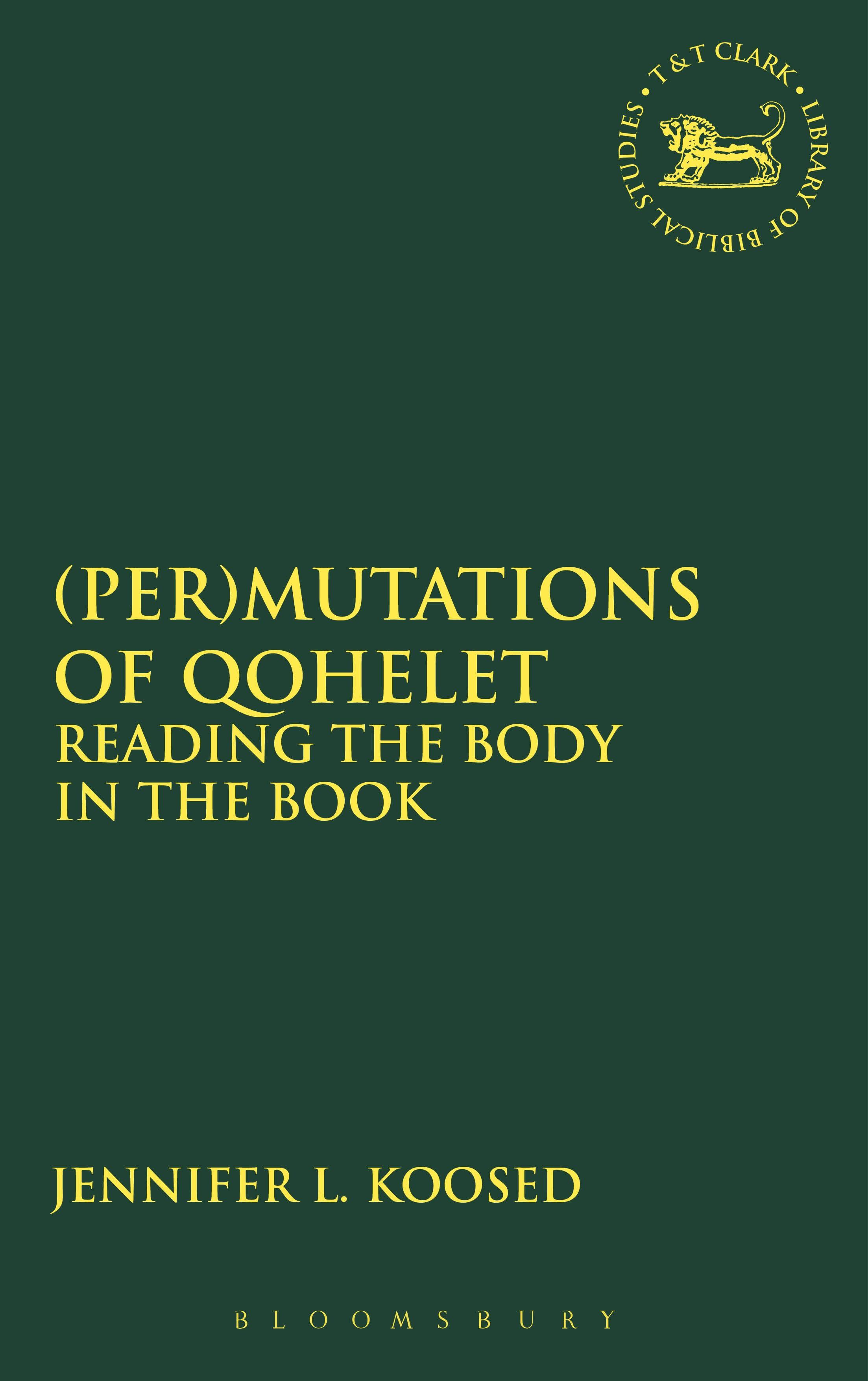
(Per)mutations of Qohelet explores the question, Who is Qohelet? Rather than peering behind or through the text to answer this question in terms of authorship, Koosed analyzes the identity that is created through the words on the page. The text is not a transparent medium connecting reader with author; instead, it is an opaque body - it has weight, substance, skin. Koosed begins with an analysis of the ways in which words construct identities and the reasons why words can affect us so profoundly, relying primarily on the work of Judith Butler and Elaine Scarry. She then explores autobiography and how the genre of autobiography - as reconfigured by Roland Barthes and Jacques Derrida - relates to Qohelet. These two chapters then set the framework for what follows: an analysis of the various bodily organs and sensations contained within the book of Qohelet. The body is embedded in the text through the naming of body parts (eye, hand, heart). And this same body is encoded in form, structure, and syntax, so that the text becomes a body with organs, systems, and even a life of its own. The book is a body and the book speaks of bodies. It speaks of the body's organs and senses; it concerns itself with the pleasures and pains of the body, the gendered body, the dying body. Finally, the ritual body is highlighted in the final passage of this enigmatic book.
Betal enkelt med kort, Klarna, Apple Pay eller Google Pay. Ikke fornøyd? Du har alltid 14 dagers angrerett. Les mer i våre vilkår. Har du spørsmål, send oss en e-post på hello@memmo.org.
Memmo gjør det enklere å studere – uansett hvor du er i verden. Hos oss samler du pensumbøker og smarte studieverktøy på ett og samme sted: sammendrag, quizer, podkaster og flashcards. Og så Ted, din studiekompis som svarer på alt du lurer på. Over 50 000 studenter studerer allerede her – bygget for at du skal lære raskere og stresse mindre.