
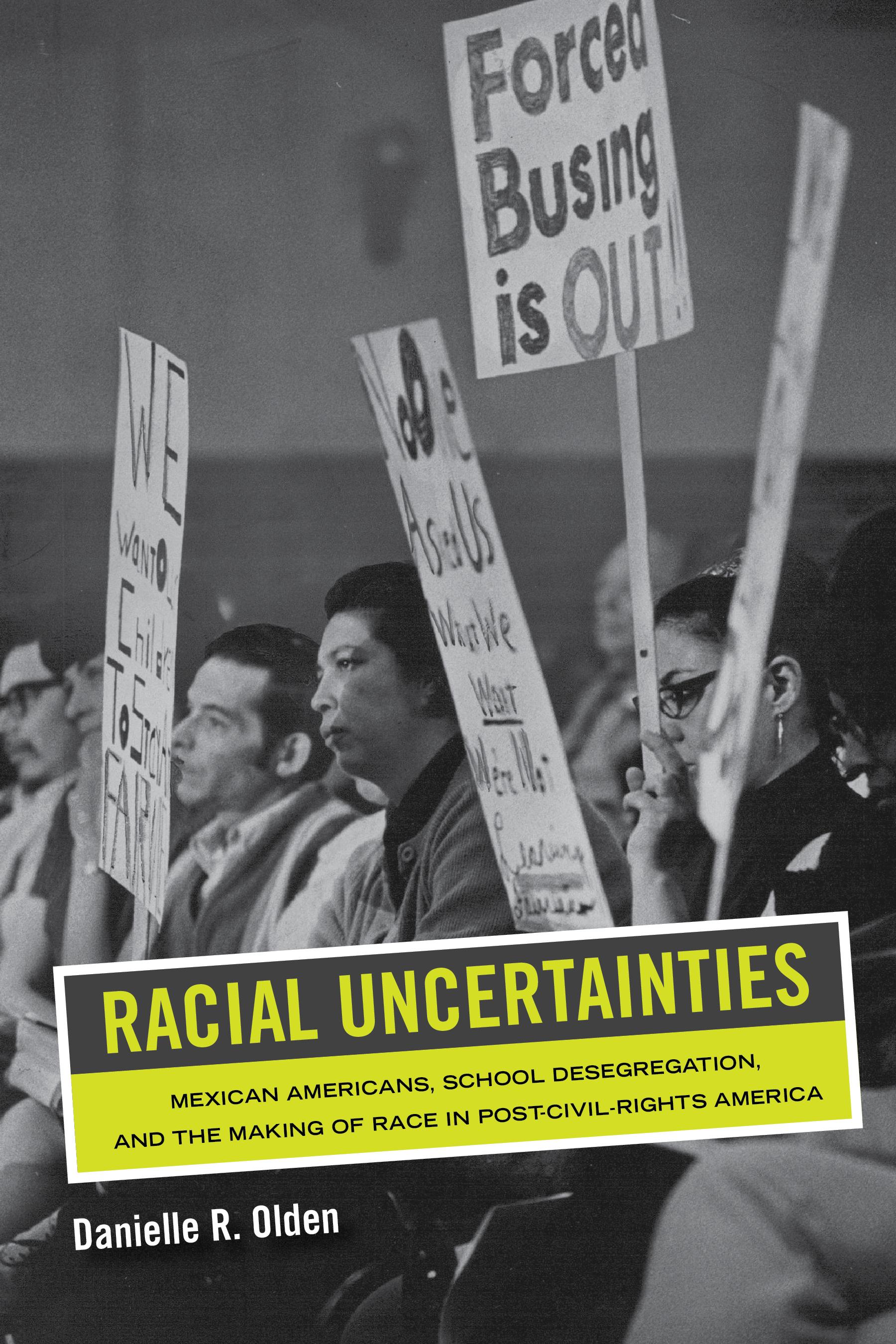
Mexican American racial uncertainty has long been a defining feature of US racial understanding. Were Mexican Americans white or nonwhite? In the post–civil rights period, this racial uncertainty took on new meaning as the courts, the federal bureaucracy, local school officials, parents, and community activists sought to turn Mexican American racial identity to their own benefit. This is the first book that examines the pivotal 1973 Keyes v. Denver School District No. 1 Supreme Court ruling, and how debates over Mexican Americans' racial position helped reinforce the emerging tropes of colorblind racial ideology.
In the post–civil rights era, when overt racism was no longer socially acceptable, anti-integration voices utilized the indeterminacy of Mexican American racial identity to frame their opposition to school desegregation. That some Mexican Americans adopted these tropes only reinforced the strength of colorblindness in battles against civil rights in the 1970s.
In the post–civil rights era, when overt racism was no longer socially acceptable, anti-integration voices utilized the indeterminacy of Mexican American racial identity to frame their opposition to school desegregation. That some Mexican Americans adopted these tropes only reinforced the strength of colorblindness in battles against civil rights in the 1970s.
Betal enkelt med kort, Klarna, Apple Pay eller Google Pay. Ikke fornøyd? Du har alltid 14 dagers angrerett. Les mer i våre vilkår. Har du spørsmål, send oss en e-post på hello@memmo.org.
Memmo gjør det enklere å studere – uansett hvor du er i verden. Hos oss samler du pensumbøker og smarte studieverktøy på ett og samme sted: sammendrag, quizer, podkaster og flashcards. Og så Ted, din studiekompis som svarer på alt du lurer på. Over 50 000 studenter studerer allerede her – bygget for at du skal lære raskere og stresse mindre.
Du vil kanskje også like
Kjøp boken0