
A free open access book is available upon publication. Learn more at www.luminosoa.org.
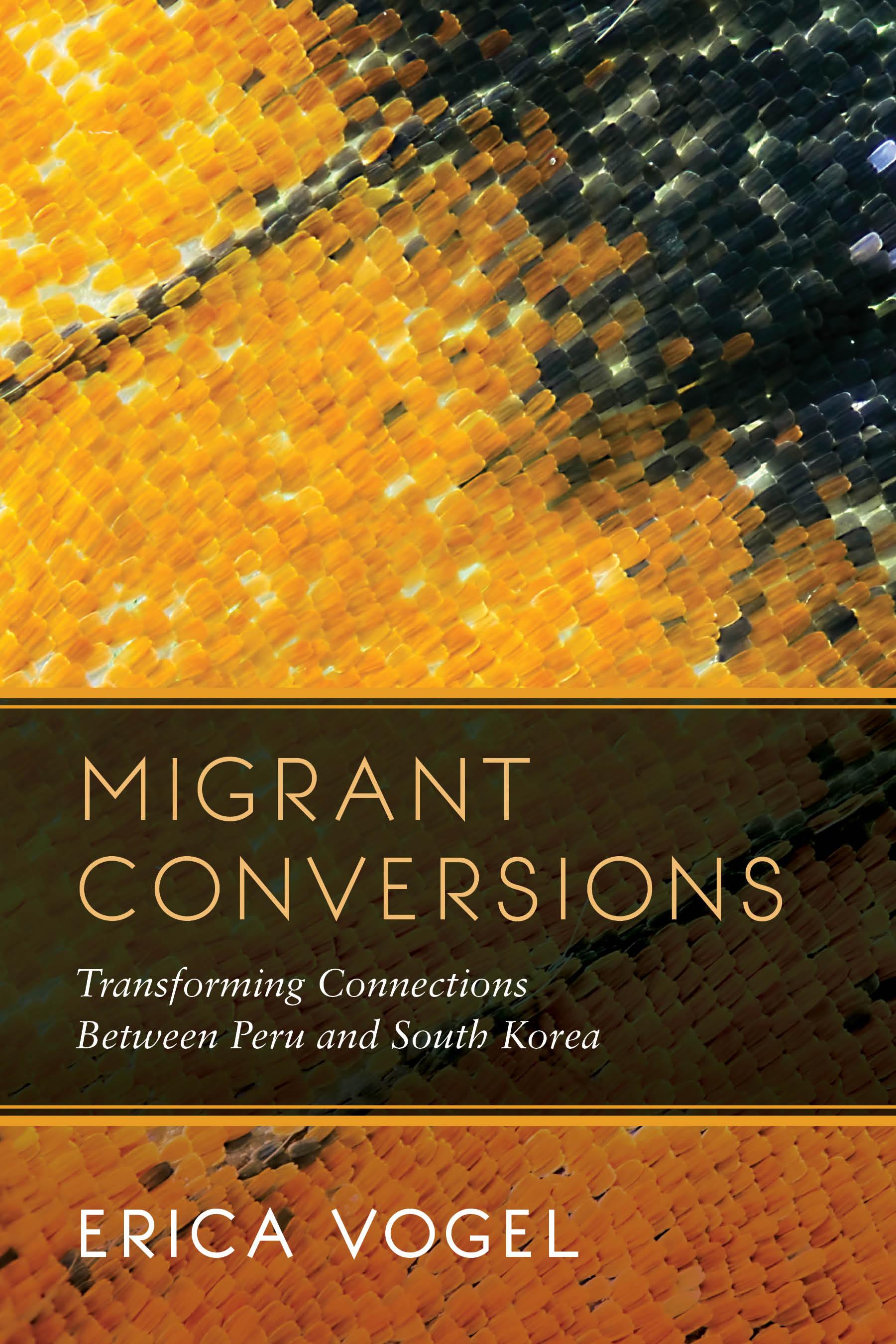
Peruvian migrant workers began arriving in South Korea in large numbers in the mid 1990s, eventually becoming one of the largest groups of non-Asians in the country. Migrant Conversions shows how despite facing unstable income and legal exclusion, migrants come to see Korea as an ideal destination. Some even see it as part of their divine destiny. Faced with looming departures, Peruvians develop cosmopolitan plans to transform themselves from economic migrants into pastors, lovers, and leaders. Set against the backdrop of 2008’s global financial crisis, Vogel explores the intersections of three types of conversions— money, religious beliefs and cosmopolitan plans—to argue that conversions are how migrants negotiate the meaning of their lives in a constantly changing transnational context. At the convergence of cosmopolitan projects spearheaded by the state, churches, and other migrants, Peruvians change the value and meaning of their migrations. Yet, in attempting to make themselves at home in the world and give their families more opportunities, they also create potential losses. As Peruvians help carve out social spaces, they create complex and uneven connections between Peru and Korea that challenge a global hierarchy of nations and migrants. Exploring how migrants, churches and nations change through processes of conversion reveals how globalization continues to impact people’s lives and ideas about their futures and pasts long after they have stopped moving, or that particular global moment has come to an end.
Peruvian migrant workers began arriving in South Korea in large numbers in the mid 1990s, eventually becoming one of the largest groups of non-Asians in the country. Migrant Conversions shows how despite facing unstable income and legal exclusion, migrants come to see Korea as an ideal destination. Some even see it as part of their divine destiny. Faced with looming departures, Peruvians develop cosmopolitan plans to transform themselves from economic migrants into pastors, lovers, and leaders. Set against the backdrop of 2008’s global financial crisis, Vogel explores the intersections of three types of conversions— money, religious beliefs and cosmopolitan plans—to argue that conversions are how migrants negotiate the meaning of their lives in a constantly changing transnational context. At the convergence of cosmopolitan projects spearheaded by the state, churches, and other migrants, Peruvians change the value and meaning of their migrations. Yet, in attempting to make themselves at home in the world and give their families more opportunities, they also create potential losses. As Peruvians help carve out social spaces, they create complex and uneven connections between Peru and Korea that challenge a global hierarchy of nations and migrants. Exploring how migrants, churches and nations change through processes of conversion reveals how globalization continues to impact people’s lives and ideas about their futures and pasts long after they have stopped moving, or that particular global moment has come to an end.
Betal enkelt med kort, Klarna, Apple Pay eller Google Pay. Ikke fornøyd? Du har alltid 14 dagers angrerett. Les mer i våre vilkår. Har du spørsmål, send oss en e-post på hello@memmo.org.
Memmo gjør det enklere å studere – uansett hvor du er i verden. Hos oss samler du pensumbøker og smarte studieverktøy på ett og samme sted: sammendrag, quizer, podkaster og flashcards. Og så Ted, din studiekompis som svarer på alt du lurer på. Over 50 000 studenter studerer allerede her – bygget for at du skal lære raskere og stresse mindre.
Du vil kanskje også like
Kjøp boken0