
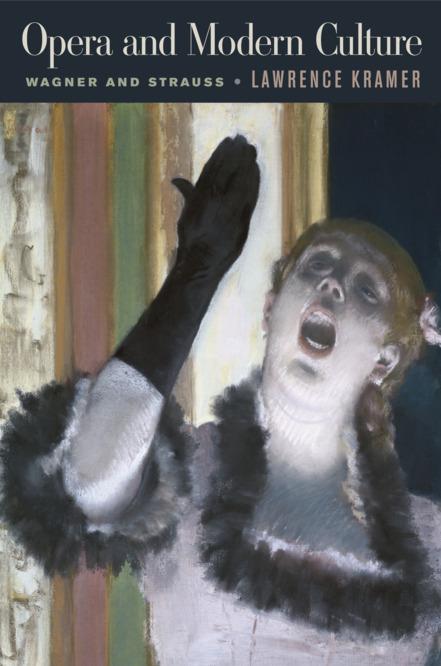
In this enlightening and entertaining book, one of the most original and sophisticated musicologists writing today turns his attention to music's most dramatic genre. Extending his ongoing project of clarifying music's various roles in Western society, Kramer brings to opera his distinctive and pioneering blend of historical concreteness and theoretical awareness.
Opera is legendary for going to extremes, a tendency that has earned it a reputation for unreality. Opera and Modern Culture shows the reverse to be true. Kramer argues that for the past two centuries the preoccupation of a group of famous operas with the limits of supremacy and debasement helped to define a normality that seems the very opposite of the operatic. Exemplified in a series of beloved examples, a certain idea of opera—a fiction of opera—has contributed in key ways to the modern era's characterizations of desire, identity, and social order. Opera and Modern Culture exposes this process at work in operas by Richard Wagner, who put modernity on the agenda in ways no one after him could ignore, and by the young Richard Strauss. The book continues the initiative of much recent writing in treating opera as a multimedia rather than a primarily musical form. From Lohengrin and The Ring of the Niebelung to Salome and Elektra, it traces the rich interplay of operatic visions and voices and their contexts in the birth pangs of modern life.
Opera is legendary for going to extremes, a tendency that has earned it a reputation for unreality. Opera and Modern Culture shows the reverse to be true. Kramer argues that for the past two centuries the preoccupation of a group of famous operas with the limits of supremacy and debasement helped to define a normality that seems the very opposite of the operatic. Exemplified in a series of beloved examples, a certain idea of opera—a fiction of opera—has contributed in key ways to the modern era's characterizations of desire, identity, and social order. Opera and Modern Culture exposes this process at work in operas by Richard Wagner, who put modernity on the agenda in ways no one after him could ignore, and by the young Richard Strauss. The book continues the initiative of much recent writing in treating opera as a multimedia rather than a primarily musical form. From Lohengrin and The Ring of the Niebelung to Salome and Elektra, it traces the rich interplay of operatic visions and voices and their contexts in the birth pangs of modern life.
Betal enkelt med kort, Klarna, Apple Pay eller Google Pay. Ikke fornøyd? Du har alltid 14 dagers angrerett. Les mer i våre vilkår. Har du spørsmål, send oss en e-post på hello@memmo.org.
Memmo gjør det enklere å studere – uansett hvor du er i verden. Hos oss samler du pensumbøker og smarte studieverktøy på ett og samme sted: sammendrag, quizer, podkaster og flashcards. Og så Ted, din studiekompis som svarer på alt du lurer på. Over 50 000 studenter studerer allerede her – bygget for at du skal lære raskere og stresse mindre.
Du vil kanskje også like
Kjøp boken0