
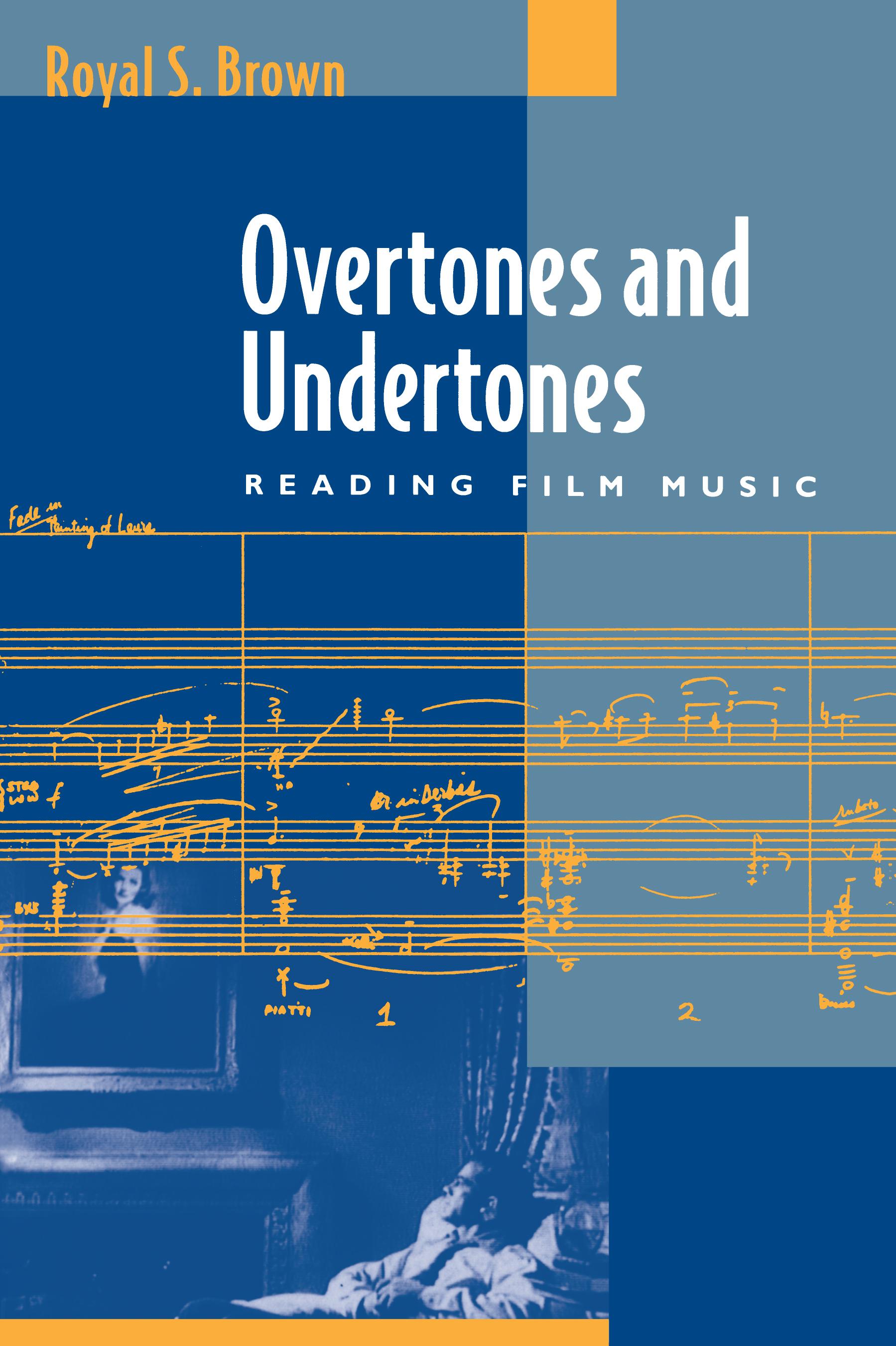
Since the days of silent films, music has been integral to the cinematic experience, serving, variously, to allay audiences' fears of the dark and to heighten a film's emotional impact. Yet viewers are often unaware of its presence. In this bold, insightful book, film and music scholar and critic Royal S. Brown invites readers not only to "hear" the film score, but to understand it in relation to what they "see."
Unlike earlier books, which offered historical, technical, and sociopolitical analyses, Overtones and Undertones draws on film, music, and narrative theory to provide the first comprehensive aesthetics of film music. Focusing on how the film/score interaction influences our response to cinematic situations, Brown traces the history of film music from its beginnings, covering both American and European cinema. At the heart of his book are close readings of several of the best film/score interactions, including Psycho, Laura, The Sea Hawk, Double Indemnity, and Pierrot le Fou. In revealing interviews with Bernard Herrmann, Miklós Rósza, Henry Mancini, and others, Brown also allows the composers to speak for themselves. A complete discography and bibliography conclude the volume.
Since the days of silent films, music has been integral to the cinematic experience, serving, variously, to allay audiences' fears of the dark and to heighten a film's emotional impact. Yet viewers are often unaware of its presence. In this bold, insightf
Unlike earlier books, which offered historical, technical, and sociopolitical analyses, Overtones and Undertones draws on film, music, and narrative theory to provide the first comprehensive aesthetics of film music. Focusing on how the film/score interaction influences our response to cinematic situations, Brown traces the history of film music from its beginnings, covering both American and European cinema. At the heart of his book are close readings of several of the best film/score interactions, including Psycho, Laura, The Sea Hawk, Double Indemnity, and Pierrot le Fou. In revealing interviews with Bernard Herrmann, Miklós Rósza, Henry Mancini, and others, Brown also allows the composers to speak for themselves. A complete discography and bibliography conclude the volume.
Since the days of silent films, music has been integral to the cinematic experience, serving, variously, to allay audiences' fears of the dark and to heighten a film's emotional impact. Yet viewers are often unaware of its presence. In this bold, insightf
Betal enkelt med kort, Klarna, Apple Pay eller Google Pay. Ikke fornøyd? Du har alltid 14 dagers angrerett. Les mer i våre vilkår. Har du spørsmål, send oss en e-post på hello@memmo.org.
Memmo gjør det enklere å studere – uansett hvor du er i verden. Hos oss samler du pensumbøker og smarte studieverktøy på ett og samme sted: sammendrag, quizer, podkaster og flashcards. Og så Ted, din studiekompis som svarer på alt du lurer på. Over 50 000 studenter studerer allerede her – bygget for at du skal lære raskere og stresse mindre.
Du vil kanskje også like
Kjøp boken0