
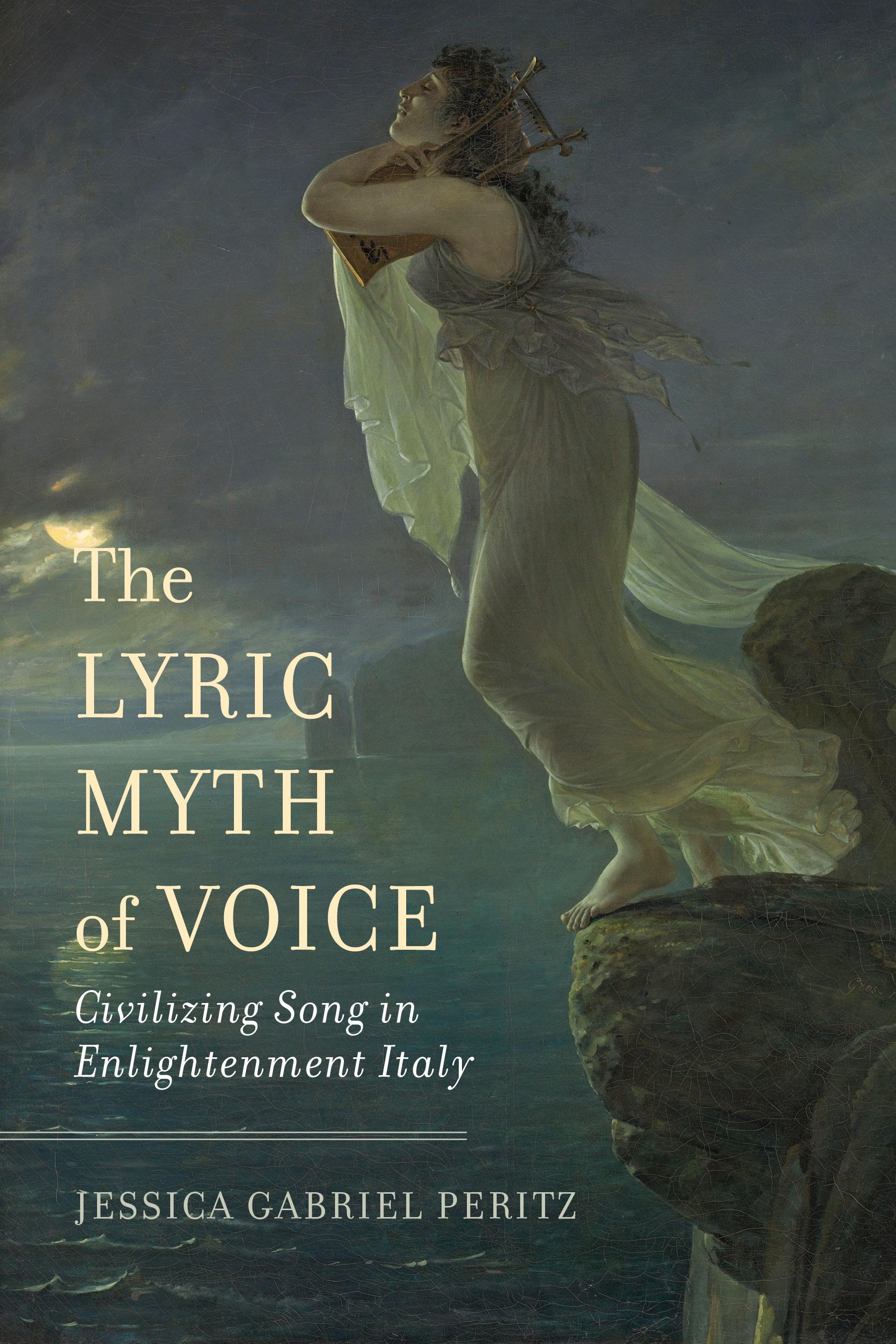
How did "voice" become a metaphor for selfhood in the Western imagination? The Lyric Myth of Voice situates the emergence of an ideological connection between voice and subjectivity in late eighteenth-century Italy, where long-standing political anxieties and new notions of cultural enlightenment collided in the mythical figure of the lyric poet-singer. Ultimately, music and literature together shaped the singing voice into a tool for civilizing modern Italian subjects. Drawing on a range of approaches and frameworks from historical musicology to gender studies, disability studies, anthropology, and literary theory, Jessica Gabriel Peritz shows how this ancient yet modern myth of voice attained interpretable form, flesh, and sound.
The publisher gratefully acknowledges the generous support of the AMS 75 PAYS Fund of the American Musicological Society, supported in part by the National Endowment for the Humanities and the Andrew W. Mellon Foundation.
The publisher gratefully acknowledges the generous support of the AMS 75 PAYS Fund of the American Musicological Society, supported in part by the National Endowment for the Humanities and the Andrew W. Mellon Foundation.
Betal enkelt med kort, Klarna, Apple Pay eller Google Pay. Ikke fornøyd? Du har alltid 14 dagers angrerett. Les mer i våre vilkår. Har du spørsmål, send oss en e-post på hello@memmo.org.
Memmo gjør det enklere å studere – uansett hvor du er i verden. Hos oss samler du pensumbøker og smarte studieverktøy på ett og samme sted: sammendrag, quizer, podkaster og flashcards. Og så Ted, din studiekompis som svarer på alt du lurer på. Over 50 000 studenter studerer allerede her – bygget for at du skal lære raskere og stresse mindre.
Du vil kanskje også like
Kjøp boken0