
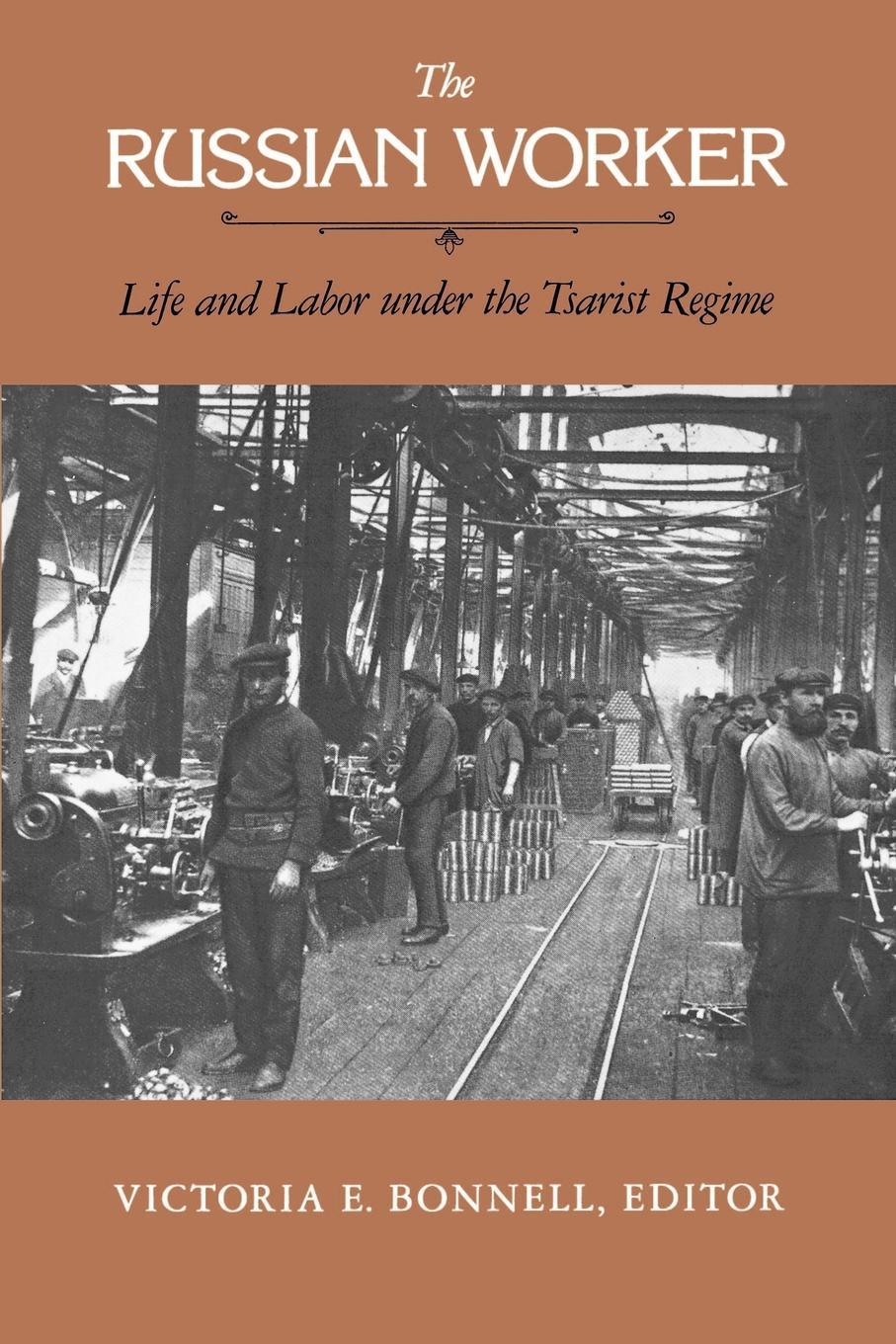
Here, for the first time in English translation, are contemporary accounts of working-class life during the final decades of the Russian Empire. Written by workers and other close observers of their milieu, these five selections recreate the world of Russian labor during a period of rapid industrialization and social change, a world far more complex and varied than has often been assumed.
The accounts in The Russian Worker explore the daily experiences, social relations, and aspirations of factory, artisanal, and sales-clerical workers, both in and outside the place of employment. Through the eyes of contemporaries we see the routine, the organization of work, and authority relations on the shop floor as well as conditions that workers encountered in providing for food and lodging and their experiences in the areas of religion, recreation, cultural activities, family ties, and links with the countryside.
With its vivid and detailed descriptions of working-class life, The Russian Worker provides new material on such important topics as the formation of workers' social identities, the position of women, patterns of stratification, and workers' concepts of status differentiation. An introductory essay by Victoria Bonnell places the selections in an historical context and examines some of the central issues in the study of Russian labor. The collection will be of value not only to specialists in the Russian field, but also to historians, sociologists, economists, and others with an interest in the sociology of work, and the history of working women.
Here, for the first time in English translation, are contemporary accounts of working-class life during the final decades of the Russian Empire. Written by workers and other close observers of their milieu, these five selections recreate the world of Russ
The accounts in The Russian Worker explore the daily experiences, social relations, and aspirations of factory, artisanal, and sales-clerical workers, both in and outside the place of employment. Through the eyes of contemporaries we see the routine, the organization of work, and authority relations on the shop floor as well as conditions that workers encountered in providing for food and lodging and their experiences in the areas of religion, recreation, cultural activities, family ties, and links with the countryside.
With its vivid and detailed descriptions of working-class life, The Russian Worker provides new material on such important topics as the formation of workers' social identities, the position of women, patterns of stratification, and workers' concepts of status differentiation. An introductory essay by Victoria Bonnell places the selections in an historical context and examines some of the central issues in the study of Russian labor. The collection will be of value not only to specialists in the Russian field, but also to historians, sociologists, economists, and others with an interest in the sociology of work, and the history of working women.
Here, for the first time in English translation, are contemporary accounts of working-class life during the final decades of the Russian Empire. Written by workers and other close observers of their milieu, these five selections recreate the world of Russ
Betal enkelt med kort, Klarna, Apple Pay eller Google Pay. Ikke fornøyd? Du har alltid 14 dagers angrerett. Les mer i våre vilkår. Har du spørsmål, send oss en e-post på hello@memmo.org.
Memmo gjør det enklere å studere – uansett hvor du er i verden. Hos oss samler du pensumbøker og smarte studieverktøy på ett og samme sted: sammendrag, quizer, podkaster og flashcards. Og så Ted, din studiekompis som svarer på alt du lurer på. Over 50 000 studenter studerer allerede her – bygget for at du skal lære raskere og stresse mindre.
Du vil kanskje også like
Kjøp boken0