
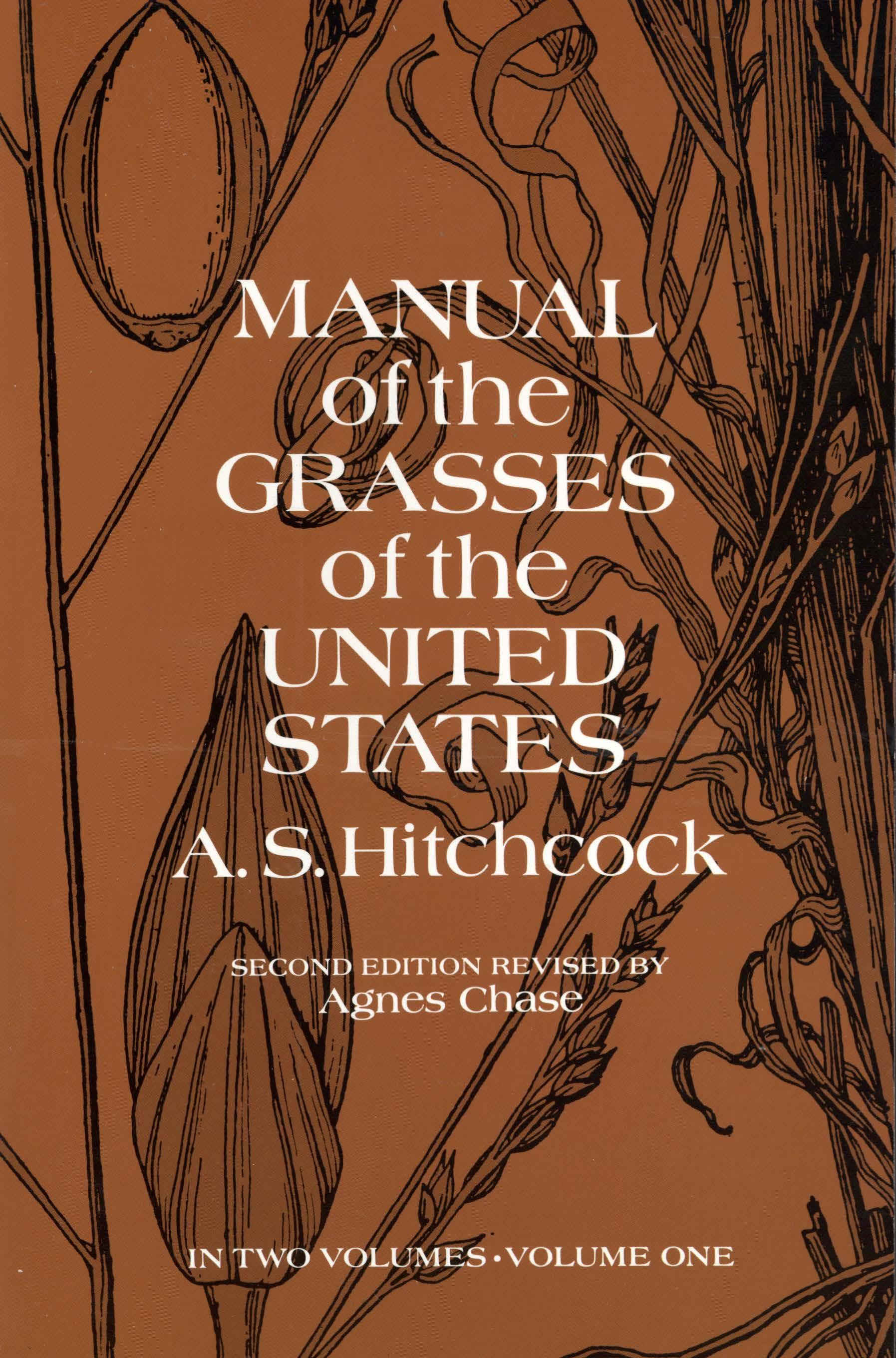
This work is actually the definitive encyclopedia of United States grass life. Compiled from the U.S. National Herbarium collection, the largest of its kind in the world, it is the only complete manual of U.S. grasses available and one of the basic reference works on U.S. plant life. It catalogs and describes in detail all 1,398 numbered species in 169 numbered genera found in this country, plus 120 species in 16 genera of the so-called “waifs.” Professor Hitchcock is the former Chief Botanist in charge of systematic agrostology for the U.S. Department of Agriculture, by whom the work was originally published, and an internationally known authority.
The heart of the book is its detailed descriptions of the family of grasses, the two main subfamilies, the tribes, genera, and species. Quick finding keys are provided for the identification of tribes and genera. Each of the species is given thorough botanical description, including various aspects of its morphology — size, shape, form of culms, blades, panicles, spikes, and flowers — and height, proper planting season, and range of distribution are noted. The Manual also outlines the common uses to which grasses are put and discusses in general terms their distribution, classification, nomenclature, and common names. The 1,199 drawings make identification of any grass species found in the United States a virtual certainty. The appended synonymy of alternate names for each species provides an authoritative taxonomy, eliminating confusion.
The nature lover with no more technical equipment than a keen eye can use this manual with profit, for a glossary of botanical terms is included. Naturalists, botanists, agriculturists, and horticulturists will find it valuable as a field and research guide to virtually all the grasses that grow in this country.
The heart of the book is its detailed descriptions of the family of grasses, the two main subfamilies, the tribes, genera, and species. Quick finding keys are provided for the identification of tribes and genera. Each of the species is given thorough botanical description, including various aspects of its morphology — size, shape, form of culms, blades, panicles, spikes, and flowers — and height, proper planting season, and range of distribution are noted. The Manual also outlines the common uses to which grasses are put and discusses in general terms their distribution, classification, nomenclature, and common names. The 1,199 drawings make identification of any grass species found in the United States a virtual certainty. The appended synonymy of alternate names for each species provides an authoritative taxonomy, eliminating confusion.
The nature lover with no more technical equipment than a keen eye can use this manual with profit, for a glossary of botanical terms is included. Naturalists, botanists, agriculturists, and horticulturists will find it valuable as a field and research guide to virtually all the grasses that grow in this country.
Betal enkelt med kort, Klarna, Apple Pay eller Google Pay. Ikke fornøyd? Du har alltid 14 dagers angrerett. Les mer i våre vilkår. Har du spørsmål, send oss en e-post på hello@memmo.org.
Memmo gjør det enklere å studere – uansett hvor du er i verden. Hos oss samler du pensumbøker og smarte studieverktøy på ett og samme sted: sammendrag, quizer, podkaster og flashcards. Og så Ted, din studiekompis som svarer på alt du lurer på. Over 50 000 studenter studerer allerede her – bygget for at du skal lære raskere og stresse mindre.
Du vil kanskje også like
Kjøp boken0