
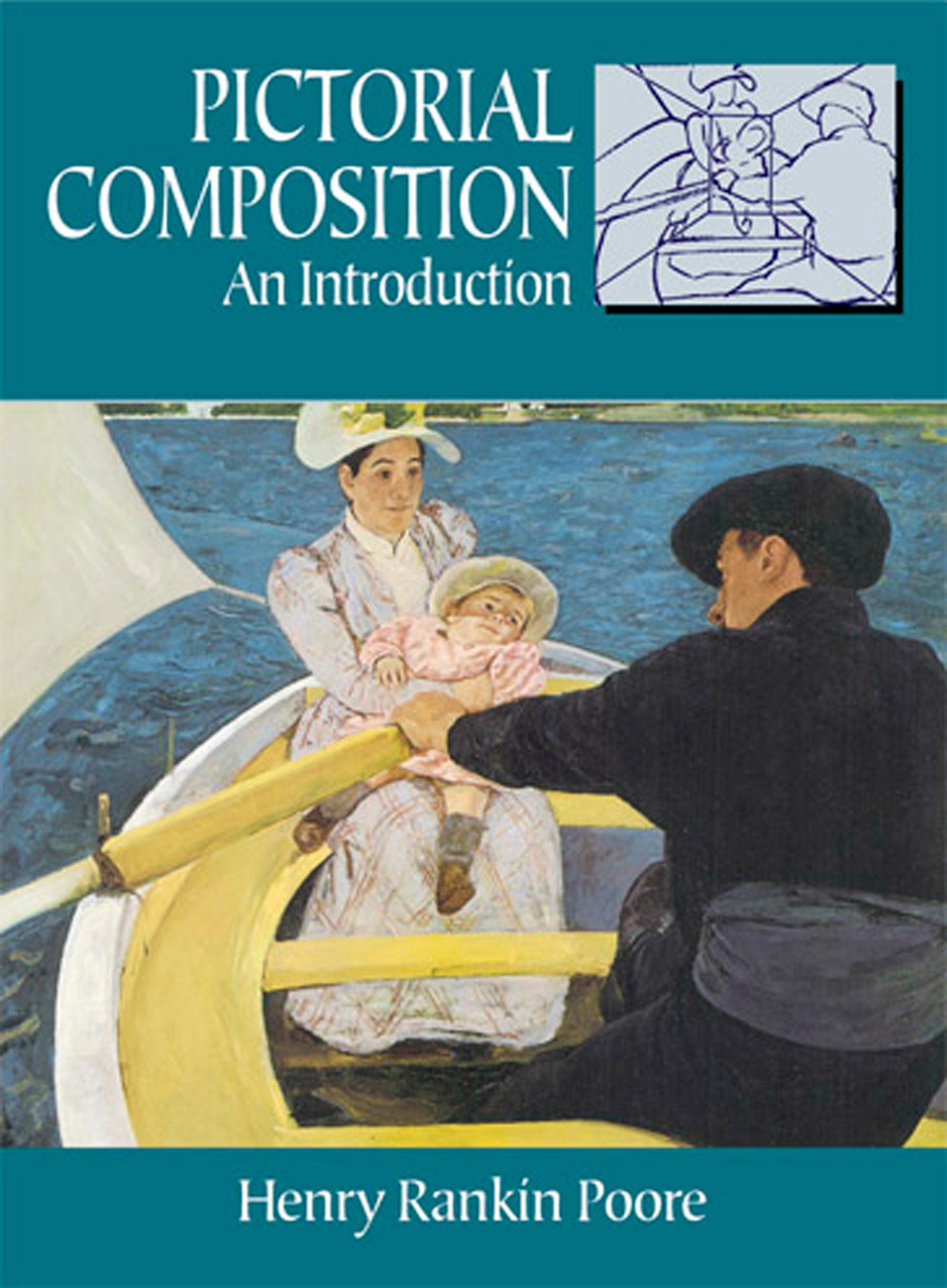
A painting's technique, color, and perspective may all be excellent, yet the painting will fail unless its composition succeeds. Composition is the harmonious arranging of the component parts of a work of art into a unified whole. Henry Poore examines the works of old masters and moderns in this book and uses these examples to explain the principles of compositions in art.
All the paintings that the author analyzes are illustrated in the text — 166 illustrations, including 9 in full color. Thirty-two diagrams by the author accompany his textural discussion of such topics as the importance of balance, entrance and exit, circular observation, angular composition, composition with one or more units, and light and shade. Balance is the most important of these topics, and it is considered in the greatest detail — balance of the steelyard, vertical and horizontal balance, and so on. A complete index enables the reader to locate his own specific areas of interest.
To see how a painting by Cézanne, Goya, or Hopper, for example, follows definite principles of composition allows the practicing artist or art student to learn composition from the finest instructors — the artists themselves. This book is also very useful to the art devotee, who will find his appreciation of the subject greatly enhanced.
Betal enkelt med kort, Klarna, Apple Pay eller Google Pay. Ikke fornøyd? Du har alltid 14 dagers angrerett. Les mer i våre vilkår. Har du spørsmål, send oss en e-post på hello@memmo.org.
Memmo gjør det enklere å studere – uansett hvor du er i verden. Hos oss samler du pensumbøker og smarte studieverktøy på ett og samme sted: sammendrag, quizer, podkaster og flashcards. Og så Ted, din studiekompis som svarer på alt du lurer på. Over 50 000 studenter studerer allerede her – bygget for at du skal lære raskere og stresse mindre.