
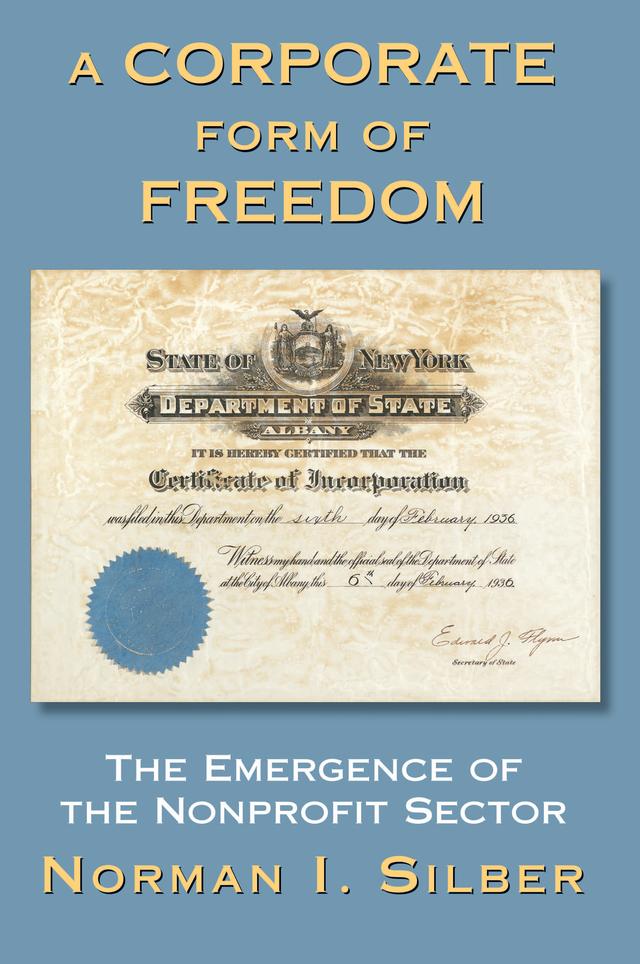
A Corporate Form of Freedom explores how courts and legislatures have decided which nonprofit groups can pursue their missions as corporations. For many years it was a privilege to hold a nonprofit charter. This view changed during the 1950s and 1960s. A new generation contended that legal theory, racial justice, and democratic values demanded that the nonprofit corporate form be available to all groups as a matter of right. As a result, nonprofit corporate status became America's corporate form for free expression. The new perspective did more than enlarge public discourse, however. It also reduced official authority to supervise or otherwise hold nonprofit organizations accountable for their activities. Norman I. Silber examines how the nonprofit world was transformed -- a transformation which refashioned political and social discourse, altered the economy, and created many of the difficulties the nonprofit sector faces today.
Betal enkelt med kort, Klarna, Apple Pay eller Google Pay. Ikke fornøyd? Du har alltid 14 dagers angrerett. Les mer i våre vilkår. Har du spørsmål, send oss en e-post på hello@memmo.org.
Memmo gjør det enklere å studere – uansett hvor du er i verden. Hos oss samler du pensumbøker og smarte studieverktøy på ett og samme sted: sammendrag, quizer, podkaster og flashcards. Og så Ted, din studiekompis som svarer på alt du lurer på. Over 50 000 studenter studerer allerede her – bygget for at du skal lære raskere og stresse mindre.
Du vil kanskje også like
Kjøp boken0