
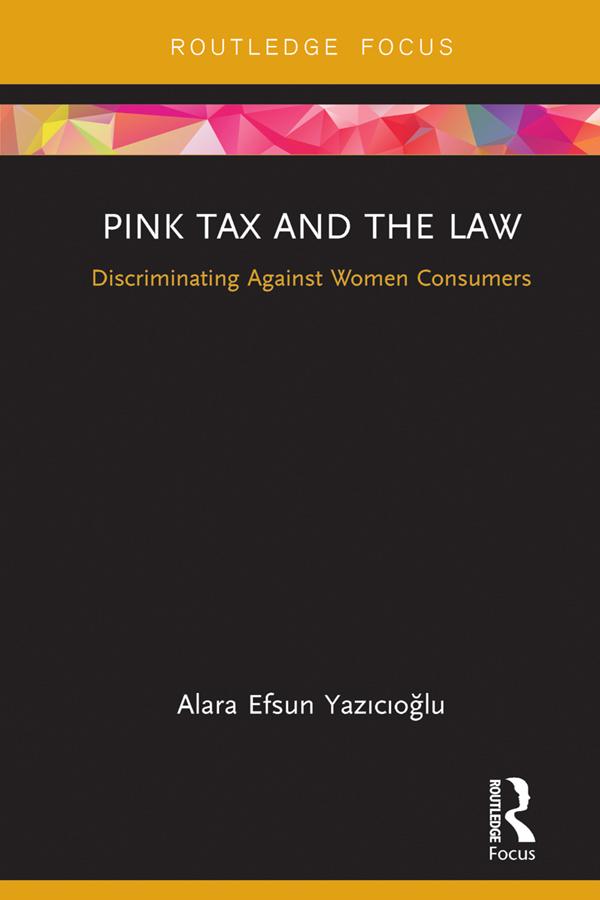
The emergence of the terms ‘pink tax’ and ‘tampon tax’ in everyday language suggests that women, who already suffer from an economic disadvantage due to the gender wage gap, are put in an even more detrimental position by means of ‘discriminatory consumption taxes’. This book is the first conducting a legal analysis to establish to what extent this public perception is accurate.
Does the practice of ‘pink tax’ effectively amount to a tax in the legal sense? Does the so-called ‘tampon tax’ genuinely constitute an anomaly within the general consumption tax system? Most importantly, can these two ‘taxes’ be legally qualified as discriminatory?
This book provides scientific answers to these questions. It first cuts through the existent information clutter by elucidating the pertinent economic, sociological and psychological components of the practices referred to as ‘pink tax’ and ‘tampon tax’. It then proceeds with a thorough legal analysis of all relevant aspects to determine whether women are indeed subject to discriminatory consumption taxes.
It is well-established that women earn less than men. This book investigates if they simultaneously pay more due to ‘discriminatory consumption taxes’.
Betal enkelt med kort, Klarna, Apple Pay eller Google Pay. Ikke fornøyd? Du har alltid 14 dagers angrerett. Les mer i våre vilkår. Har du spørsmål, send oss en e-post på hello@memmo.org.
Memmo gjør det enklere å studere – uansett hvor du er i verden. Hos oss samler du pensumbøker og smarte studieverktøy på ett og samme sted: sammendrag, quizer, podkaster og flashcards. Og så Ted, din studiekompis som svarer på alt du lurer på. Over 50 000 studenter studerer allerede her – bygget for at du skal lære raskere og stresse mindre.