
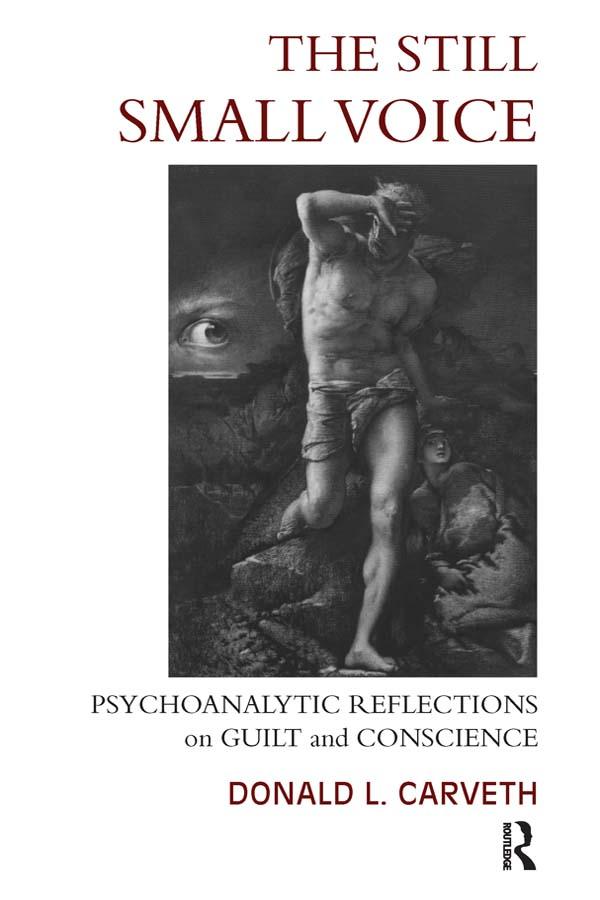
Whereas Freud himself viewed conscience as one of the functions of the superego, in The Still Small Voice: Psychoanalytic Reflections on Guilt and Conscience, the author argues that superego and conscience are distinct mental functions and that, therefore, a fourth mental structure, the conscience, needs to be added to the psychoanalytic structural theory of the mind. He claims that while both conscience and superego originate in the so-called pre-oedipal phase of infant and child development they are comprised of contrasting and often conflicting identifications. The primary object, still most often the mother, is inevitably experienced as, on the one hand, nurturing and soothing and, on the other, as frustrating and persecuting. Conscience is formed in identification with the nurturer; the superego in identification with the aggressor. There is a principle of reciprocity at work in the human psyche: for love received one seeks to return love; for hate, hate (the talion law).
Betal enkelt med kort, Klarna, Apple Pay eller Google Pay. Ikke fornøyd? Du har alltid 14 dagers angrerett. Les mer i våre vilkår. Har du spørsmål, send oss en e-post på hello@memmo.org.
Memmo gjør det enklere å studere – uansett hvor du er i verden. Hos oss samler du pensumbøker og smarte studieverktøy på ett og samme sted: sammendrag, quizer, podkaster og flashcards. Og så Ted, din studiekompis som svarer på alt du lurer på. Over 50 000 studenter studerer allerede her – bygget for at du skal lære raskere og stresse mindre.