
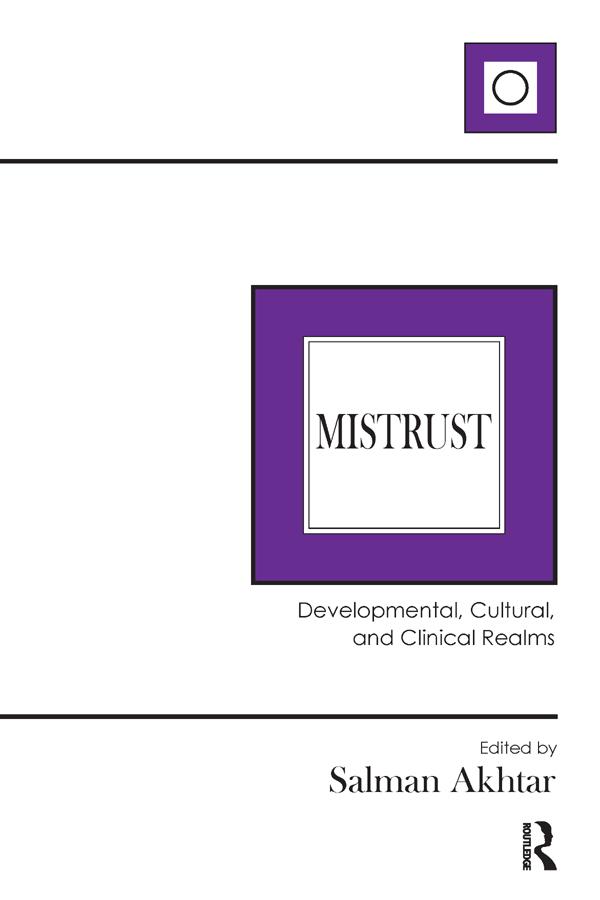
Humans are weak. Lacking the claws and thick skins of other animals, we are forced to rely on members of our own species to survive and flourish in the world. The fact that the human infant is born in an utterly helpless state also makes others' protective care necessary. Attachment, bonding, concern, and mutuality thus become cornerstones of human existence. Trust also enters this equation. Originating in the early mother-child relationship, trust continues to grow, get contextually refined tempered by reality testing, and gain nuances throughout the subsequent adult life. Its absence (mistrust) or malformation (distrust) contributes to psychopathology and is responsible for much intrapsychic distress and interpersonal strife. Given its formative significance and it crucial role in the therapeutic process, one is surprised by the paucity of psychoanalytic writings specifically devoted to the topic of trust and mistrust. Few, if any, monographs on trust exist. A collection of essays written specifically for this volume, it deals with the ontogenesis, psychopathology, cultural vicissitudes, and technical implications of trust and mistrust.
Betal enkelt med kort, Klarna, Apple Pay eller Google Pay. Ikke fornøyd? Du har alltid 14 dagers angrerett. Les mer i våre vilkår. Har du spørsmål, send oss en e-post på hello@memmo.org.
Memmo gjør det enklere å studere – uansett hvor du er i verden. Hos oss samler du pensumbøker og smarte studieverktøy på ett og samme sted: sammendrag, quizer, podkaster og flashcards. Og så Ted, din studiekompis som svarer på alt du lurer på. Over 50 000 studenter studerer allerede her – bygget for at du skal lære raskere og stresse mindre.
Du vil kanskje også like
Kjøp boken0