
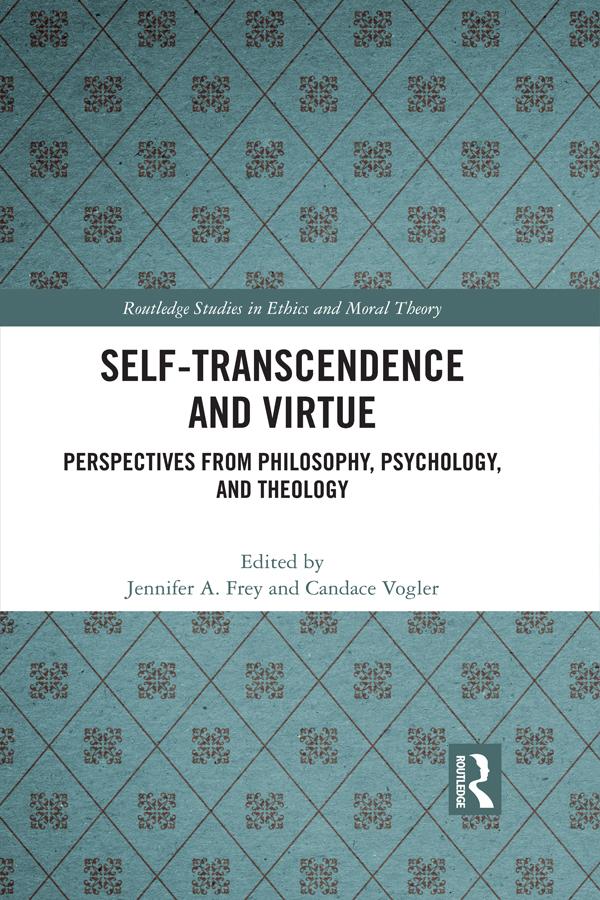
Recent research in the humanities and social sciences suggests that individuals who understand themselves as belonging to something greater than the self—a family, community, or religious or spiritual group—often feel happier, have a deeper sense of purpose or meaning in their lives, and have overall better life outcomes than those who do not. Some positive and personality psychologists have labeled this location of the self within a broader perspective "self-transcendence." This book presents and integrates new, interdisciplinary research into virtue, happiness, and the meaning of life by re-orienting these discussions around the concept of self-transcendence.
The essays are organized around three broad themes connected to self-transcendence. First, they investigate how self-transcendence helps us to understand aspects of the moral life as it is studied within psychology, including the development of wisdom, the practice of moral praise, and psychological well-being. Second, they explore how self-transcendence is linked to virtue in different religious and spiritual traditions including Judaism, Islam, Christianity, Buddhism, and Confucianism. Finally, they ask how self-transcendence can help us theorize about Aristotelean and Thomist conceptions of virtue, like hope and piety, and how this helps us to re-conceptualize happiness and meaning in life.
Betal enkelt med kort, Klarna, Apple Pay eller Google Pay. Ikke fornøyd? Du har alltid 14 dagers angrerett. Les mer i våre vilkår. Har du spørsmål, send oss en e-post på hello@memmo.org.
Memmo gjør det enklere å studere – uansett hvor du er i verden. Hos oss samler du pensumbøker og smarte studieverktøy på ett og samme sted: sammendrag, quizer, podkaster og flashcards. Og så Ted, din studiekompis som svarer på alt du lurer på. Over 50 000 studenter studerer allerede her – bygget for at du skal lære raskere og stresse mindre.