
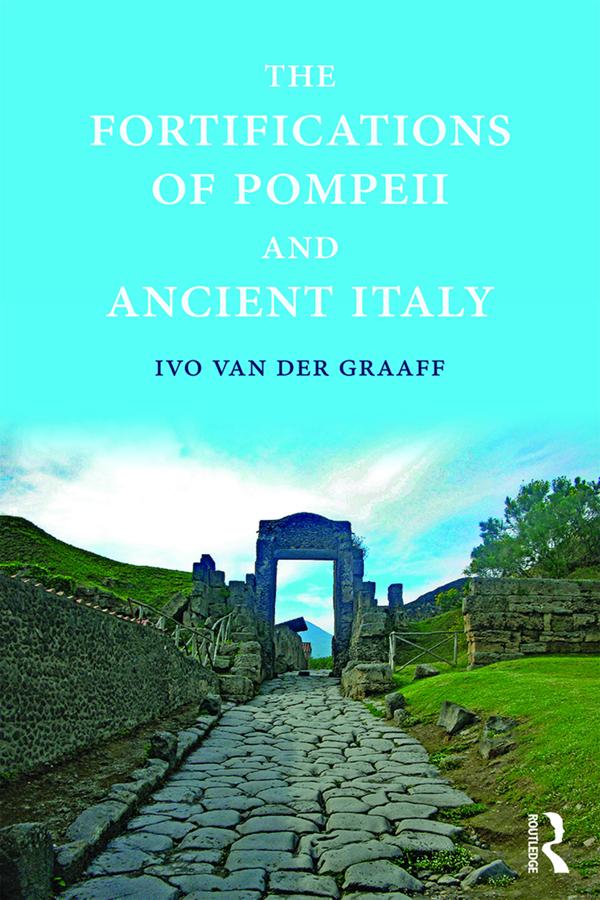
The fortifications of Pompeii stand as the ancient city’s largest, oldest, and best preserved public monument. Over its 700-year history, Pompeii invested significant amounts of money, resources, and labor into (re)building, maintaining, and upgrading the walls. Each intervention on the fortifications marked a pivotal event of social and political change, signaling dramatic shifts in Pompeii’s urban, social, and architectural framework. Although the defenses had a clear military role, their design, construction materials, and aesthetics reflect the political, social, and urban development of the city. Their fate was intertwined with that of Pompeii.
This study redefines Pompeii’s fortifications as a central monument that physically and symbolically shaped the city. It considers the internal and external forces that morphed their appearance and traces how the fortifications served to foster a sense of community. The city wall emerges as a dynamic, ideologically freighted monument that was fundamental to the image and identity of Pompeii. The book is a unique narrative of the social and urban development of the city from foundation to the eruption of Vesuvius, through the lens of the public building most critical to its independence and survival.
Betal enkelt med kort, Klarna, Apple Pay eller Google Pay. Ikke fornøyd? Du har alltid 14 dagers angrerett. Les mer i våre vilkår. Har du spørsmål, send oss en e-post på hello@memmo.org.
Memmo gjør det enklere å studere – uansett hvor du er i verden. Hos oss samler du pensumbøker og smarte studieverktøy på ett og samme sted: sammendrag, quizer, podkaster og flashcards. Og så Ted, din studiekompis som svarer på alt du lurer på. Over 50 000 studenter studerer allerede her – bygget for at du skal lære raskere og stresse mindre.