
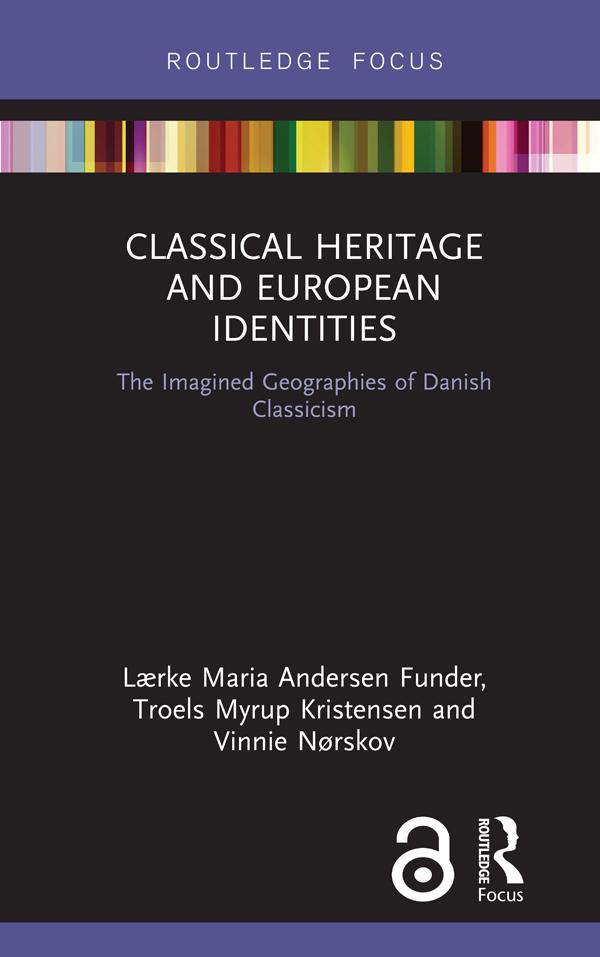
Classical Heritage and European Identities examines how the heritages of classical antiquity have been used to construct European identities, and especially the concept of citizenship, in Denmark from the eighteenth century to the present day. It implements a critical historiographical perspective in line with recent work on the "reception" of classical antiquity that has stressed the dialectic relationship between past, present and future.
Arguing that the continuous employment and appropriation of lassical heritages in the Danish context constitutes an interesting case of an imagined geography that is simultaneously based on both national and European identities, the book shows how Denmark’s imagined geography is naturalized through very distinctive uses of classical heritages within the educational and heritage sectors.
Chapter 1 of this book is freely available as a downloadable Open Access PDF at http://www.taylorfrancis.com under a Creative Commons Attribution-Non Commercial-No Derivatives (CC-BY-NC-ND) 4.0 license.
Betal enkelt med kort, Klarna, Apple Pay eller Google Pay. Ikke fornøyd? Du har alltid 14 dagers angrerett. Les mer i våre vilkår. Har du spørsmål, send oss en e-post på hello@memmo.org.
Memmo gjør det enklere å studere – uansett hvor du er i verden. Hos oss samler du pensumbøker og smarte studieverktøy på ett og samme sted: sammendrag, quizer, podkaster og flashcards. Og så Ted, din studiekompis som svarer på alt du lurer på. Over 50 000 studenter studerer allerede her – bygget for at du skal lære raskere og stresse mindre.